
A Bug Out Bag is a portable emergency kit that contains essential items to help individuals survive during a disaster or crisis.
In emergency preparedness, having a well-stocked Bug Out Bag is crucial. It provides a means to quickly respond to unexpected events and survive for at least 72 hours.
A Bug Out Bag typically includes basic tools and supplies, such as food, water, first aid kits, and communication devices.
Key Takeaways
- A Bug Out Bag is a vital component of emergency preparedness.
- It should contain essential items to sustain life for at least 72 hours.
- A well-stocked Bug Out Bag can help individuals respond to unexpected disasters.
- The bag should be portable and easily accessible.
- Regularly checking and updating the bag’s contents is crucial.
Understanding the Purpose of a Bug Out Bag
Understanding the purpose of a Bug Out Bag is crucial for anyone looking to enhance their emergency preparedness. A Bug Out Bag is more than just a collection of items; it’s a carefully curated kit designed to help individuals survive and thrive during emergencies.
What is a Bug Out Bag?
A Bug Out Bag is essentially a version of the 72-hour kit, an arsenal of survival gear and provisions that will see you through at least three days of an emergency situation. It’s a portable kit that includes everything one might need to survive, from food and water to first aid supplies and tools.
The concept is straightforward: by having a pre-prepared bag, individuals can quickly respond to emergencies without having to scramble for essential items. This proactive approach to emergency preparedness can significantly enhance one’s chances of survival and comfort during crises.
Why You Need One
Having a Bug Out Bag is not just a good idea; it’s a necessity in today’s unpredictable world. Emergencies can arise from natural disasters, man-made catastrophes, or personal crises, and being prepared can make all the difference.
“The will to survive is important, but the will to prepare is vital.” –
A Bug Out Bag ensures that you have the necessary items to survive for at least 72 hours, giving you time to assess the situation, find safety, and potentially receive aid.
| Essential Item | Purpose |
|---|---|
| Water and Food | Survival Basics |
| First Aid Kit | Medical Emergencies |
| Multi-tool | Versatile Utility |
Situations That May Require a Bug Out Bag
Bug Out Bags are designed to be versatile, applicable to a wide range of emergency situations. These can include natural disasters like hurricanes, earthquakes, and floods, as well as man-made emergencies such as chemical spills or power grid failures.
Having a Bug Out Bag ready means being prepared for the unexpected, ensuring that you and your loved ones can respond effectively to emergencies.
- Natural Disasters
- Man-made Emergencies
- Personal Crises
In conclusion, a Bug Out Bag is a fundamental component of emergency preparedness, providing a practical means to survive and navigate through crises. By understanding its purpose and assembling the necessary items, individuals can significantly enhance their resilience in the face of emergencies.
Essential Items to Include
A well-prepared Bug Out Bag contains essential items that can make a significant difference in survival situations. These items are crucial for sustaining life, providing comfort, and ensuring safety during emergencies.
Water and Water Purification
Water is a fundamental necessity for survival. Including a sufficient supply of water in your Bug Out Bag is vital. Additionally, incorporating water purification methods can extend your water supply. Options include water filters, purification tablets, or a portable UV purifier.
For instance, a water filter like the LifeStraw can effectively remove bacteria and viruses from water, making it safe to drink. Purification tablets are another effective method, offering a lightweight and compact solution.
Food Supplies
Non-perishable food items are a must in a Bug Out Bag. These should be high in calories, nutritious, and easy to prepare. Examples include energy bars, canned goods, dried fruits, and MREs (Meals Ready to Eat).
| Food Item | Calories per Serving | Shelf Life |
|---|---|---|
| Energy Bars | 200-300 | Up to 2 years |
| Canned Goods | 100-200 | Up to 5 years |
| Dried Fruits | 150-250 | Up to 1 year |
| MREs | 1200 | Up to 3 years |
Shelter and Comfort
Adequate shelter and comfort items can significantly enhance survival chances. This includes a lightweight tent, sleeping bag, blanket, and sleeping pad. These items provide protection from the elements and help maintain body heat.
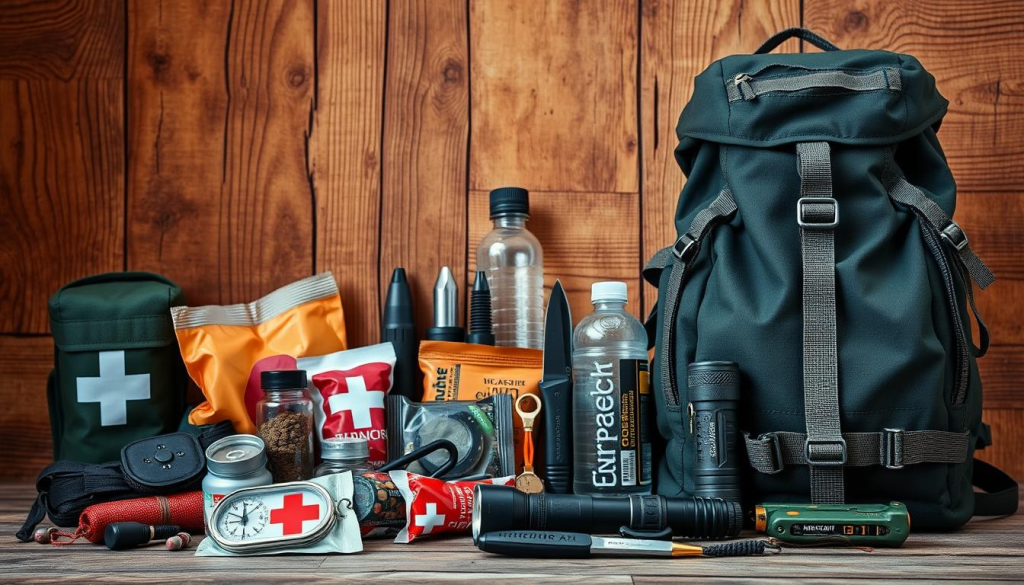
By carefully selecting and including these essential items in your Bug Out Bag, you can ensure a better chance of survival and comfort during emergencies.
First Aid Kit: Why It’s Critical
When preparing an emergency go bag, one of the most important items to include is a well-stocked first aid kit. A first aid kit is essential for treating injuries and preventing infections, which can be critical in survival situations.
Key Items in a First Aid Kit
A basic first aid kit should include a variety of supplies to treat common injuries. Some of the key items to include are:
- Bandages and band-aids
- Antiseptic wipes and ointment
- Pain relievers and antihistamines
- Gauze pads and rolls
- Medical tape
Brands like MyMedic offer high-quality first aid kits that are well-organized and comprehensive.
How to Customize Your Kit
Customizing your first aid kit to fit your specific needs is crucial. Consider any personal medical conditions or allergies when selecting items. For example, if you have a severe allergy, including an EpiPen in your kit is vital.
It’s also important to regularly inspect your kit to ensure that all items are still usable and not expired.
Training and Knowledge
Having a first aid kit is only effective if you know how to use the items in it. First aid training can provide you with the knowledge to treat injuries effectively.
Consider taking a first aid course to learn about wound cleaning, splinting, and other critical first aid techniques.
Tools and Equipment to Pack
When assembling your Bug Out Bag, it’s crucial to include a variety of tools and equipment to ensure you’re prepared for any situation. The right gear can make a significant difference in your ability to survive and navigate through challenging environments.
Multi-tools and Knives
Multi-tools and knives are indispensable in a Bug Out Bag. They can be used for a wide range of tasks, from cutting branches to opening cans. A good multi-tool should include pliers, scissors, and a knife blade. Consider brands like Leatherman or Gerber for high-quality options.
Key Features to Look for in a Multi-tool:
- Durable construction
- Variety of functions
- Ease of use
Fire-starting Equipment
Fire-starting equipment is critical for warmth, cooking, and signaling. Include waterproof matches, a lighter, and a ferrocerium rod in your Bug Out Bag. These tools will help you start a fire in various conditions.
| Fire-starting Method | Advantages | Disadvantages |
|---|---|---|
| Waterproof Matches | Easy to use, relatively cheap | Can be affected by moisture if not properly stored |
| Ferrocerium Rod | Durable, works in wet conditions | Requires technique to use effectively |
Navigation Tools
Navigation tools are essential for finding your way during an emergency. A compass, a GPS device, and detailed maps of your area are crucial. Make sure your navigation tools are battery-powered and consider carrying spare batteries.
By including these tools and equipment in your Bug Out Bag, you’ll be better prepared to handle emergencies and navigate challenging situations.
Clothing and Personal Gear
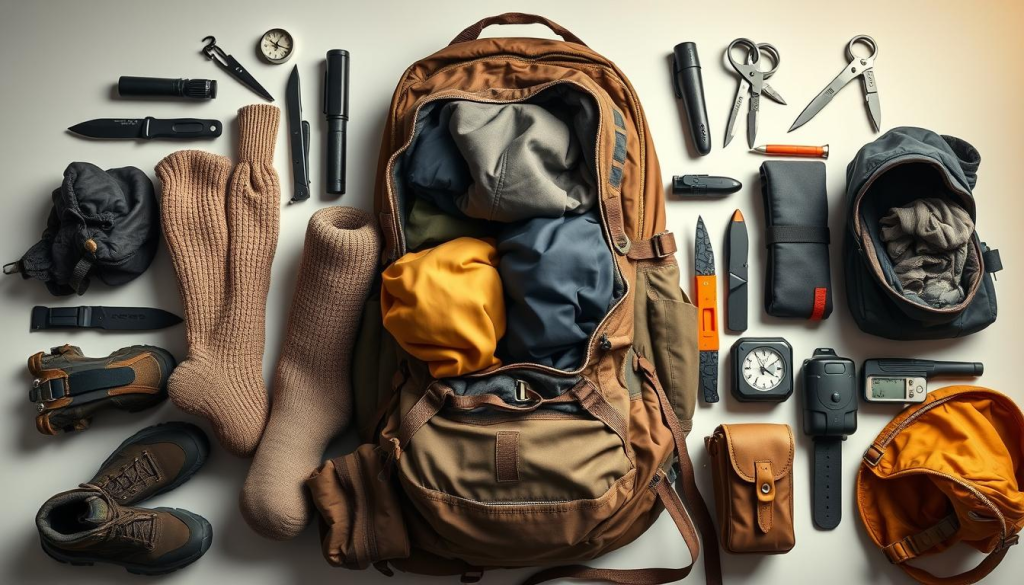
A well-prepared Bug Out Bag includes clothing and personal gear tailored to the expected weather conditions and terrain. This ensures that you remain comfortable and protected during emergencies. As emphasized by survival experts, “Clothing is not just about comfort; it’s about protection from the elements and potential hazards.”
Weather-Appropriate Clothing
Pack clothing that is suitable for the climate and weather conditions you might face. This includes moisture-wicking base layers, insulating mid-layers, and waterproof outer layers. Consider the season and potential weather extremes in your area. For instance, if you live in a cold climate, include warm hats, gloves, and scarves.
Footwear Considerations
Footwear is a critical component of your Bug Out Bag. Choose sturdy, comfortable shoes that are suitable for hiking and walking long distances. Consider the terrain you might encounter and pack accordingly. For example, if you expect to be in wet conditions, waterproof boots are essential. As noted by outdoor enthusiasts, “Good footwear can make or break your survival experience.”
Hygiene Products
Maintaining personal hygiene is vital for health and morale. Include biodegradable soap, toothbrush and toothpaste, and wet wipes in your Bug Out Bag. These items will help you stay clean and prevent the spread of infections. Remember, personal hygiene can significantly impact your overall well-being during stressful situations.
By carefully selecting clothing and personal gear, you can enhance your comfort and survival chances during emergencies. Ensure that your Bug Out Bag is tailored to your specific needs and the potential challenges you might face.
Security Measures for Your Bug Out Bag
Security is a critical aspect of any bug out bag, ensuring you’re prepared for the unexpected. When disaster strikes, your safety depends on being proactive and having the right tools and mindset.
Defense Tools to Consider
One of the key components of security is having appropriate defense tools. This doesn’t necessarily mean carrying a firearm, although that can be an option for some. Other alternatives include pepper spray, stun guns, or even a simple knife or baton. The goal is to have a means to protect yourself if confronted with danger.
It’s crucial to choose a defense tool you’re comfortable using and have received training on. For firearms, this means understanding local laws and practicing regularly. For other tools, it involves knowing how to effectively deploy them in a threatening situation.
Maintaining Situational Awareness
Beyond physical tools, maintaining situational awareness is vital. This means being aware of your surroundings, understanding potential threats, and knowing when to act or retreat. Situational awareness is about being alert and prepared for any scenario.
To enhance situational awareness, it’s helpful to stay informed about weather conditions, potential natural disasters, and social or political unrest in your area. This knowledge can guide your decisions on when to bug out and where to go.

Protective Clothing
Protective clothing is another aspect of security that shouldn’t be overlooked. This can include durable clothing that protects against the elements and physical harm, such as long-sleeved shirts, sturdy pants, and gloves. In some scenarios, body armor or a helmet might also be considered.
The key is to dress in layers and be prepared for changing conditions. Comfortable, practical clothing can also aid in mobility and endurance during an evacuation.
Important Documents and Identification
A well-prepared Bug Out Bag includes not just supplies, but also vital documents and identification. In the event of an emergency, having these documents readily available can significantly simplify the process of recovery and reunification.
Essential Documents to Pack
When it comes to documents, it’s essential to pack those that can verify your identity, insurance, and other critical information. Some of the key documents to include are:
- Identification: Driver’s license, passport, or any government-issued ID.
- Insurance Papers: Health, auto, and home insurance documents.
- Vital Records: Copies of birth certificates, marriage certificates, and social security cards.
- Financial Documents: Bank account information, credit cards, and cash.
Keeping Your Documents Safe
It’s not enough to just pack your documents; you must also ensure they remain safe and accessible. Consider using a waterproof container or a fireproof safe within your Bug Out Bag. Additionally, making digital copies of these documents can provide an extra layer of security.

Digital Backup Options
In today’s digital age, having a backup of your important documents is easier than ever. Consider scanning your documents and storing them securely online or on an external hard drive. Some options include:
- Cloud Storage: Services like Dropbox or Google Drive can store your documents securely.
- External Hard Drives: Keep an external hard drive with your documents in a safe place.
- USB Drives: Store a USB drive with your documents in your Bug Out Bag.
By including both physical and digital copies of your important documents, you can ensure that you are prepared for any situation that may arise.
Tips for Organizing Your Bag Efficiently
To maximize the effectiveness of your Bug Out Bag, it’s essential to organize it thoughtfully. A well-organized bag ensures that you can quickly access the items you need during an emergency.
Best Practices for Packing
When packing your Bug Out Bag, it’s crucial to follow best practices to ensure that all bug out bag essentials are included and easily accessible. Start by categorizing items into groups such as first aid, food, water, shelter, and tools. Use packing cubes or pouches to keep similar items together, making it easier to find what you need quickly.
For example, you can use a dedicated pouch for your first aid kit, keeping bandages, antiseptic wipes, and medications organized. Similarly, pack your food supplies in airtight containers to maintain freshness and make them easy to access.
Weight Distribution Strategies
Proper weight distribution is vital for comfort when carrying your Bug Out Bag. Distribute the weight evenly by placing heavier items, such as water or tools, close to your back and centered within the bag. This helps maintain balance and reduces strain on your shoulders and back.
Use the bag’s compartments and pockets to your advantage. Place frequently used items in easy-to-reach pockets, and ensure that the weight is evenly distributed between the top and bottom of the bag.
Regular Maintenance and Updates
Regular maintenance of your Bug Out Bag is crucial to ensure it remains relevant and effective. Schedule regular checks every six months to update supplies, check expiration dates, and replace items as needed.
During these checks, inspect your bag for any signs of wear and tear, and make necessary repairs. Update your bag according to seasonal changes or changes in your personal circumstances.
| Maintenance Task | Frequency | Notes |
|---|---|---|
| Check Expiration Dates | Every 6 months | Update food, water, and medical supplies |
| Inspect Bag Condition | Every 6 months | Repair or replace bag as needed |
| Update Documents | Annually | Ensure IDs, insurance, and other documents are current |
By following these tips for organizing your Bug Out Bag, you can ensure that you are always prepared for emergencies, with your bug out bag essentials at the ready.
Adaptability and Special Considerations
The effectiveness of a Bug Out Bag hinges on its ability to adapt to different emergencies and the specific needs of its users. Disaster preparedness supplies should be tailored to address various potential threats and the unique requirements of each family member.
Tailoring to Family Needs
When preparing a Bug Out Bag, it’s essential to consider the diverse needs within your family. This includes packing supplies for children, the elderly, and individuals with specific medical conditions. Adaptability in this context means having the right equipment and knowledge to support everyone.
For families with young children, this might mean including diapers, formula, and child-friendly medications. For those with elderly members, it could involve packing necessary medications and mobility aids.
Pets and Bug Out Bags
Pets are an integral part of many families, and their needs should not be overlooked. When assembling a Bug Out Bag, it’s crucial to include pet supplies such as food, water, bowls, and any necessary medication.
Considering the potential for pets to become stressed or injured during an emergency, it’s also a good idea to include a pet first aid kit and a carrier or leash to help keep them safe and under control.
Specific Threats and Local Considerations
Understanding the specific threats and conditions in your area is vital for creating an effective Bug Out Bag. Whether you live in a region prone to hurricanes, earthquakes, or wildfires, your disaster preparedness supplies should be chosen with these risks in mind.
For example, if you live in an area susceptible to wildfires, including masks and goggles can help protect against smoke and ash. In regions prone to flooding, waterproof bags and sandbags might be essential.
By tailoring your Bug Out Bag to the specific needs of your family and the potential threats in your area, you can significantly enhance your adaptability and readiness for emergencies.
Making Your Bug Out Bag a Family Project
Creating a Bug Out Bag is not just about individual preparedness; it’s an opportunity to involve the entire family in the process. By making it a family project, you can educate your loved ones on the importance of emergency preparedness and build a sense of security together.
Involving Family Members
Involving family members in the preparation of a Bug Out Bag can be a valuable educational experience. Assign tasks to each member based on their capabilities, ensuring everyone understands their role in emergency situations. This collaborative approach helps create a comprehensive bug out bag checklist that covers all necessary aspects.
Preparing Kids for Emergencies
Preparing children for emergencies is crucial. Explain the purpose of a Bug Out Bag in a way they can understand, and involve them in packing essential items. This not only helps them feel more secure but also teaches them important survival skills, contributing to overall family preparedness.
Building a Sense of Security Together
By working together on a Bug Out Bag, families can build a sense of security and readiness. Regularly review and update the bag together, ensuring everyone knows what to do in case of an emergency. This collective effort strengthens family bonds and enhances overall preparedness.