
In emergency situations, having a well-prepared bug out bag can be a lifesaver. A bug out bag is a portable emergency kit that contains essential items for survival during disasters or emergency situations.
According to the CDC and other emergency preparedness guidelines, having a bug out bag ready is crucial for survival. It is designed to help individuals evacuate quickly and safely, providing them with the necessary tools and supplies to sustain themselves until help arrives.
The importance of being prepared cannot be overstated, and a well-stocked bug out bag is a critical component of any emergency preparedness plan.
Key Takeaways
- Understanding the importance of a bug out bag in emergency situations.
- Knowing the essential items to include in a bug out bag.
- Recognizing the role of a bug out bag in ensuring survival during disasters.
- Learning how to prepare a bug out bag according to emergency preparedness guidelines.
- Appreciating the significance of having a portable emergency kit.
Introduction to Bug Out Bags
A bug out bag, often referred to as a 72-hour kit, is an essential component of emergency preparedness. It is designed to help individuals survive for at least 72 hours during emergencies, providing them with necessary supplies such as food, water, first aid materials, and shelter.
The concept of a bug out bag is straightforward: it’s a portable collection of items that can sustain you when you’re forced to evacuate quickly or when you’re unable to access basic necessities due to a disaster or emergency situation.
What is a Bug Out Bag?
A bug out bag is a pre-packed bag that contains essential items to help you survive during an emergency. The idea is to have everything you need in one bag, making it easy to grab and go at a moment’s notice. The contents of a bug out bag can vary depending on personal needs, the type of emergencies you might face, and the environment you live in.
Why You Need One
Having a bug out bag is crucial for emergency preparedness. It ensures that you’re equipped to handle unexpected situations, providing you with the necessary tools to survive until help arrives or until the situation improves. A well-prepared bug out bag can be the difference between safety and danger.
| Essential Items | Description |
|---|---|
| Water and Purification Tablets | Ensures access to clean drinking water |
| Non-Perishable Food | Provides sustenance during emergencies |
| First Aid Kit | For treating minor injuries and preventing infections |
| Shelter Materials (Tent, Blanket) | Offers protection from the elements |
When to Use Your Bug Out Bag
Your bug out bag is designed to be used in emergency situations where you need to evacuate quickly or survive for an extended period without access to basic necessities. This could be during natural disasters like hurricanes, earthquakes, or floods, or other emergencies that require immediate action.
It’s essential to understand that a bug out bag is not just for extreme scenarios; it can also be useful in less severe situations where you might need to leave your home quickly or be self-sufficient for a while.
Essential Items for Survival
Survival in the face of disaster requires careful planning and the right equipment. When assembling your bug out bag, it’s crucial to include items that will sustain you, protect you, and help you navigate through challenging situations.
Water and Purification
Water is a fundamental necessity for survival. Including a reliable means of accessing safe drinking water in your bug out bag is vital. Consider packing water purification tablets or a portable water filter. These tools can ensure you have access to clean drinking water, even in contaminated environments. As survival expert, “Having clean drinking water can be the difference between life and death in a survival situation.”

Food Supplies
Non-perishable food items are a must in any bug out bag. Look for high-calorie foods that are lightweight and easy to prepare, such as energy bars, dried fruits, and canned goods. These will provide you with the necessary sustenance to keep going. It’s also a good idea to include a manual can opener to access canned food.
First Aid Kit
A well-stocked first aid kit is essential for treating injuries and preventing infections. Your kit should include bandages, antiseptic wipes, pain relievers, and any medications you may need. Regularly check your kit to ensure all items are still usable and not expired.
“A good first aid kit can save lives by providing immediate care for injuries.” –
Multi-Tool or Knife
A multi-tool or knife is a versatile item that can be used for a variety of tasks, from cutting branches to opening cans. When choosing a multi-tool or knife, consider one that is durable and has multiple functions.
By including these essential items in your bug out bag, you’ll be better prepared to face unexpected challenges and emergencies. Remember, the key to survival is being prepared.
Clothing and Personal Items
A well-prepared bug out bag includes a thoughtful selection of clothing and personal items designed to sustain you through challenging situations. The right clothing can protect you from the elements, while personal items can help maintain your health and hygiene.
Layered Clothing
Layered clothing is essential for adapting to varying temperatures and weather conditions. It allows you to adjust your attire to suit the environment, ensuring you remain comfortable and protected. Consider including:
- Moisture-wicking base layers to keep you dry
- Insulating mid-layers for warmth
- Waterproof outer layers to shield against rain and wind
Tip: Choose clothing that is versatile, durable, and quick-drying. Avoid cotton as it retains moisture and can be uncomfortable when wet.
Footwear Considerations
Footwear is a critical component of your bug out bag. It should be sturdy, comfortable, and suitable for various terrains. Consider packing:
- Hiking boots or sturdy shoes for rugged terrain
- Socks for blister prevention and comfort
- Sandals or water shoes for water crossings or warm weather
Remember: Break in your footwear before an emergency to prevent blisters and discomfort.
Personal Hygiene Supplies
Maintaining personal hygiene is crucial for health and morale. Include:
- Toothbrush and toothpaste
- Biodegradable soap
- Wet wipes or hand sanitizer
- Any personal hygiene items you regularly use
As James Clear, author of “Atomic Habits,” once said, “Your habits reflect your identity, and your identity is shaped by your habits.” Maintaining personal hygiene habits, even in challenging situations, can significantly impact your overall well-being.
“The will to survive is important, but the will to prepare is vital.”
By carefully selecting and packing clothing and personal items, you can enhance your comfort and resilience during emergencies, making your bug out bag a more effective tool for survival.
Shelter and Sleeping Gear
Shelter and sleeping gear are critical components of a bug out bag, providing safety and comfort in crisis situations. These elements are crucial for protecting you from the elements and ensuring you have a decent rest, which is vital for survival.
Emergency Blankets
Emergency blankets, often made of lightweight, compact materials like Mylar, are designed to retain body heat. They are an essential item for any bug out bag due to their minimal weight and space requirements. However, they may not be as durable as other options.
Portable Tents or Tarps
Portable tents or tarps offer more substantial shelter options. They can provide better protection from wind, rain, and sun exposure. When choosing a tent or tarp, consider its waterproof rating, ease of setup, and durability.
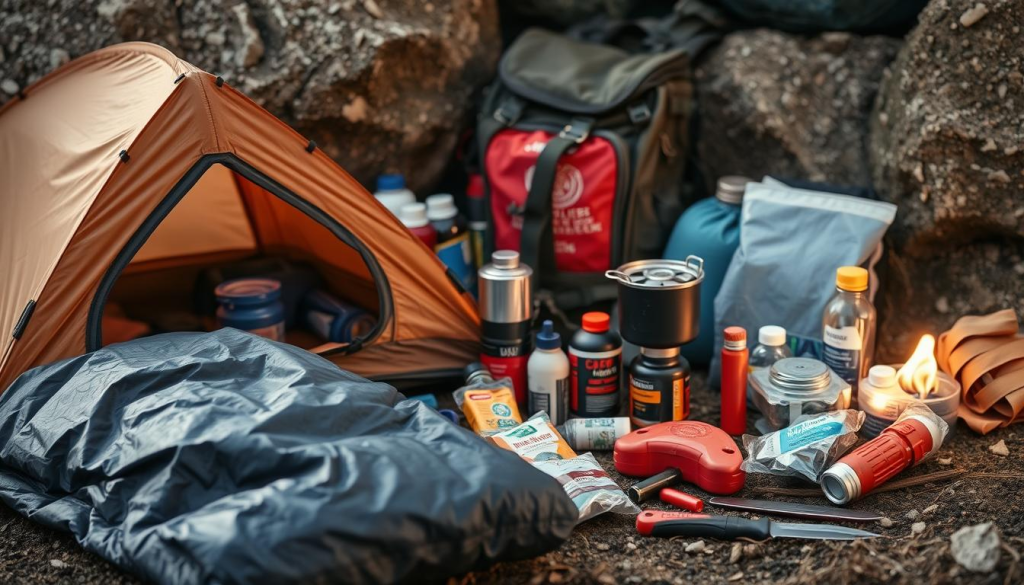
Sleeping Bags vs. Sleeping Pads
Sleeping bags and sleeping pads serve different purposes but are both crucial for a comfortable night’s sleep. Sleeping bags provide warmth, while sleeping pads offer comfort and insulation from the ground. Consider the climate you’ll be in and choose accordingly.
| Item | Benefits | Considerations |
|---|---|---|
| Emergency Blankets | Lightweight, compact, retains heat | Durability, may not be as effective in extreme cold |
| Portable Tents/Tarps | Provides substantial shelter, waterproof | Weight, setup complexity, durability |
| Sleeping Bags | Provides warmth, compact options available | Weight, temperature rating, comfort |
| Sleeping Pads | Comfort, insulation from ground | Weight, bulk, R-value for insulation |
When assembling your bug out bag, it’s essential to balance the need for survival gear with practical considerations like weight and space. By carefully selecting your shelter and sleeping gear, you can ensure you’re prepared for a variety of emergency situations.
Fire Starting Equipment
A reliable method for starting a fire is essential for survival, and there are several options to consider for your bug out bag. Fire starting equipment is crucial for providing warmth, light, and a means of cooking food, making it a vital component of your survival gear.
Lighters and Matches
Lighters and matches are two of the most common methods for starting a fire. Lighters are convenient and easy to use, but they can be affected by wind and rain. Waterproof matches, on the other hand, are more resistant to the elements but require more effort to use. It’s a good idea to include both in your bug out bag to ensure you have a backup in case one fails.
Fire Starter Kits
Fire starter kits usually include a variety of tools designed to help start a fire, such as ferrocerium rods and tinder. These kits can be very effective, especially in challenging weather conditions. When choosing a fire starter kit, consider one that is compact, durable, and easy to use.
Survival Fire Strikers
Survival fire strikers, like ferrocerium rods, are a popular choice for starting fires in survival situations. They are durable, waterproof, and can generate sparks even when wet. To use a ferrocerium rod effectively, hold it at a 30- to 40-degree angle and strike it with a knife or other sharp object to produce sparks onto your tinder.
In conclusion, having the right fire starting equipment in your bug out bag can significantly enhance your chances of survival. By considering the advantages and disadvantages of different options and including a variety of tools, you can ensure you’re prepared for any situation.
Navigation and Communication Tools
In a survival situation, having the right navigation and communication tools can be a lifesaver. These tools enable you to stay informed, find your way, and signal for help when needed.
Effective navigation is critical in a survival situation. Without it, you can become lost and disoriented, making it harder to find safety. Including the right navigation tools in your bug out bag can make all the difference.
Maps and Compasses
A map and compass are essential navigation tools. A map provides a visual representation of the terrain, while a compass helps you determine direction. When choosing a map, consider one that is waterproof and detailed, covering the area you are likely to be in. A compass with a built-in clinometer can also be useful for measuring slope angles.
It’s also important to know how to use these tools effectively. Consider taking a navigation course to improve your skills. Proper navigation can be the difference between safety and danger.
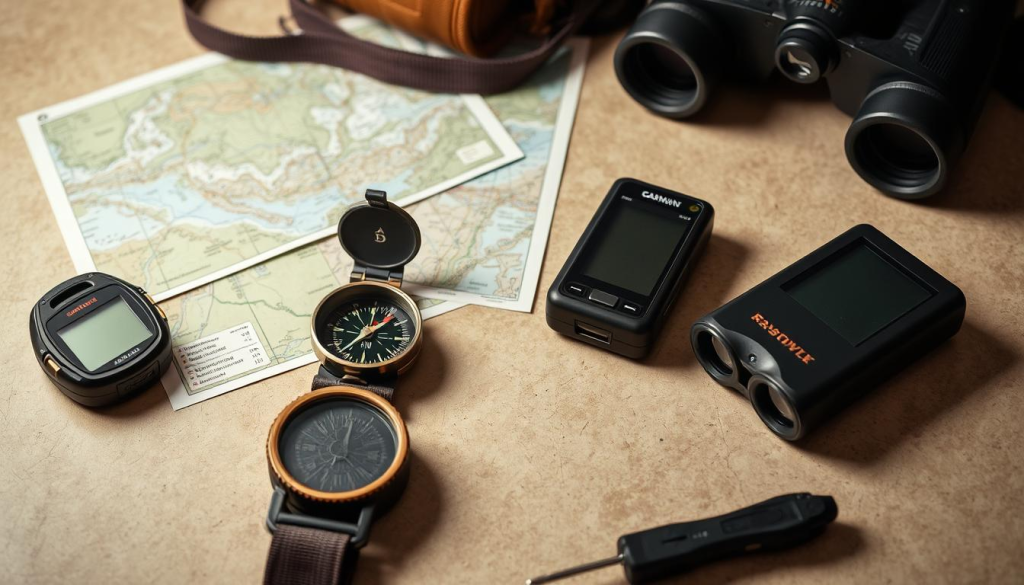
GPS Devices
GPS devices provide accurate location information and can be invaluable in a survival situation. They can help you navigate through unfamiliar terrain and locate your position. When choosing a GPS device, consider one with a long battery life and a robust design.
Some GPS devices also offer additional features such as altimeters, compasses, and weather forecasts. These can be useful in a survival situation, providing you with more information to make informed decisions.
Whistles and Flares
Whistles and flares are critical communication tools. A whistle can be used to signal for help, while flares can be used to signal your location to rescuers. When choosing a whistle, consider one that is loud and pea-less, as these are more reliable in cold weather.
Flares should be stored in a waterproof container and used according to the manufacturer’s instructions. It’s essential to use these tools effectively to signal for help.
By including these navigation and communication tools in your bug out bag, you can improve your chances of staying safe and being rescued in a survival situation.
Lighting and Visibility Gear
Having adequate lighting and visibility gear in your bug out bag can significantly enhance your chances of survival during a crisis. In emergency situations, being able to navigate, signal for help, and perform tasks in the dark is crucial.
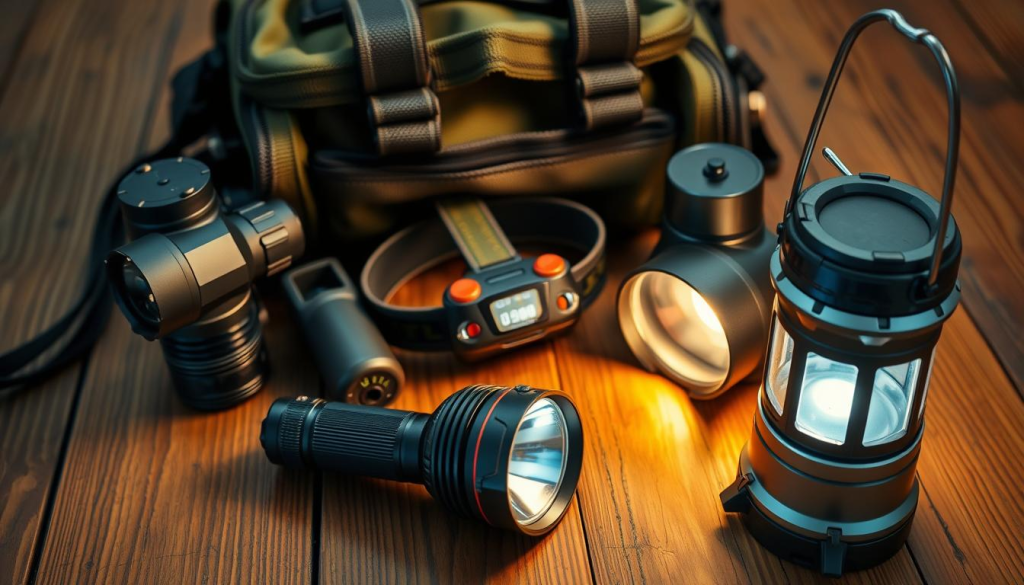
Flashlights and Headlamps
Flashlights and headlamps are essential items for any bug out bag. They provide hands-free or hands-on lighting, depending on your needs. When choosing a flashlight or headlamp, consider brightness, battery life, and durability. LED lights are preferred for their energy efficiency and long lifespan.
Some models come with red light modes to preserve night vision, which is a valuable feature for navigating in the dark without being detected.
Glow Sticks
Glow sticks are another useful lighting option for a bug out bag. They are simple, reliable, and don’t require batteries. Glow sticks can be used to mark paths, signal for help, or provide general lighting.
It’s a good idea to include a variety of glow sticks in different colors, as some colors are more visible in certain conditions. For example, red glow sticks are less visible from a distance and can be used to preserve night vision.
Reflective Gear
Reflective gear, such as reflective tape, vests, or clips, can significantly enhance visibility. These items can be used to signal your presence to potential rescuers or to make your bug out bag more visible in low-light conditions.
When selecting reflective gear, consider the level of reflectivity and durability. Some reflective materials are designed to be highly visible from a distance, making them ideal for signaling.
Including a mix of lighting and visibility gear in your bug out bag will prepare you for various scenarios, ensuring you can navigate, signal for help, and perform tasks effectively in low-light conditions.
Tools and Equipment
Tools and equipment are vital components of any bug out bag, enabling individuals to respond effectively in emergency situations. The right gear can make a significant difference in survival and comfort during challenging times.
Camping Gear
Camping gear is an essential part of a bug out bag, providing the means to establish shelter and start a fire. A compact tent or tarp can serve as a reliable shelter, while a portable camping stove or fire starter kit can help in cooking meals and providing warmth.
Key camping gear items include:
- Portable tents or tarps
- Camping stoves or fire starters
- Sleeping bags or emergency blankets
Paracord and Rope
Paracord and rope are versatile tools that can be used for a variety of tasks, from securing shelter to creating a makeshift tow line. High-quality paracord is durable and can withstand significant stress, making it an indispensable item in a bug out bag.
When selecting paracord or rope, consider the following factors:
- Durability and resistance to wear
- Length and versatility
- Weight and packability
Duct Tape
Duct tape is a simple yet highly effective tool that can be used for repairs, securing items, and even as a makeshift bandage. Its versatility and durability make it a must-have in any emergency kit.
Tips for using duct tape effectively:
- Wrap it around a pencil or stick to save space
- Use it to repair tears in clothing or gear
- Apply it to minor cuts or scrapes to protect the wound
By incorporating these tools and equipment into your bug out bag, you’ll be better prepared to handle a wide range of emergency situations, from natural disasters to personal crises.
Bug Out Bag Maintenance
To stay prepared, it’s crucial to regularly check and update your bug out bag. A well-maintained bug out bag can be the difference between safety and peril during emergencies.
Regular Checks and Updates
Regular checks involve verifying the condition and expiration dates of items in your bug out bag. This includes checking food supplies, water purification tablets, and medical kits. Update your supplies as needed to ensure they remain usable and effective.
It’s also essential to test equipment like flashlights, radios, and other electronic devices to ensure they’re functioning correctly. Replace batteries and damaged items promptly.
Seasonal Changes
Seasonal changes can significantly impact the contents and preparation of your bug out bag. For instance, during winter, you may need to include warmer clothing, hand warmers, and possibly a sled or toboggan for evacuation. In contrast, summer might require more hydration supplies, sun protection, and insect repellent.
Review your bug out bag at the start of each season to adjust its contents according to the anticipated weather conditions and potential hazards.
Personalizing Your Bag
Personalizing your bug out bag involves tailoring its contents to your specific needs, including any medical conditions, personal preferences, and the needs of your family members. Consider including personal documents, cash, and essential medications in your bag.
“A bug out bag is not just about survival; it’s about being prepared for any situation that may arise, ensuring you can protect and care for yourself and your loved ones.”
Customize your bug out bag to fit your lifestyle and the potential emergencies you might face. This might include adding specific tools, clothing, or equipment relevant to your environment or situation.
By following these guidelines, you can ensure your bug out bag remains a reliable resource in times of need. Regular maintenance not only enhances your preparedness but also gives you peace of mind.
Security and Defense
In the face of uncertainty, a well-prepared bug out bag should include essential security and defense items. These tools are vital for protecting you and your loved ones during emergency situations.
Self-Defense Items
Self-defense items are a critical component of your bug out bag’s security and defense capabilities. Consider including pepper spray, a personal alarm, or other non-lethal deterrents. These tools can help deter potential threats without causing permanent harm.
When selecting self-defense items, it’s essential to consider local laws and regulations regarding their use and possession. Ensure that you are familiar with the proper use of these items to maximize their effectiveness.
Personal Alarm Devices
Personal alarm devices are another crucial aspect of your bug out bag’s security features. These devices can be used to signal for help or deter potential threats. Look for alarms that are loud, compact, and easy to use.
Some personal alarm devices come with additional features such as GPS tracking or flashlight functionality. These features can enhance the overall utility of the device, making it a valuable addition to your bug out bag.
When preparing your bug out bag, it’s crucial to strike a balance between security and practicality. Ensure that your security and defense items are not only effective but also comply with local laws and regulations.
Important Documents and Cash
Including important documents and a stash of cash in your bug out bag is crucial for survival and recovery during emergencies. These items can provide a means of identification, financial support, and access to essential services when you need them most.
Copies of Personal Identification
Having copies of your personal identification documents is vital. These can include a driver’s license, passport, or any other government-issued ID. It’s essential to have these documents readily available in case you need to prove your identity or access certain services.
- Driver’s license or state ID
- Passport
- Birth certificate
- Social Security card
Make sure to store these copies in a waterproof container to protect them from damage.
Emergency Contact Information
In addition to identification, it’s crucial to have a list of emergency contact information. This can include phone numbers and addresses of family members, friends, or emergency services. Having this information readily available can be a lifeline in a crisis situation.
- Family member contact details
- Emergency services contact details
- Insurance information
Cash and Small Change
Cash is king during emergencies, especially when ATMs and credit card machines are not functioning. Having a mix of small and large bills can help you purchase essential items or services.
- Small bills ($1, $5, $10)
- Large bills ($20, $50, $100)
- Coins for small purchases or vending machines
It’s also a good idea to have some cash in a foreign currency if you anticipate traveling or if your area is prone to specific types of disasters that might require international assistance.
By including these important documents and cash in your bug out bag, you’ll be better prepared to handle emergencies and ensure your survival and recovery.
Training and Preparedness
Training and preparedness are the backbone of any successful emergency response plan. Having the must-have items for a bug out bag is crucial, but it’s equally important to know how to use them effectively.
To be truly prepared, one must undergo emergency first aid training. This training equips individuals with the skills to respond to medical emergencies, such as wounds, cardiac arrests, and other life-threatening conditions. It’s a critical component of being prepared for any disaster scenario.
Emergency First Aid Training
Emergency first aid training includes learning how to stop bleeding, perform CPR, and use automated external defibrillators (AEDs). These skills are essential for saving lives in emergency situations.
| Skill | Description | Importance Level |
|---|---|---|
| Wound Cleaning and Dressing | Learning to clean and dress wounds to prevent infection | High |
| CPR and AED Use | Understanding how to perform CPR and use an AED | Critical |
| Basic Life Support | Knowing how to support vital functions in emergency situations | Critical |
Survival Skills Workshops
Survival skills workshops teach individuals how to survive in various environments with minimal equipment. These workshops cover topics such as finding and purifying water, building shelters, and starting fires without modern tools.
Attending a survival skills workshop can significantly enhance one’s ability to cope with best bug out bag items and use them effectively in real-world scenarios.
Practice Drills
Regular practice drills are essential for ensuring that one can effectively use their bug out bag and other emergency equipment. These drills help in identifying any gaps in preparedness and in reinforcing the skills learned during training.
By incorporating emergency first aid training, survival skills workshops, and regular practice drills into one’s preparedness plan, individuals can ensure they are well-equipped to handle emergencies. This comprehensive approach to preparedness is key to successfully navigating disaster scenarios with the items from your bug out bag checklist.
Conclusion: Customize Your Bug Out Bag
Creating an effective bug out bag requires more than just packing essential items; it’s about tailoring the contents to your personal needs and circumstances. By doing so, you ensure that your bug out bag remains a relevant and valuable resource in emergency situations.
Personalizing Your Bug Out Bag
To personalize your bug out bag, consider your bug out bag essentials based on your environment, health, and the types of emergencies you might face. For instance, if you live in an area prone to earthquakes, including items like a portable charger and a whistle can be crucial. Reviewing your survival gear for bug out bag regularly will help you stay prepared.
Staying Adaptable
Continual learning and adaptation are key to maintaining an effective bug out bag. Stay informed about new bug out bag contents list and best practices in survival and emergency preparedness. Attend workshops, read relevant literature, and practice drills to ensure you’re always ready.
By customizing your bug out bag and staying adaptable, you’ll be better equipped to handle unexpected situations and keep yourself and your loved ones safe.