
In the event of a disaster or emergency, having a well-stocked emergency preparedness kit is crucial for survival. A bug out bag is designed to help you survive for at least 72 hours, providing essential items such as food, water, shelter, and first aid supplies.
This portable kit is a vital component of any emergency preparedness plan, enabling you to respond quickly and effectively in a crisis. By understanding what to include in your bug out bag, you can ensure you’re prepared for any situation.
Key Takeaways
- A bug out bag is essential for emergency preparedness.
- It should contain essential items like food, water, and first aid supplies.
- A well-stocked bug out bag can help you survive for at least 72 hours.
- Understanding what to include is crucial for effective emergency preparedness.
- A bug out bag is a vital component of any emergency plan.
Understanding the Importance of a Bug Out Bag
Understanding the importance of a bug out bag can be a lifesaver in emergency situations. A bug out bag is a portable collection of essential items that can help you survive for at least 72 hours during a crisis.
According to Mountain House, a bug out bag is essentially a version of the 72-hour kit, an arsenal of survival gear and provisions. This kit is designed to provide the necessary tools and supplies to help you navigate through emergencies.
What is a Bug Out Bag?
A bug out bag is a pre-packed bag containing essential items such as food, water, first aid supplies, and communication tools. It’s designed to be easily carried and accessed in case of an emergency evacuation.
Why You Need One
Having a bug out bag is crucial in emergency situations. It allows you to respond quickly and effectively, ensuring your safety and the safety of your loved ones. A well-prepared bug out bag can help you stay calm and focused during a crisis.
Assessing Risks and Threats in Your Area
Assessing the risks and threats in your area is vital in determining what items to include in your bug out bag. Consider the types of emergencies that are likely to occur in your region, such as natural disasters or other potential hazards.
| Risk/Threat | Recommended Items |
|---|---|
| Earthquakes | First aid kit, flashlight, battery-powered radio |
| Floods | Waterproof bags, personal flotation devices, water purification tablets |
| Wildfires | Fire-resistant clothing, N95 masks, emergency shelter |
By understanding the potential risks and threats in your area, you can tailor your bug out bag to meet your specific needs, ensuring you’re better prepared for any emergency situation.
Essential Gear for Your Bug Out Bag
A well-stocked bug out bag is crucial for survival in unexpected situations. The right equipment can significantly enhance your ability to respond to emergencies.
The Right Backpack
Choosing the right backpack is the first step in assembling your bug out bag. There are two main schools of thought on the type of backpack to use: those who prefer a lightweight, minimalist design and those who opt for a more robust, feature-rich bag.
Key Considerations:
- Durability and comfort
- Size and capacity
- Organization and accessibility
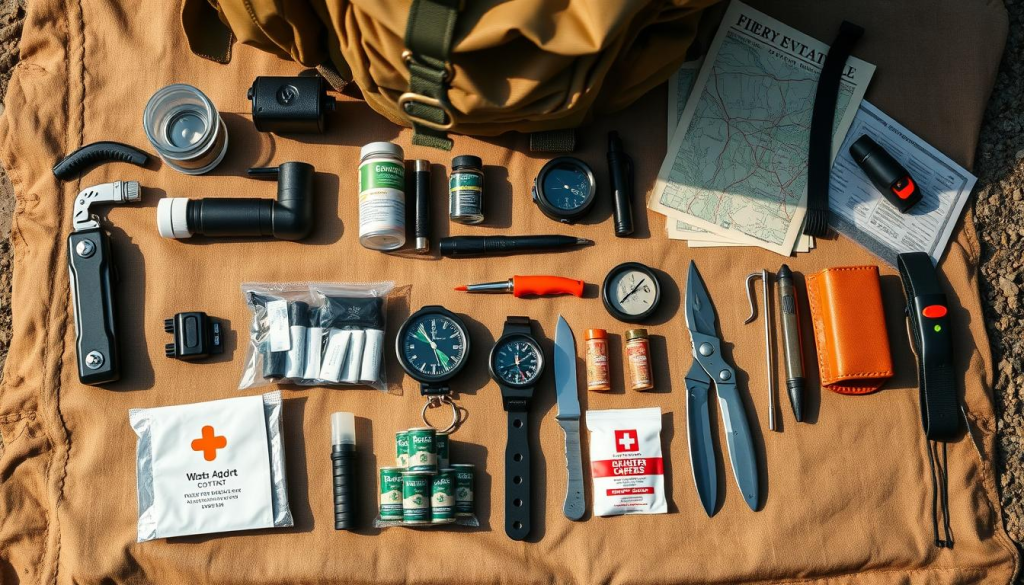
Multi-Tool or Knife
A multi-tool or knife is an indispensable item in any bug out bag. It can be used for a variety of tasks, from cutting through debris to opening cans.
Shelter and Sleeping Gear
Adequate shelter and sleeping gear are critical for survival. This includes a tent, sleeping bag, and sleeping pad.
Fire Starting Supplies
Fire starting supplies, such as matches, lighters, or firestarters, are essential for warmth, cooking, and signaling.
| Item | Description | Importance Level |
|---|---|---|
| Backpack | Comfortable, durable bag to carry gear | High |
| Multi-tool or Knife | Versatile tool for various tasks | High |
| Tent and Sleeping Bag | Shelter and warmth for survival | High |
| Fire Starting Supplies | Means to start a fire for warmth and cooking | High |
Food and Water Supplies
In the event of a disaster, the importance of having adequate food and water supplies cannot be overstated. These essentials are crucial for survival and should be carefully considered when packing your bug out bag.
Water Filtration Systems
A water filtration system is a vital component of your bug out bag, enabling you to source water from rivers, lakes, or ponds and make it safe to drink. Options include portable filters, purification tablets, and UV light purifiers.
- Portable filters like the LifeStraw or Sawyer Mini are effective against bacteria, viruses, and parasites.
- Purification tablets offer a lightweight and compact solution for water treatment.
- UV light purifiers, such as the SteriPen, use ultraviolet light to kill pathogens.
Non-Perishable Food Items
Stocking your bug out bag with non-perishable food items ensures you have a reliable source of nutrition. Consider high-calorie foods that are easy to prepare and have a long shelf life.
- Energy bars, such as Clif Bars or PowerBars, provide a compact source of energy.
- Canned goods like beans, tuna, or chicken are nutritious and can be used in a variety of dishes.
- Dried fruits and nuts are healthy snack options that can be easily stored.
Cooking Gear Essentials
Cooking gear is necessary for preparing meals from your non-perishable food items. A portable stove or camping stove, along with a cooking pot and utensils, can significantly enhance your ability to prepare hot meals.
- A portable stove like the MSR PocketRocket is lightweight and efficient.
- Cooking pots and pans made from durable, lightweight materials like titanium or aluminum are ideal.
- Don’t forget utensils such as a spork or multi-tool for meal preparation.
By including these food and water supplies in your bug out bag, you’ll be better prepared to face emergencies and disasters.
Clothing and Personal Items
Clothing and personal items are crucial components of a bug out bag, providing protection and hygiene during a crisis. The right clothing can help you adapt to various environmental conditions, while personal items maintain your dignity and health.
Weather-Appropriate Clothing
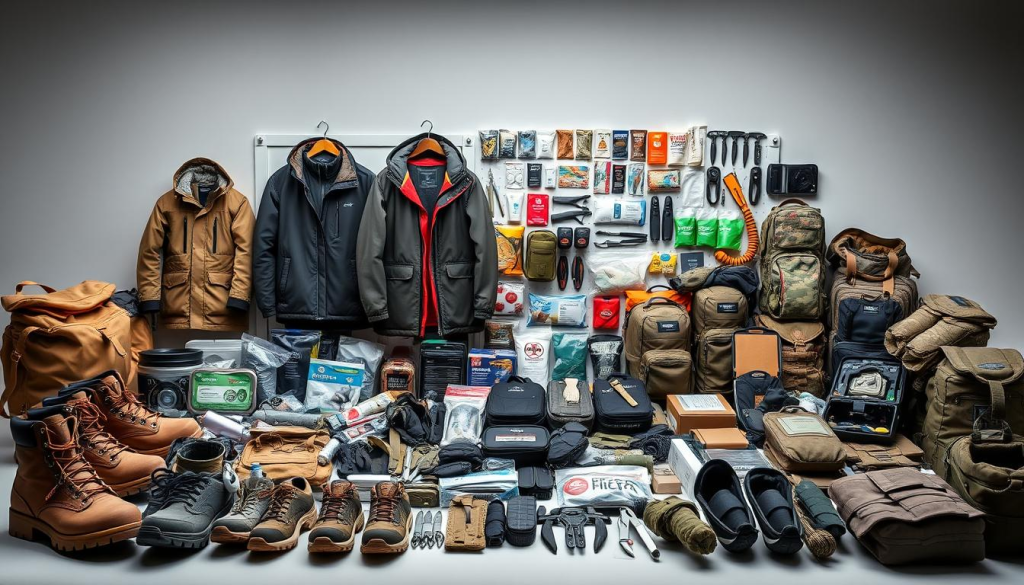
Packing clothing that is suitable for different weather conditions is vital. This includes rain gear like waterproof jackets and pants, as well as warm layers such as fleeces and insulated jackets. Consider the climate of your area and the potential weather conditions you might face. Moisture-wicking fabrics can help keep you dry and comfortable.
Footwear Considerations
Sturdy, comfortable footwear is essential for mobility and protection. Boots or hiking shoes with good ankle support and waterproofing are ideal. Consider the terrain you might encounter and pack accordingly. Extra socks and insoles can also be useful additions.
Personal Hygiene Supplies
Maintaining personal hygiene is important for health and morale. Include toilet paper, hand sanitizer, and biodegradable soap in your bug out bag. These items can help prevent the spread of illness and keep you clean. Don’t forget any personal hygiene items that are essential to you, such as feminine hygiene products or moist towelettes.
By carefully selecting clothing and personal items, you can enhance your comfort and survival chances during an emergency. Regularly review and update these items to ensure they remain relevant and useful.
First Aid and Medical Supplies
A well-stocked first aid kit is crucial for treating injuries and illnesses during a disaster. In an emergency situation, having the right medical supplies can make a significant difference in the outcome. Your bug out bag should include a comprehensive first aid kit that covers a range of potential medical needs.
Basic First Aid Kit Components
A basic first aid kit should include items such as bandages, antiseptic wipes, and pain relievers. Some essential components include:
- Bandages and band-aids in various sizes
- Antiseptic wipes and ointments
- Pain relievers such as acetaminophen or ibuprofen
- Antihistamines for allergic reactions
- Aspirin for heart attack or stroke symptoms
It’s also important to include any personal medical items, such as medications or equipment, in your first aid kit.
Medications and Prescriptions
If you or a family member has a medical condition, it’s essential to include any necessary medications or prescriptions in your bug out bag. This may include:
- Insulin or other diabetes medications
- Epinephrine auto-injectors for severe allergic reactions
- Medications for chronic conditions such as heart disease or asthma
Be sure to check the expiration dates of any medications and replace them as needed.
Emergency Medical Devices
In addition to basic first aid supplies, consider including emergency medical devices in your bug out bag. These may include:
- A defibrillator or automated external defibrillator (AED)
- A tourniquet or other bleeding control devices
- A splint or other immobilization devices
By including these first aid and medical supplies in your bug out bag, you’ll be better prepared to respond to emergencies and keep yourself and your loved ones safe.
Navigation and Communication Tools
Surviving a disaster requires more than just basic supplies; it demands effective navigation and communication. In the face of an emergency, being able to navigate through unfamiliar terrain and communicate with others can be the difference between safety and peril.
To ensure you’re prepared, it’s essential to include the right navigation and communication tools in your bug out essentials checklist. Here are some of the most critical items to consider:
Maps and Compass
A map and compass are fundamental navigation tools. Even with GPS technology, a map and compass can be relied upon when electronic devices fail. It’s crucial to choose a compass that is durable and has a built-in sighting mirror for precise direction-of-travel readings.
When selecting maps, opt for topographic maps that detail terrain features, roads, and potential hazards. These maps can help you plan your route and avoid dangerous areas.
Emergency Radio
An emergency radio is a vital tool for staying informed about the situation on the ground. Look for a radio that is battery-powered or hand-crank, ensuring it remains functional even without access to electricity.
Some radios come equipped with additional features such as flashlights, USB charging ports, and NOAA Weather Radio certification. These features can enhance the radio’s utility in a survival situation, making it a must-have bug out item.
Signaling Devices
Signaling devices are critical for alerting potential rescuers to your location. A whistle is a simple yet effective signaling device that can be heard over long distances. The international distress signal is three short blasts on a whistle, followed by a minute of silence, and then three more blasts.
Other signaling devices include mirrors and flares. A mirror can be used to reflect sunlight towards any aircraft or rescuers during the day, while flares can signal your location at night or in low visibility conditions.
| Tool | Purpose | Key Features |
|---|---|---|
| Map and Compass | Navigation | Durable compass, topographic maps |
| Emergency Radio | Staying Informed | Battery-powered or hand-crank, additional features like flashlight or USB charging |
| Signaling Devices (Whistle, Mirror, Flares) | Signaling for Help | Easy to use, visible or audible over long distances |
By including these navigation and communication tools in your bug out bag, you’ll significantly enhance your chances of survival and rescue in the event of a disaster.
Lighting and Power Solutions
Lighting and power solutions are vital components of any bug out bag inventory, ensuring you stay powered and visible during emergencies. When disaster strikes, having reliable light sources can be the difference between safety and danger.
Flashlights and Headlamps
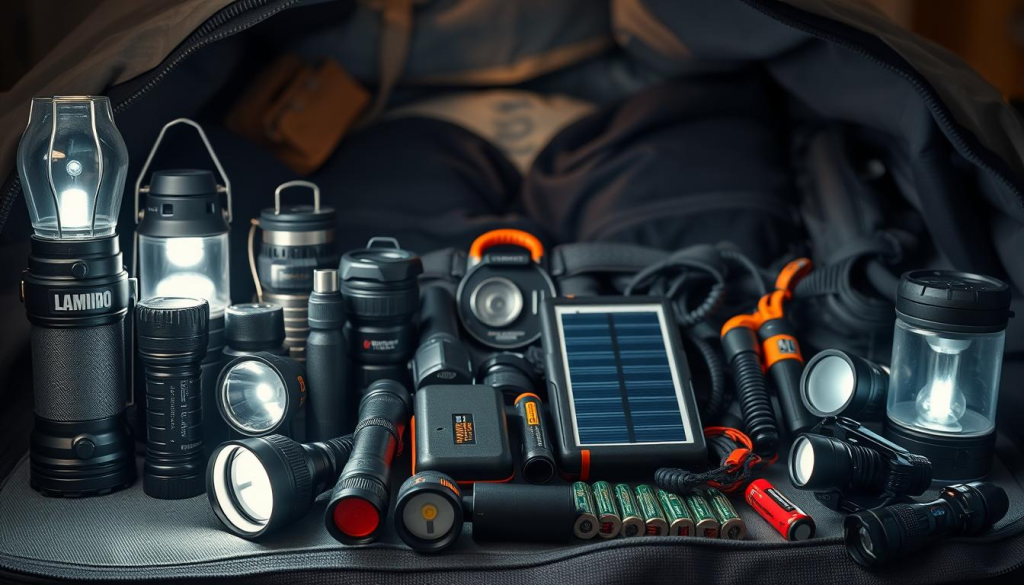
A good quality flashlight or headlamp is indispensable for navigating through dark environments. Look for models that are waterproof and have adjustable brightness settings. Headlamps, in particular, offer the advantage of hands-free operation, which can be crucial during emergencies.
Batteries and Solar Chargers
To keep your lighting and communication devices powered, it’s essential to include extra batteries and a solar charger in your bug out bag. Solar chargers can harness sunlight to charge your devices, providing a sustainable power solution. Make sure to choose batteries that are compatible with your flashlight or headlamp.
Glow Sticks and Candles
In addition to flashlights and headlamps, glow sticks and candles can provide supplementary lighting. Glow sticks are particularly useful as they don’t require batteries and can last for several hours. Candles, on the other hand, can provide both light and heat, making them a valuable addition to your bug out bag.
By incorporating these necessary bug out supplies into your inventory, you’ll be better equipped to handle emergencies with confidence and safety.
Tools for Defense and Safety
Defense and safety tools are vital components of a comprehensive bug out bag, providing you with the means to protect yourself when it matters most. In an emergency, having the right equipment can significantly enhance your ability to stay safe.
Self-Defense Items
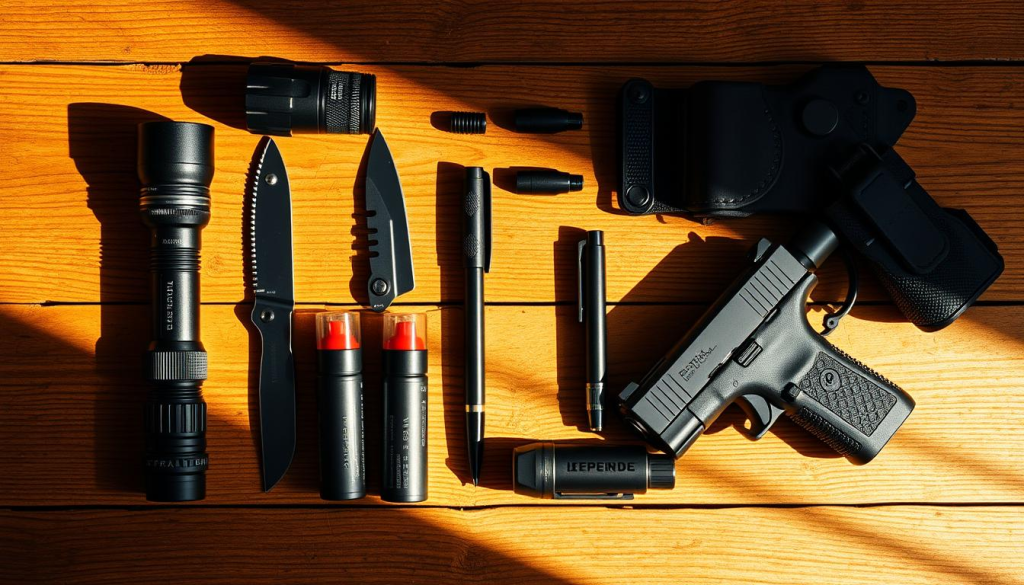
Self-defense items are a critical aspect of your bug out bag. These can include a firearm, baton, or other personal defense tools. It’s essential to choose an item that you are comfortable using and have received proper training for.
Pepper Spray or Personal Alarm
Pepper spray or a personal alarm can serve as an effective deterrent against potential threats. Pepper spray can incapacitate an attacker, while a personal alarm can draw attention to your situation, potentially scaring off the aggressor.
Safety Whistle
A safety whistle is another simple yet effective tool for signaling for help. It’s lightweight, easy to use, and can be heard over long distances, making it an excellent addition to your bug out bag.
When assembling your bug out bag, it’s crucial to consider the legal implications of carrying self-defense items. Familiarize yourself with local laws regarding pepper spray, firearms, and other defense tools to ensure you’re in compliance.
By including these essential items for your bug out bag, you can enhance your safety and the safety of those with you during an emergency. Remember, the key to effective preparedness is having the right tools and knowing how to use them.
Bug Out Bag Additions for Families
In emergency preparedness, families should prioritize customizing their bug out bags to meet the unique needs of each member. A well-stocked bug out bag can make a significant difference in the face of a disaster or emergency.
Child-Specific Items
When preparing a bug out bag for families, it’s essential to include child-specific items. These may encompass diapers, formula, baby food, and any necessary medications. “Children have different needs than adults,” as noted by emergency preparedness experts, “and their needs must be prioritized.” Comfort items like a favorite toy or blanket can also be crucial for children’s emotional well-being during stressful situations.
- Diapers and wipes
- Baby formula and food
- Child-friendly medications
- Comfort items like favorite toys or blankets
Pet Supplies
Pet owners should not forget to include pet supplies in their bug out bags. Essential items include pet food, water, bowls, and any necessary medication. As the American Society for the Prevention of Cruelty to Animals (ASPCA) suggests, “having a plan for your pets is crucial.” Pet identification and vaccination records should also be included.
- Pet food and water
- Bowls and a portable water container
- Pet medications and vaccination records
- A pet carrier or crate
Family Communication Plans
Having a family communication plan is vital in emergency situations. This plan should include a designated meeting point and a contact person outside the immediate area. “A well-coordinated plan can help reduce panic and ensure everyone’s safety,” according to emergency management officials. Families should also consider creating a communication card with important contact information.
- Designate a meeting point
- Choose a contact person outside the immediate area
- Create a communication card with important contact information
By incorporating these additions into their bug out bags, families can enhance their preparedness and resilience in the face of emergencies.
Tips for Packing Your Bug Out Bag
When it comes to bug out bags, packing smart is just as important as having the right gear. A well-organized bug out bag ensures that you can access necessary bug out supplies quickly and efficiently during an emergency.
Effective packing involves several key strategies. First, it’s essential to consider the weight and bulk of your gear. A bug out bag that is too heavy can be a hindrance, while one that is too light may not provide enough bug out bag inventory to sustain you.
Weight Distribution Techniques
Distributing the weight of your bug out bag evenly is crucial to prevent fatigue during travel. Consider using a backpack with multiple compartments to spread out the weight. Place heavier items, such as water or medical supplies, closer to your back to maintain balance.
Using modular design principles can also help. This involves packing your gear into smaller, easily accessible pouches or bags, which can be rearranged as needed. This not only aids in weight distribution but also in organizing your gear.
Organizing Your Gear
Organizing your bug out bag is about more than just throwing in supplies. It’s about creating a system that allows you to find what you need quickly. Use pouches, compartments, and dividers to categorize your gear. For example, keep all your first aid supplies in one pouch and your food supplies in another.
Consider the concept of “bug out buddies,” where you and a partner or family member prepare bug out bags together, ensuring that you both have what you need and can support each other in an emergency.
| Category | Items to Include | Tips for Packing |
|---|---|---|
| First Aid | Bandages, antiseptic wipes, pain relievers | Keep in an easily accessible pouch |
| Food and Water | Non-perishable food, water filter or purification tablets | Pack in airtight containers to save space |
| Shelter and Warmth | Tent, sleeping bag, fire starter | Consider the weight and bulk when packing |
Regular Reviews and Updates
Your bug out bag is not a static entity; it needs to be reviewed and updated regularly. Check expiration dates of food and medical supplies, update maps and communication devices, and ensure that all gear is in good working condition.
Regular reviews also give you the opportunity to adjust your bug out bag inventory based on changing circumstances, such as seasonal weather changes or new family needs.
By following these tips for packing your bug out bag, you can ensure that you are prepared for any emergency, with a bag that is both efficient and effective.
Final Thoughts on Your Bug Out Bag List
Creating a comprehensive bug out bag is crucial for emergency preparedness. By including the right items, you can ensure your safety and the safety of your loved ones during a crisis.
Tailoring Your Bug Out Bag
Personalization is key to an effective bug out essentials checklist. Consider your specific needs, such as medical conditions or family requirements, when packing your emergency survival gear list.
Staying Informed and Prepared
Continuous learning and preparedness are vital in staying ahead of potential threats. Stay informed about weather conditions, natural disasters, and other emergencies that may affect your area.
Building a Resilient Community
Encouraging community preparedness can help build a more resilient community. Share your knowledge with others, and encourage them to create their own bug out bags with a comprehensive emergency survival gear list.
By following these tips and regularly reviewing your bug out bag, you can ensure that you are prepared for any emergency situation.