
When disaster strikes, having the right clothing in your emergency kit can make a significant difference. Clothing is not just about comfort; it’s about survival and maintaining dignity in the face of adversity. A well-prepared Bug Out Bag includes clothing that provides privacy, modesty, sanitation, comfort, warmth, and confidence.
The primary purpose of a Bug Out Bag is to sustain a person for 72 hours during an emergency evacuation. Therefore, packing the right emergency clothing is crucial. This includes considering the climate, potential hazards, and the activities you may need to perform.
Key Takeaways
- Pack clothing that is versatile and suitable for various weather conditions.
- Consider the importance of layers for temperature control.
- Choose clothing that is durable and easy to maintain.
- Don’t forget accessories like hats and gloves.
- Ensure your clothing choices are appropriate for the potential hazards you may face.
Understanding the Importance of Bug Out Bag Clothes
The importance of Bug Out Bag clothes cannot be overstated, as they provide protection and comfort during crises. A Bug Out Bag is a portable collection of essential items that an individual can quickly grab in case of an emergency or disaster, enabling them to survive for a period until help arrives or until they can reach a safe location.
What is a Bug Out Bag?
A Bug Out Bag is meant to be deployed quickly and should contain essentials like clothing, water, medications, and food. The concept is to have everything needed to survive for at least 72 hours packed into a bag that is easy to carry. Emergency clothing is a critical component of this bag, as it helps protect against environmental elements.
Why Clothing is Essential in Emergencies
Clothing is not just about personal style; it’s about protection and comfort during emergencies. The right clothing can help regulate body temperature, protect against the elements, and provide comfort during stressful situations. For instance, moisture-wicking fabrics can keep you dry, while insulating layers can keep you warm.
| Clothing Type | Purpose | Benefits |
|---|---|---|
| Base Layers | Regulate body temperature | Moisture-wicking, breathable |
| Insulating Layers | Retain warmth | Lightweight, warm |
| Outer Layers | Protect against elements | Water-resistant, windproof |
Understanding the role of clothing in a Bug Out Bag is vital for emergency preparedness. By choosing the right clothing, individuals can enhance their chances of survival and comfort during emergencies.
Essential Clothing Types for Your Bug Out Bag
Building a bug out wardrobe that is both practical and durable is essential for tackling unexpected situations. When it comes to preparing your bug out bag, the types of clothing you include can make a significant difference in your ability to adapt to various conditions.
Base Layers
Base layers are crucial for temperature regulation and moisture management. They should be made from materials that wick away sweat and dry quickly. Consider including both short-sleeved and long-sleeved tops, as well as leggings or long underwear for colder conditions.
Key Features of Base Layers:
- Moisture-wicking fabric
- Breathability
- Quick-drying properties
Insulating Layers
Insulating layers provide warmth and are vital for cold weather conditions. Fleece jackets, wool sweaters, or synthetic insulated jackets are good options. These layers help to retain body heat and can be worn on their own or layered under outerwear.
As noted by outdoor experts, “Layering is key to maintaining comfort in varying temperatures.”
Outer Layers
Outer layers protect against wind, rain, and other environmental elements. A waterproof and breathable jacket, such as one made with Gore-Tex or a similar technology, is indispensable. Additionally, consider including durable pants that can withstand rough terrain and harsh weather.
| Outer Layer Feature | Benefit |
|---|---|
| Waterproof material | Protects against rain and moisture |
| Breathability | Prevents overheating and discomfort |
| Durable construction | Withstands rough handling and harsh conditions |
Footwear
Footwear is a critical component of your bug out bag clothing. Sturdy, waterproof boots or shoes that are suitable for walking long distances are essential. Consider the terrain you may encounter and choose footwear that provides adequate support and protection.
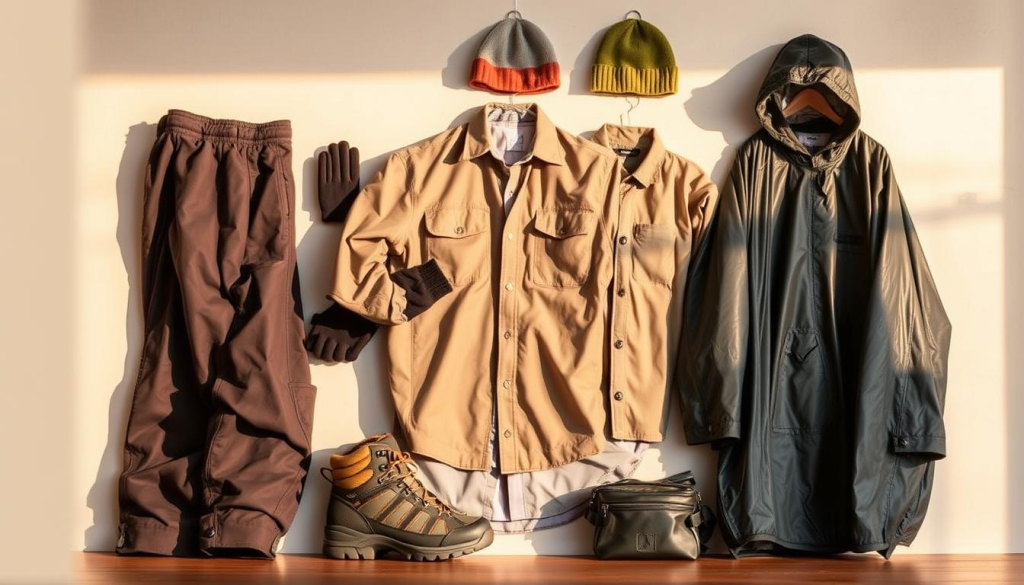
By including a mix of base layers, insulating layers, outer layers, and appropriate footwear, you can ensure that your bug out bag is equipped to handle a variety of situations, keeping you safe and comfortable.
Choosing the Right Fabrics for Bug Out Clothing
Selecting the appropriate fabric for your bug out bag clothing is crucial for comfort and survival. The right fabric can help manage sweat, withstand rough conditions, and prevent overheating. When preparing your disaster clothing essentials, it’s essential to consider the properties of different fabrics.
Moisture-Wicking Materials
Moisture-wicking materials are a must-have in survival clothing. These fabrics draw sweat away from the skin, allowing it to evaporate quickly, thus keeping you dry and comfortable. This is particularly important during intense physical activities or in hot weather conditions.
Some popular moisture-wicking materials include synthetic fabrics like polyester and nylon, as well as some natural fibers like wool. When choosing moisture-wicking clothing, look for fabrics that are breathable and have a moisture-wicking treatment applied.
Durability and Weather Resistance
The durability of your tactical apparel is vital, as it needs to withstand various environmental conditions. Fabrics that are resistant to tears and abrasions are essential. Additionally, weather-resistant fabrics can protect you from the elements, such as rain or wind.
| Fabric Type | Durability | Weather Resistance |
|---|---|---|
| Nylon | High | Excellent |
| Polyester | Medium to High | Good |
| Wool | Medium | Good |
Importance of Breathability
Breathability is another critical factor in bug out clothing. Fabrics that allow for airflow help regulate body temperature, preventing overheating during strenuous activities. This is particularly important in warm or temperate climates.
Look for fabrics with a mesh paneling or those that are designed to be breathable. Some fabrics are treated with technologies that enhance breathability while maintaining moisture-wicking properties.
Footwear Essentials for Your Bug Out Bag
When preparing a Bug Out Bag, selecting the right footwear is crucial for survival and comfort. The right shoes can protect your feet from harsh environments and provide the necessary support during extended periods of walking or running.
Sturdy Hiking Boots are a fundamental component of any Bug Out Bag. They offer the support and protection needed for rugged terrain, making them ideal for navigating challenging landscapes. Look for boots that are waterproof, have good ankle support, and are made from durable materials.
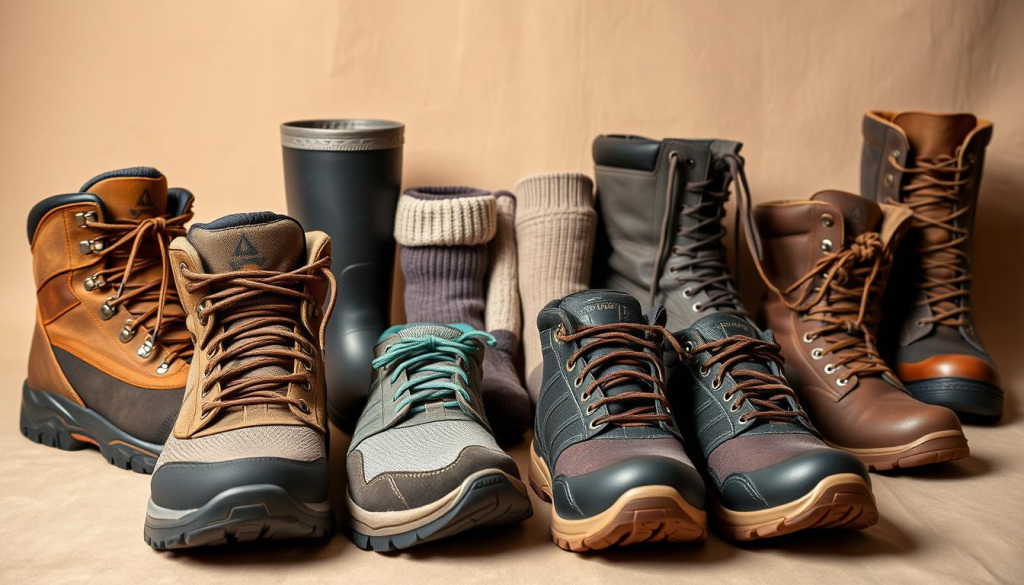
Sturdy Hiking Boots
Hiking boots are designed to withstand harsh conditions, providing both protection and stability. They are particularly useful in rocky, uneven, or slippery terrains where ankle support is crucial.
Trail Running Shoes
For those who prefer a lighter alternative, Trail Running Shoes can be a viable option. They offer flexibility and comfort, making them suitable for faster-paced movements over varied terrain. While they may not provide the same level of ankle support as hiking boots, they are a good choice for those who need to move quickly.
Extra Socks and Insoles
In addition to the right shoes, including extra socks and insoles in your Bug Out Bag can significantly enhance foot comfort. Moisture-wicking socks can help keep feet dry, reducing the risk of blisters. Insoles can provide additional cushioning and support, making long walks more manageable.
By carefully selecting the right footwear and accessories, you can ensure that your Bug Out Bag is equipped to handle a variety of emergency situations, keeping your feet protected and comfortable.
Seasonal Considerations for Bug Out Clothing
When preparing your Bug Out Bag, it’s crucial to consider the seasonal clothing requirements to ensure you’re ready for any emergency. The season plays a significant role in determining the type of clothing that should be included in your Bug Out Bag.
The right clothing can make a significant difference in your comfort and survival during emergency situations. Different seasons demand different types of clothing to cope with varying weather conditions.
Winter Clothing Must-Haves
In winter, the key is to maintain body heat. Insulating layers are crucial. Include thermal base layers, insulating mid-layers like fleece jackets, and a waterproof outer layer to protect against snow and wind.
- Thermal tops and leggings
- Fleece jackets or pullovers
- Waterproof and windproof outerwear
- Warm hats and gloves
Summer Clothing Essentials
For summer, the focus shifts to breathability and sun protection. Lightweight, moisture-wicking clothing can help keep you cool and dry. Don’t forget a hat and sunglasses for sun protection.
- Lightweight, moisture-wicking shirts and shorts
- Breathable socks
- Sun hat or cap
- Sunglasses with UV protection
Rainy Season Gear
During the rainy season, waterproof and water-resistant clothing is essential. This includes waterproof jackets, pants, and gear bags to keep your equipment dry.
| Rainy Season Essentials | Description |
|---|---|
| Waterproof Jacket | Prevents rain from penetrating to your clothing |
| Water-resistant Pants | Keeps your lower half dry in wet conditions |
| Waterproof Bags | Protects your Bug Out Bag contents from rain |
By adapting your Bug Out Bag clothing to the season, you can ensure you’re better prepared for emergencies.
Accessories to Enhance Your Clothing Setup
Enhancing your bug out bag clothing with the right accessories is crucial for emergency preparedness. Accessories can significantly improve the functionality of your clothing, providing additional warmth, protection, and versatility in various survival situations.
Hats and Gloves
Hats and gloves are essential for preventing heat loss and protecting your extremities in cold conditions. Choose tactical apparel that is both durable and weather-resistant. Look for hats that can shield your face and neck from wind and snow, and gloves that offer a good balance between insulation and dexterity.
Buffs and Scarves
Buffs and scarves can provide additional warmth and protection for your neck and face. They can also be used to signal for help or as a makeshift bandage in emergencies. Opt for materials that are breathable, moisture-wicking, and quick-drying to keep you comfortable.
Gaiters for Muddy Terrain
Gaiters are invaluable for keeping your feet dry and clean when navigating through muddy or wet terrain. They can be used with your hiking boots to prevent water and debris from entering. When selecting gaiters, consider the material’s durability and waterproofing capabilities.
Incorporating these accessories into your bug out bag can enhance your overall emergency preparedness gear. By choosing the right bug out accessories, you can ensure you’re better equipped to handle various survival scenarios.
Organizing Your Bug Out Bag Clothing
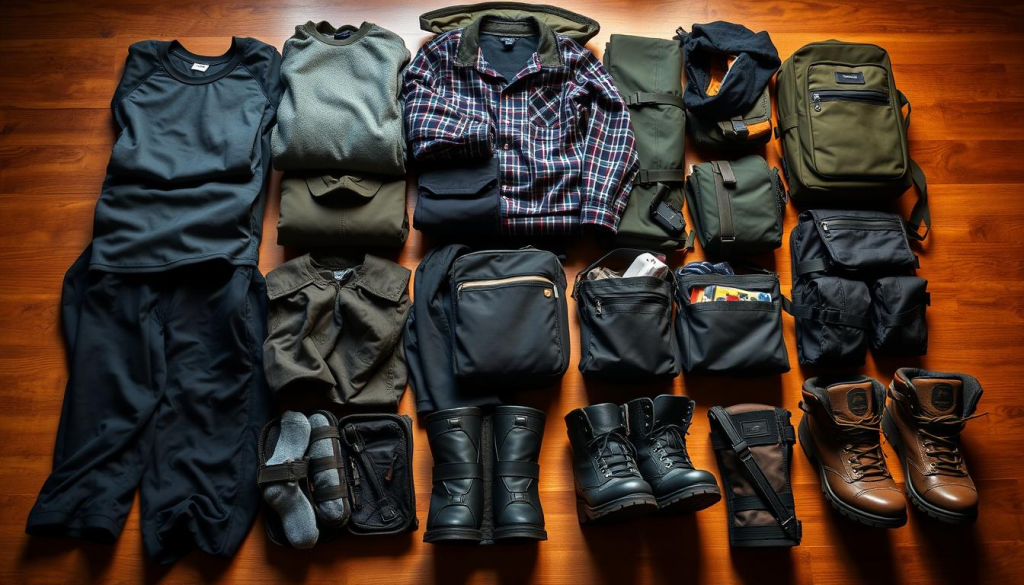
Organizing your bug out bag clothes effectively is crucial for quick access and adaptability during emergencies. A well-organized clothing system allows you to respond to changing conditions, ensuring you stay safe and comfortable.
Packing Techniques
To maximize space and efficiency, consider using specific packing techniques for your bug out bag clothes. Rolling your clothes is a popular method that not only saves space but also reduces wrinkles. You can also use packing cubes or compression bags to keep your clothing organized and compress your gear to make the most of your bag’s space.
- Roll clothing to save space and reduce wrinkles.
- Use packing cubes or compression bags for organization.
- Place frequently used items in easy-to-reach locations.
Recommendations for Layering
Layering is a critical aspect of dressing for emergencies, as it allows you to adjust your clothing to suit changing weather conditions. Start with a moisture-wicking base layer, add an insulating mid-layer, and finish with a waterproof outer layer. This system provides flexibility and helps maintain body heat.
- Base layer: Choose moisture-wicking fabrics.
- Mid-layer: Select insulating materials like fleece or down.
- Outer layer: Opt for waterproof and wind-resistant materials.
Ensuring Quick Access to Essential Items
To ensure quick access to essential clothing items, store them in designated, easily accessible pockets or compartments. Consider the frequency of use and the urgency of each item when deciding where to place it in your bug out bag.
- Store essential items like socks and underwear in easy-to-reach pockets.
- Keep your layering system organized by type.
- Regularly check and update your clothing to ensure it remains suitable for your needs.
Maintenance and Care of Bug Out Bag Clothes
To keep your survival clothing in top condition, regular maintenance is not just recommended, it’s essential. The effectiveness of your Bug Out Bag clothes during emergencies largely depends on how well you care for them.
Cleaning and Storing Your Gear
Cleaning your Bug Out Bag clothing regularly is vital. Use mild detergents that are designed for the type of fabric your clothes are made of. Avoid harsh chemicals that can damage the material or compromise its water-resistant coating. After washing, ensure your clothes are completely dry before storing them in a well-ventilated area to prevent mold and mildew.
Proper storage is also crucial. Fold your clothes neatly and store them in airtight bags or containers to protect them from dust and moisture. This not only keeps your clothes clean but also helps in maintaining their functionality.
Repairing Damaged Clothing
Even with proper care, clothing can get damaged. It’s essential to repair your gear as soon as possible to prevent further deterioration. Carry a small repair kit with you that includes needles, threads, and fabric glue. For more significant repairs, consider using a portable sewing kit or taking your clothes to a professional.
Checking for Wear and Tear
Regularly inspecting your Bug Out Bag clothing for signs of wear and tear is crucial. Check for frayed seams, torn fabric, and worn-out areas. Replace any item that shows significant wear to ensure you remain prepared for emergencies.
By following these maintenance tips, you can extend the life of your Bug Out Bag clothing and ensure it remains in good condition when you need it most.
Final Tips for Selecting Bug Out Bag Clothes
As you assemble your Bug Out Bag, it’s crucial to tailor your clothing choices to your specific needs and the potential emergencies you might face. Personalizing your bug out wardrobe ensures that you’re prepared for the unique challenges of your environment.
Tailoring Your Wardrobe
Consider factors such as climate, terrain, and personal comfort when selecting your emergency preparedness gear. This will help you create a Bug Out Bag that’s equipped to handle any situation.
Putting Your Gear to the Test
Testing your gear before an emergency is vital. This ensures that your clothing is functional, comfortable, and suitable for the demands of a crisis situation.
Staying Up-to-Date
Regularly updating your Bug Out Bag clothing is also essential. This involves checking for wear and tear, ensuring that your gear remains relevant and effective. By following these final tips, you can trust that your Bug Out Bag is ready to help you navigate any emergency.