
In emergency situations, having the right amount of cash on hand can be a lifeline. When digital payment systems fail, cash becomes the primary means of exchange.
A bug out bag is designed to help individuals survive and thrive during emergencies. Including an adequate amount of cash is crucial for emergency preparedness.
Key Takeaways
- Cash is essential for emergency preparedness.
- A bug out bag should include an adequate amount of cash.
- Digital payment systems can fail during emergencies.
- Having cash on hand can be a lifeline.
- Emergency preparedness requires careful planning.
Understanding the Purpose of a Bug Out Bag
A bug out bag is a crucial element in emergency preparedness, serving as a portable kit that contains essential items for survival. It’s designed to help individuals quickly respond to and survive during the initial stages of a disaster or emergency situation.
The concept of a bug out bag is centered around being prepared for the unexpected. Whether it’s a natural disaster, power outage, or other emergencies, having a well-stocked bug out bag can make a significant difference in ensuring one’s safety and survival.
What is a Bug Out Bag?
A bug out bag is defined as a pre-packed disaster survival kit that includes vital supplies such as food, water, first aid materials, and communication tools. It’s intended to be easily carried and accessed in case of an emergency, providing the necessary items to sustain life for at least the first few days.
The contents of a bug out bag can vary based on individual needs, the type of potential emergencies, and personal preferences. However, the core idea remains the same: to have a ready-to-go bag that contains everything needed to survive and potentially evacuate the area safely.
Importance of Being Prepared
Being prepared is key to surviving and recovering from emergencies. A bug out bag is a fundamental component of this preparedness, ensuring that one has the necessary tools and supplies to respond effectively.
The importance of being prepared cannot be overstated. Emergencies can arise at any moment, and having a plan and the right equipment can significantly reduce risk. Some key benefits of having a bug out bag include:
- Quick response to emergencies
- Enhanced survival chances due to having essential supplies
- Reduced reliance on external aid during the initial stages of a disaster
- Increased flexibility and ability to adapt to changing situations
Incorporating a bug out bag into one’s emergency preparedness plan is a proactive step towards ensuring safety and survival. It’s about being ready for the unexpected and having the means to respond effectively.
The Role of Cash in Emergency Situations
Cash plays a vital role in bug out bags, serving as a financial reserve during crises. In emergency situations, the availability of cash can be a determining factor in one’s ability to acquire essential goods and services.
The importance of cash lies in its universality and the fact that it doesn’t rely on electronic systems, which can fail during disasters. As noted by financial experts, “In times of crisis, cash is king.” This mantra highlights the significance of having a readily available financial resource that can be used without the need for electronic verification or connectivity.
“In times of crisis, cash is king.”
Why Carry Cash?
Carrying cash in a bug out bag is crucial for several reasons. Firstly, during emergencies, ATMs and credit card machines may not be functioning due to power outages or network failures. Secondly, some businesses might not accept cards, especially in situations where their card processing systems are down.
Having cash on hand allows individuals to purchase necessary items from vendors or stores that may not have electronic payment facilities. This is particularly important in scenarios where bartering might not be feasible or practical.
Benefits of Cash in Emergency Situations:
- Universally accepted
- Does not rely on electronic systems
- Provides immediate purchasing power
Risks of Relying Solely on Cards
Relying solely on cards for financial transactions during emergencies poses significant risks. The primary risk is the potential failure of electronic payment systems due to power outages, network issues, or other technical problems.
| Risk Factor | Description |
|---|---|
| Power Outages | Prevents the use of electronic payment systems |
| Network Failures | Disrupts card transaction processing |
| Technical Issues | Can render card machines unusable |
To mitigate these risks, it’s advisable to include a reasonable amount of cash in your bug out bag. The exact amount can vary based on individual circumstances, such as the size of your family and the nature of the emergency.

In conclusion, cash is a vital component of a bug out bag, serving as a reliable financial reserve during emergency situations. By understanding the importance of cash and the risks associated with relying solely on cards, individuals can better prepare themselves for unforeseen circumstances.
How Much Cash to Include in Your Bug Out Bag
One of the key decisions in preparing a bug out bag is deciding on the cash amount. The right amount of cash can vary significantly based on several factors, including personal circumstances, location, and the nature of potential emergencies.
Recommended Cash Amounts
Experts generally recommend having between $500 to $1000 in small bills in a bug out bag. This amount is considered sufficient for covering initial expenses during most emergencies.
- Small bills are recommended because they are more versatile and easier to use in various situations.
- Having unmarked and untraceable cash is crucial to maintain privacy and avoid potential tracking.
Factors Influencing Cash Amount
Several factors can influence the amount of cash you should include in your bug out bag:
- Family size: Larger families require more cash to cater to everyone’s needs.
- Location: The cost of living varies significantly across different regions, impacting the amount of cash needed.
- Type of emergency: Different emergencies may require different levels of financial preparedness.
By considering these factors and maintaining a reasonable amount of cash, you can enhance your preparedness for unexpected situations.
Denominations to Consider
Deciding on the right denominations for your bug out bag cash is a critical aspect of emergency preparedness. The mix of denominations can significantly impact your ability to purchase necessary items during a crisis.
Small Denominations vs. Large Denominations
When it comes to cash in a bug out bag, having a mix of small and large denominations is advisable. Small denominations are essential for buying low-cost items or when exact change is needed. On the other hand, large denominations can be useful for more significant purchases or when dealing with vendors who may not be able to provide change.
Sources suggest that using small denominations can make it easier to pay for small items, which is often the case in emergency situations where local economies may be disrupted.
Keeping Change Handy
Keeping a supply of small bills and coins handy is crucial. This ensures that you have change available for transactions where larger bills might not be accepted or when exact change is required.
A practical approach is to allocate your bug out bag cash into different denominations. Here’s a simple guideline:
| Denomination | Recommended Amount | Purpose |
|---|---|---|
| $1 bills | 10-20 | For small purchases or change |
| $5 bills | 5-10 | For medium-sized transactions |
| $10 bills | 2-5 | For larger purchases |
| $20 bills | 1-3 | For significant transactions or backup |
This allocation ensures that you are prepared for various scenarios, from buying small essentials to making larger purchases, thereby making your bug out bag cash supplies more versatile and effective.
Alternatives to Cash in a Bug Out Bag
Beyond traditional cash, alternatives like digital currency and bartering items can play a crucial role in a bug out bag. These alternatives can provide additional security and flexibility in emergency situations.
Digital Currency
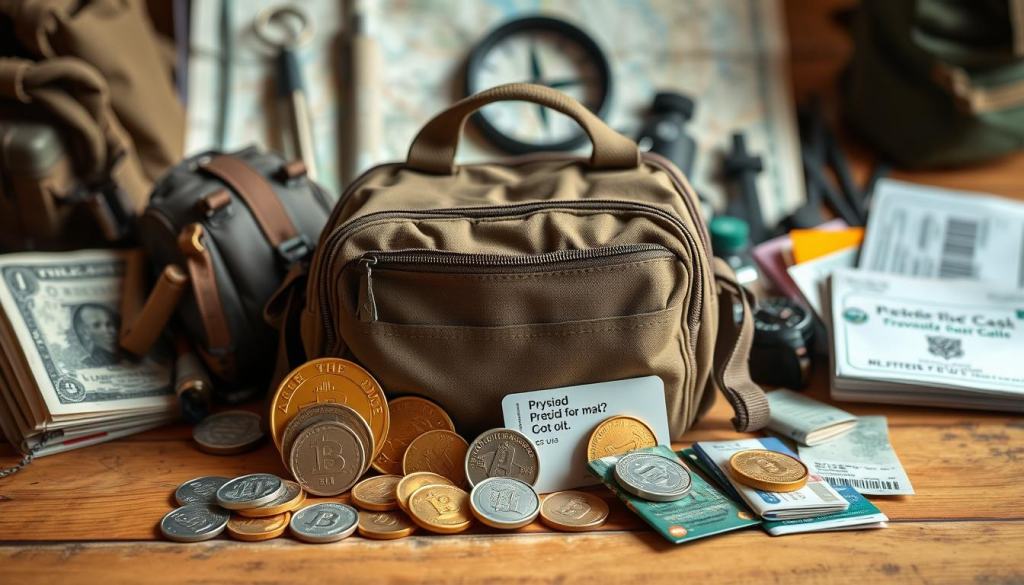
Digital currency, such as cryptocurrency, offers a modern alternative to traditional cash. It can be stored digitally and accessed using a smartphone or other devices, potentially providing a convenient and secure way to store value.
However, there are limitations to consider. Digital currency can be volatile, and its adoption varies widely. In a crisis, it’s uncertain whether digital currency will be accepted or accessible.
Key considerations for including digital currency in your bug out bag:
- Ensure you have a reliable means of accessing your digital funds.
- Understand the risks associated with volatility and potential loss of access.
- Consider the devices needed to access your digital currency and include them in your bug out bag.
Bartering Items
Bartering items are another alternative to cash that can be included in a bug out bag. These are goods or services that can be exchanged for other necessities during an emergency.
Effective bartering items typically have the following characteristics:
- They are valuable and in demand.
- They are durable and can withstand the test of time.
- They are easily divisible or portable.
Examples of useful bartering items include non-perishable food, water purification tablets, first aid supplies, and tools. Including a variety of these items can enhance your ability to barter effectively.
It’s also important to consider the potential for bartering items to be used or consumed over time, requiring periodic review and replenishment of your bug out bag’s contents.
Where to Store Cash in Your Bug Out Bag
Storing cash in your bug out bag requires careful planning to ensure it’s both safe and accessible. The last thing you want during an emergency is to be unable to access your funds due to poor storage decisions.
Safe Storage Options
When it comes to storing cash, security is paramount. Consider using a waterproof container or a money clip that can protect your cash from damage. Some preppers also use hidden compartments within their bug out bags to deter potential thieves.
Another option is to use a lockbox or a secure pouch that can be attached to your person or bag. This adds an extra layer of security against theft or loss.
Practical Locations Within Your Bag
Once you have decided on a safe storage method, consider the location within your bug out bag. It’s advisable to store your cash in an easily accessible location, such as an outside pocket or a quick-access compartment. This allows you to retrieve your cash quickly when needed.
Avoid storing cash in the main compartment of your bag, as this can make it harder to find in an emergency. Instead, use a designated cash storage area that is both secure and easily accessible.
By carefully planning where to store your cash, you can ensure that your bug out bag is effective in supporting your emergency preparedness needs.
Accessing Cash in Different Situations
A well-prepared bug out bag includes not just cash, but a plan for its use in diverse emergency situations. The ability to access cash when needed is as crucial as having it in the first place.
Urban vs. Rural Emergencies
The nature of an emergency can vary significantly between urban and rural areas, affecting how you might need to use your cash.
In urban settings, while ATMs and banks might be more accessible, the economic infrastructure could be severely impacted during a disaster, making cash essential for transactions.
In contrast, rural areas might have fewer ATMs and banking facilities, making it even more critical to have sufficient cash on hand. Additionally, the types of goods and services available for purchase might differ, influencing how you allocate your cash.
| Emergency Type | Cash Needs | Potential Challenges |
|---|---|---|
| Urban | Higher denomination bills for larger purchases | Potential for looting and higher prices |
| Rural | Smaller denominations for local, smaller transactions | Limited access to goods and services |
Dealing with Inflation and Currency Fluctuations
Economic instability can lead to inflation or currency fluctuations, affecting the purchasing power of your cash.
“In times of economic uncertainty, the value of cash can fluctuate rapidly, making it essential to understand the economic context of your emergency.”
To mitigate these risks, consider diversifying your financial reserves. This could include:
- Foreign currency, especially from more stable economies
- Precious metals like gold or silver
- Bartering items that retain value

Understanding these dynamics can help you make informed decisions about your bug out bag’s financial reserve, ensuring you’re better prepared for whatever situation arises.
Planning for Family and Group Needs
Planning for family and group needs is a critical aspect of bug out bag preparation that shouldn’t be overlooked. When emergencies arise, having sufficient cash to cater to the needs of all individuals involved is crucial.
Cash Needs for Multiple People
When calculating the amount of cash to include in your bug out bag, it’s essential to consider the number of people you’re planning for. This includes family members or any individuals you’re part of a group with.
Calculating Cash Needs: A general rule of thumb is to allocate enough cash to cover at least a week’s worth of expenses for each person. This can vary based on the anticipated cost of living in your area or the place you’re heading to.
Coordinating Finances with Group Members
If you’re part of a group, coordinating your financial preparations can help ensure everyone is on the same page. This includes discussing and deciding on a collective bug out bag strategy that includes cash allocation.
Benefits of Coordination: By pooling your resources and knowledge, you can make more informed decisions about how much cash is needed and how to store it securely.
| Group Size | Recommended Cash Amount | Storage Suggestion |
|---|---|---|
| 1-2 people | $1,000-$2,000 | Wallet or a secure pouch |
| 3-5 people | $3,000-$5,000 | Divided among members, in secure locations |
| 6 or more people | $6,000 or more | Multiple secure locations, consider a safe |

Adjusting Cash Amounts Over Time
Over time, economic fluctuations can impact the adequacy of the cash in your bug out bag. It’s essential to periodically assess and adjust the cash amount to ensure it remains sufficient for emergency situations.
Regularly Reviewing Your Bug Out Bag
Regular reviews of your bug out bag are crucial to ensure that the cash amount is still appropriate. Consider the following during your reviews:
- Check if the denominations you have are still usable and relevant.
- Assess whether the total amount of cash is still sufficient based on your current needs and the economic situation.
- Update your cash stash as necessary to reflect changes in your personal circumstances or the economy.
Tip: Make it a habit to review your bug out bag at least once a year or whenever there are significant changes in your life or the economy.
Being Aware of Economic Changes
Economic changes, such as inflation or changes in currency valuation, can significantly impact the purchasing power of the cash in your bug out bag. Staying informed about:
- Economic forecasts and trends.
- Changes in currency or financial regulations.
- Potential for natural disasters or other emergencies that could affect local economies.
can help you make informed decisions about your bug out bag cash.
“The key to being prepared is not just having a bug out bag, but ensuring it’s relevant and effective over time.”
By regularly reviewing your bug out bag and staying aware of economic changes, you can ensure that your cash amount remains adequate for any situation.
Additional Tips for Your Bug Out Bag
Creating a comprehensive bug out plan involves more than just deciding on the amount of cash to include in your bug out bag. It’s about preparing for emergencies with the right mix of emergency funds and essential items.
Essential Items Beyond Cash
When assembling your bug out bag, consider including items like non-perishable food, a first aid kit, and a reliable means of communication. These items, along with your bug out bag savings, will help you navigate a range of emergency situations.
Creating a Comprehensive Bug Out Plan
A well-rounded bug out plan takes into account various scenarios and the resources you’ll need to respond effectively. This includes having a strategy for accessing your bug out bag emergency funds when needed, as well as a plan for communicating with family members or group members.
By combining the right amount of cash with other essential items and a solid plan, you can ensure you’re prepared for whatever emergencies come your way.
FAQ
How much cash should I include in my bug out bag?
Why is cash important in a bug out bag?
What are the risks of relying solely on cards during emergencies?
What denominations should I use for cash in my bug out bag?
FAQ
How much cash should I include in my bug out bag?
The amount of cash to include in a bug out bag varies, but a general guideline is to have at least 0 to 0 in small denominations, considering the potential costs of essential goods and services during an emergency.
Why is cash important in a bug out bag?
Cash is crucial in a bug out bag because it can be used to purchase essential goods and services when digital payment systems fail or are unavailable during emergencies.
What are the risks of relying solely on cards during emergencies?
Relying solely on cards during emergencies can be risky because digital payment systems can fail, and ATMs or card machines may be unavailable or damaged, leaving you without access to your funds.
What denominations should I use for cash in my bug out bag?
It’s recommended to use small denominations, such as , , , and
FAQ
How much cash should I include in my bug out bag?
The amount of cash to include in a bug out bag varies, but a general guideline is to have at least $200 to $500 in small denominations, considering the potential costs of essential goods and services during an emergency.
Why is cash important in a bug out bag?
Cash is crucial in a bug out bag because it can be used to purchase essential goods and services when digital payment systems fail or are unavailable during emergencies.
What are the risks of relying solely on cards during emergencies?
Relying solely on cards during emergencies can be risky because digital payment systems can fail, and ATMs or card machines may be unavailable or damaged, leaving you without access to your funds.
What denominations should I use for cash in my bug out bag?
It’s recommended to use small denominations, such as $20, $10, $5, and $1 bills, to make it easier to purchase goods and services, and to keep change handy.
Are there alternatives to cash that I can include in my bug out bag?
Yes, alternatives to cash include digital currency and bartering items, such as food, water, and other essential supplies, which can be used to trade for goods and services.
How should I store cash in my bug out bag?
Cash should be stored in a safe and secure location within the bug out bag, such as a waterproof container or a hidden pocket, to protect it from damage or theft.
How do I access cash in different emergency situations?
In urban emergencies, cash can be used to purchase goods and services from local businesses, while in rural emergencies, cash may be used to trade with individuals or purchase from local markets.
How do I plan for cash needs for multiple people?
When planning for a group, it’s essential to consider the cash needs of each individual and to coordinate finances with group members to ensure that everyone has access to the necessary funds.
How often should I review and update my bug out bag cash?
It’s recommended to regularly review and update your bug out bag cash to ensure that it remains relevant and effective, and to adjust for economic changes, such as inflation or currency fluctuations.
What other essential items should I include in my bug out bag beyond cash?
Essential items to include in a bug out bag beyond cash include food, water, first aid supplies, shelter, and communication devices, which can help individuals survive and find safety during emergencies.
bills, to make it easier to purchase goods and services, and to keep change handy.
Are there alternatives to cash that I can include in my bug out bag?
Yes, alternatives to cash include digital currency and bartering items, such as food, water, and other essential supplies, which can be used to trade for goods and services.
How should I store cash in my bug out bag?
Cash should be stored in a safe and secure location within the bug out bag, such as a waterproof container or a hidden pocket, to protect it from damage or theft.
How do I access cash in different emergency situations?
In urban emergencies, cash can be used to purchase goods and services from local businesses, while in rural emergencies, cash may be used to trade with individuals or purchase from local markets.
How do I plan for cash needs for multiple people?
When planning for a group, it’s essential to consider the cash needs of each individual and to coordinate finances with group members to ensure that everyone has access to the necessary funds.
How often should I review and update my bug out bag cash?
It’s recommended to regularly review and update your bug out bag cash to ensure that it remains relevant and effective, and to adjust for economic changes, such as inflation or currency fluctuations.
What other essential items should I include in my bug out bag beyond cash?
Essential items to include in a bug out bag beyond cash include food, water, first aid supplies, shelter, and communication devices, which can help individuals survive and find safety during emergencies.