
Administering immediate care during an emergency can significantly impact the outcome for an ill or injured person before Emergency Medical Services (EMS) arrive. Knowing basic first aid tips can help save lives and prevent further injury.
In emergency situations, having the knowledge to provide proper care is crucial. This article will provide an overview of essential health tips and first aid techniques to help you respond effectively in critical situations.
Key Takeaways
- Understanding the basics of first aid can help in emergency situations.
- Knowing how to administer immediate care can save lives.
- Basic health tips can prevent further injury.
- Being prepared with first aid knowledge is crucial.
- Proper care can significantly impact the outcome in emergencies.
Understanding First Aid: The Basics
Understanding the basics of first aid is essential for responding effectively in medical emergencies. First aid is the immediate care given to someone who is injured or suddenly becomes ill. It is a vital skill that can make a significant difference in the outcome of an emergency.
What is First Aid?
First aid is not a substitute for medical care, but it can be the difference between life and death, or between a speedy recovery and a prolonged one. Basic first aid involves simple, lifesaving techniques that can be performed with minimal equipment.
- Assessing the situation and the person’s condition
- Providing care for injuries or illnesses, such as wounds, fractures, or allergic reactions
- Calling for emergency medical services when necessary
Importance of First Aid
The importance of emergency first aid cannot be overstated. It allows individuals to respond quickly and effectively in emergency situations, potentially saving lives. First aid can also reduce the severity of an injury or illness, leading to better outcomes.
Some key benefits of first aid include:
- Prompt treatment of injuries, reducing the risk of complications
- Providing comfort and reassurance to the injured or ill person
- Helping to prevent further harm or injury
Common First Aid Myths
There are several common myths surrounding first aid that can lead to confusion or inappropriate responses in emergencies. For example, some people believe that you should put butter or ice on a burn, which is not recommended. Understanding the facts can help you provide better care.
Some common myths include:
- Using a tourniquet for all types of bleeding
- Attempting to remove an object from a wound
- Not calling for medical help because the injury seems minor
Being aware of these myths can help you provide more effective first aid.
Essential First Aid Supplies to Keep at Home
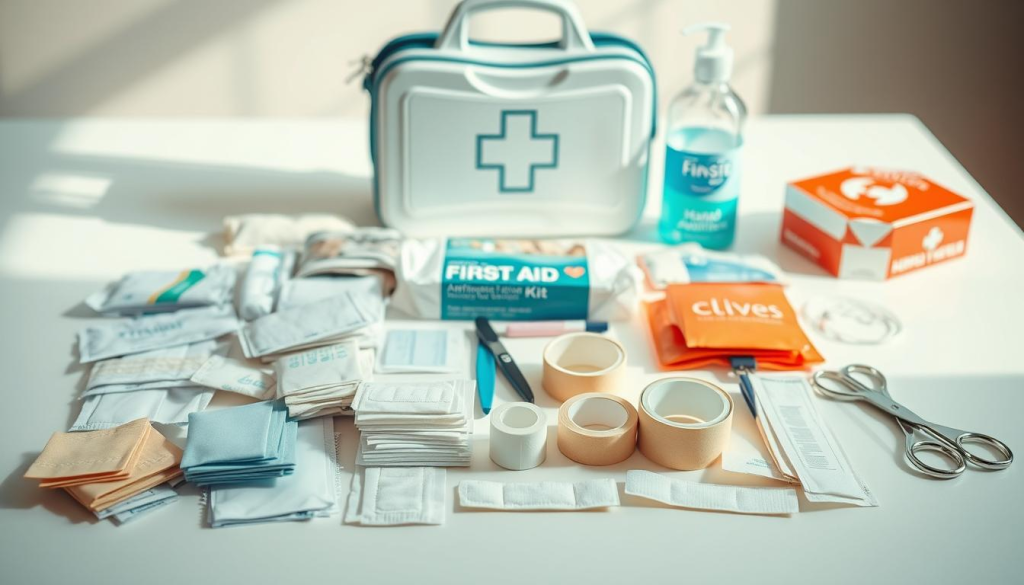
Being prepared for medical emergencies starts with having the essential first aid supplies at home. A well-stocked first aid kit can make a significant difference in responding to injuries and illnesses effectively.
Basic First Aid Kit Contents
A basic first aid kit should include a variety of supplies to handle common injuries and conditions. These first aid kit essentials are:
- Bandages and band-aids in various sizes
- Antiseptic wipes and ointment
- Gauze pads and rolls
- Medical tape
- Pain relievers and antihistamines
- Anti-diarrheal medication
- Cold pack
As Dr. John Smith, a family medicine specialist, notes, “A first aid kit is not just about treating injuries; it’s about being prepared for any medical situation that may arise.”
Specialized Items for Chronic Conditions
For households with individuals having chronic conditions, it’s crucial to include specialized items in the first aid kit. These may include:
- Medications for specific conditions (e.g., EpiPen for severe allergic reactions)
- Glucose monitoring equipment for diabetes
- Inhalers for asthma
According to a study published in the
Journal of Emergency Medicine
, having the right equipment on hand can significantly improve outcomes in emergency situations.
Maintaining Your First Aid Kit
Maintaining your first aid kit is just as important as stocking it. Regular checks should be performed to:
- Ensure all items are within their expiration dates
- Replace used or damaged supplies
- Update medications and equipment as necessary
By keeping your first aid kit up to date, you can ensure that you’re always prepared to respond to medical emergencies effectively.
Coping with Common Medical Emergencies
Common medical emergencies, such as cuts, burns, and sprains, require immediate and proper first aid to prevent further injury. Knowing how to handle these situations effectively can significantly impact the outcome and aid in a speedy recovery.
How to Handle Cuts and Scrapes
Cuts and scrapes are among the most common injuries that require first aid. To handle them effectively:
- Stop the bleeding by applying gentle pressure with a clean cloth or bandage.
- Clean the wound with mild soap and water to prevent infection.
- Apply an antibiotic ointment to promote healing.
- Cover the wound with a sterile bandage or dressing.
Important: If the cut is deep, jagged, or won’t stop bleeding, seek medical attention.
What to Do for Burns
Burns can be caused by heat, electricity, or chemicals, and the first aid procedure varies based on the severity:
- For minor burns, cool the burn with cool (not cold) water for 10-15 minutes.
- Apply a topical antibiotic ointment and cover with a non-stick dressing.
- For severe burns, call for emergency medical help immediately.
- Do not apply ice, butter, or ointments that can cause infection.
Dealing with Sprains and Strains
Sprains and strains are injuries to the muscles and ligaments. To provide first aid:
- Rest the injured area to prevent further injury.
- Apply ice to reduce swelling and pain.
- Use a compression bandage to support the injured area.
- Elevate the injured limb above heart level to reduce swelling.
Tip: If the pain is severe or the injury is serious, seek medical attention.
By following these first aid procedures, you can effectively cope with common medical emergencies and provide the necessary care until professional medical help is available.
First Aid Techniques Everyone Should Know
The ability to perform first aid techniques is essential for responding to emergencies with confidence. First aid knowledge can significantly impact the outcome of emergency situations, making it crucial for everyone to learn.
CPR: Cardio-Pulmonary Resuscitation
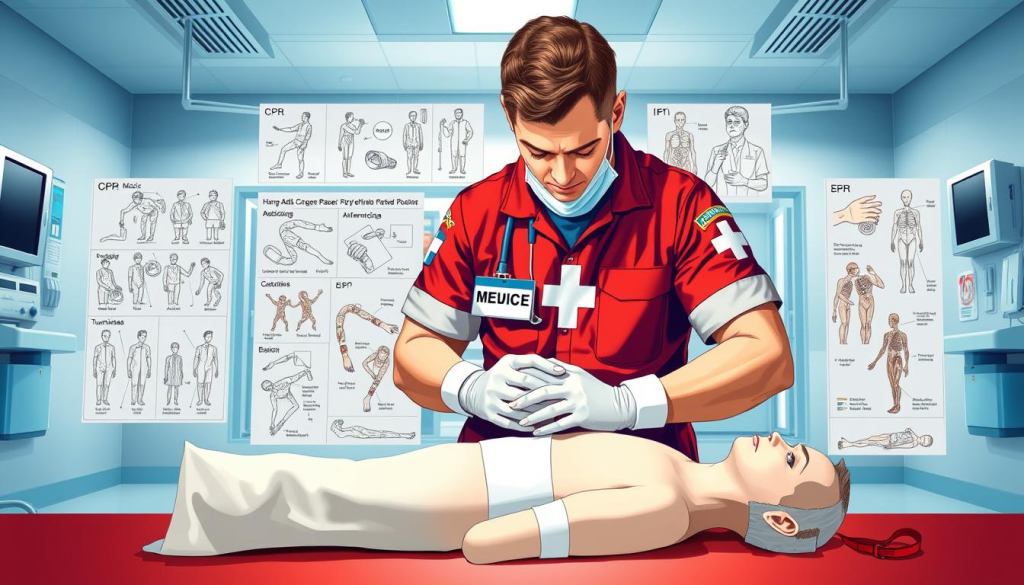
Cardiopulmonary resuscitation (CPR) is one of the most critical emergency medical procedures. It involves chest compressions and rescue breaths to maintain blood circulation and oxygenation to vital structures of the body, especially the brain, in cases of cardiac arrest.
Key steps in performing CPR include:
- Checking the scene for safety and calling for help
- Checking the person’s airway, breathing, and circulation (ABCs)
- Starting chest compressions at a rate of 100-120 per minute
- Giving rescue breaths after every 30 chest compressions
The Heimlich Maneuver for Choking
The Heimlich maneuver is a lifesaving technique used to relieve choking caused by an object becoming stuck in the throat. It involves a series of abdominal thrusts to dislodge the object.
Steps to perform the Heimlich maneuver:
- Stand behind the person and wrap your arms around their waist
- Make a fist with one hand, placing it just above the navel
- Grasp your fist with your other hand and perform a quick upward thrust
- Continue until the object is dislodged
Using an Automated External Defibrillator (AED)
An Automated External Defibrillator (AED) is a portable device that analyzes the heart’s rhythm and, if necessary, delivers an electric shock, or defibrillation, to help the heart re-establish an effective rhythm.
Using an AED involves:
- Turning on the AED and following voice prompts
- Attaching electrode pads to the person’s bare chest
- Analyzing the heart rhythm
- Delivering a shock if advised by the AED
| Technique | Purpose | Key Steps |
|---|---|---|
| CPR | Maintain blood circulation and oxygenation | Chest compressions and rescue breaths |
| Heimlich Maneuver | Relieve choking | Abdominal thrusts to dislodge object |
| AED | Restore heart rhythm | Attach pads, analyze rhythm, deliver shock if necessary |
Mastering first aid techniques such as CPR, the Heimlich maneuver, and using an AED can significantly enhance one’s ability to respond to emergencies effectively. These techniques are crucial for saving lives and reducing the severity of injuries.
Recognizing the Signs of a Medical Emergency
Knowing how to identify a medical emergency is key to providing timely care. Medical emergencies such as heart attacks, strokes, and severe allergic reactions require immediate attention. Being able to recognize the signs and symptoms of these conditions can significantly improve outcomes.
Symptoms of a Heart Attack
A heart attack occurs when the blood flow to the heart is blocked, causing damage to the heart muscle. Common symptoms include chest pain or discomfort, which may feel like pressure, squeezing, or fullness. Other signs can include shortness of breath, nausea or vomiting, and lightheadedness. Some people may experience pain or discomfort in one or both arms, the back, neck, jaw, or stomach.
If you or someone else is experiencing these symptoms, it’s crucial to call emergency services immediately. Prompt medical treatment can save lives and reduce the risk of long-term damage.
Stroke Warning Signs
A stroke occurs when the blood supply to part of the brain is interrupted or reduced, preventing brain tissue from getting oxygen and nutrients. Key warning signs include face drooping, arm weakness, and speech difficulties. Other symptoms can include confusion, trouble seeing in one or both eyes, and dizziness or loss of balance.
The acronym FAST is a helpful way to remember the signs of a stroke: Face drooping, Arm weakness, Speech difficulties, and Time to call emergency services.
Allergic Reactions to Watch For
Severe allergic reactions, also known as anaphylaxis, are life-threatening and require immediate medical attention. Symptoms can include hives or itching, swelling of the face, lips, tongue, or throat, and difficulty breathing. Other signs may include abdominal cramps, nausea or vomiting, and a rapid heartbeat.
If someone is experiencing anaphylaxis, it’s essential to administer epinephrine using an EpiPen or similar device if available, and then call emergency services. First aid certification courses often cover how to respond to such emergencies.
First Aid for Specific Age Groups
Understanding the unique needs of different age groups is crucial for effective first aid. The physiological differences among infants, children, and adults necessitate tailored approaches to emergency care.
First Aid for Infants and Toddlers
Infants and toddlers require special care due to their fragile physiology. When administering first aid to this age group, it’s essential to be gentle and cautious. For instance, CPR on infants involves using two fingers to compress the chest, rather than the traditional heel-of-the-hand method used for adults. Additionally, choking relief for infants involves a combination of back slaps and chest thrusts.
Key first aid tips for infants include:
- Checking for breathing and pulse before starting CPR
- Using the correct technique for chest compressions
- Calling for emergency services immediately
First Aid Tips for Children
Children are more prone to injuries from falls and accidents, making it vital for parents and caregivers to know basic first aid. Techniques such as the Heimlich maneuver for choking are adapted for children, using less force than for adults. It’s also crucial to teach children about basic safety rules to prevent accidents.
First aid for children should include:
- Learning basic first aid techniques, such as wound cleaning and dressing
- Understanding how to recognize signs of serious conditions, like appendicitis or severe allergic reactions
- Keeping a first aid kit accessible and knowing how to use its contents
Adult First Aid Considerations
Adults can face a range of medical emergencies, from heart attacks to severe injuries. Knowing how to respond can significantly impact outcomes. Adults benefit from learning CPR, using an Automated External Defibrillator (AED), and understanding the signs of stroke or heart attack.
Important adult first aid considerations include:
- Recognizing the signs of a heart attack or stroke
- Knowing how to use an AED
- Understanding the importance of calling emergency services promptly
Enrolling in first aid training courses can equip adults with the skills needed to handle emergencies effectively.
Health and Safety in Outdoor Adventures
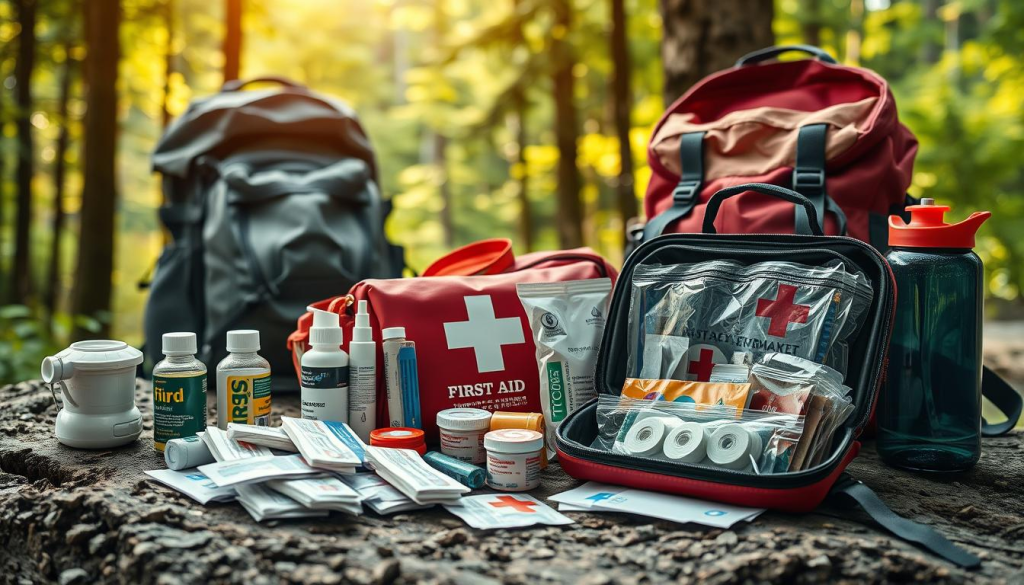
Preparing for outdoor adventures involves more than just packing the right gear; it includes being ready for health emergencies. When venturing into the wilderness, being prepared can make a significant difference in the outcome of an emergency.
Preparing for Hiking and Camping
Before heading out, it’s essential to plan your trip meticulously. This includes checking the weather forecast, understanding the terrain, and knowing the regulations of the area you’re visiting.
Essential Items to Pack:
- Map and compass
- First aid kit
- Extra batteries for flashlights or GPS devices
- Water purification tablets or filter
- Emergency shelter and warmth
First Aid for Outdoor Injuries
Outdoor injuries can range from minor cuts and scrapes to severe conditions like fractures or allergic reactions. Knowing how to respond to these injuries is crucial.
| Injury Type | First Aid Response |
|---|---|
| Cuts and Scrapes | Clean with water, apply antibiotic ointment, and cover |
| Burns | Cool with water, apply burn cream, and cover |
| Snake Bites | Keep calm, remove constrictive items, and seek medical help |
Hydration and Nutrition Tips
Staying hydrated and maintaining proper nutrition are vital during outdoor adventures. Dehydration and malnutrition can lead to serious health issues.
Tips for Staying Hydrated:
- Drink water regularly throughout the day
- Avoid drinking water from untreated sources
- Use water purification methods if necessary
Proper nutrition involves consuming a balanced diet that includes a mix of carbohydrates, proteins, and fats to maintain energy levels.
First Aid Training Options Available
While understanding first aid techniques is crucial, actual training is what truly prepares you for real-life emergencies. Getting official first-aid training is the best way to prepare for emergencies, as it equips you with the practical skills needed to respond effectively.
Investing in first aid training not only enhances your ability to handle emergencies but also contributes to a safer community. Various training options are available to suit different needs and preferences.
Local CPR and First Aid Classes
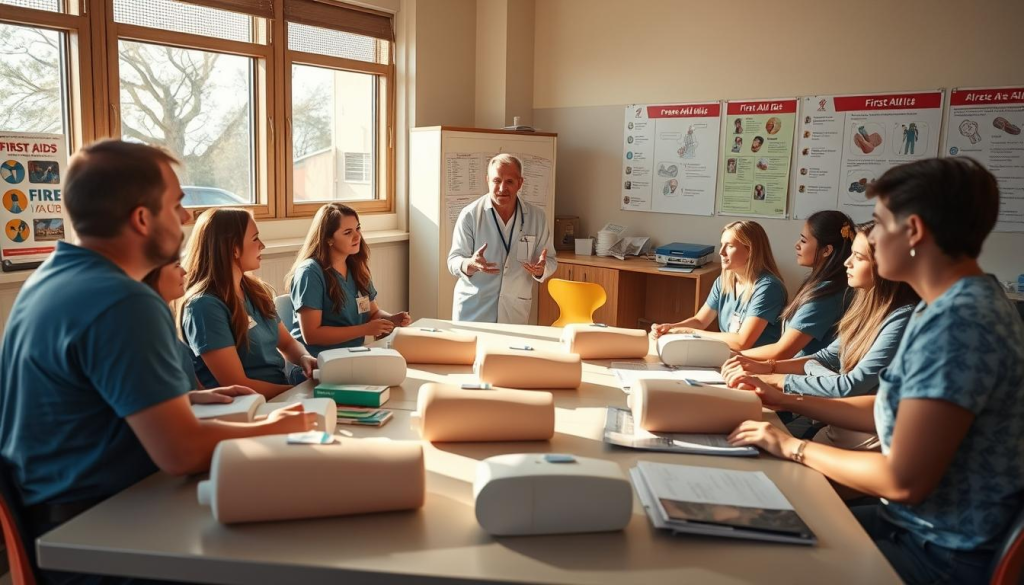
Local CPR and first aid classes offer hands-on training with certified instructors. These classes provide an opportunity to practice techniques on mannequins and learn from experienced professionals. For instance, the American Red Cross offers a variety of CPR and first aid courses tailored to different age groups and needs.
Some benefits of local classes include:
- Personalized instruction
- Practical experience
- Certification upon completion
Online Courses to Consider
For those with busy schedules or preferring self-paced learning, online first aid courses are a viable alternative. Reputable organizations like the American Heart Association and the National Safety Council offer comprehensive online training programs. These courses cover a range of topics, from basic first aid to advanced cardiovascular life support.
When selecting an online course, consider the following:
- Accreditation and certification
- Course content and duration
- Reviews and testimonials
Certification and Renewal Guidelines
First aid certifications are typically valid for two years, after which renewal is required. The renewal process often involves a refresher course to update skills and knowledge on the latest guidelines. As noted by the American Red Cross, “Certification is a critical step in ensuring that individuals are equipped to respond to emergencies effectively.”
“Certification is not just a piece of paper; it’s a testament to your ability to save lives.” –
To maintain certification, individuals should:
- Keep track of their certification expiration dates
- Enroll in renewal courses promptly
- Stay informed about updates in first aid practices
Mental Health First Aid
Recognizing the signs of mental health distress is the first step in providing aid. Mental health first aid is crucial for supporting individuals in crisis, and it involves understanding the signs of mental health issues and knowing how to respond appropriately.
Recognizing Mental Health Crises
Mental health crises can manifest in various ways, including severe depression, anxiety attacks, or psychotic episodes. It’s essential to be aware of the warning signs, such as significant changes in mood, withdrawal from social activities, or expressions of hopelessness.
Common signs of a mental health crisis include:
- Extreme mood swings
- Withdrawal from social interactions
- Talking about feeling hopeless or trapped
- Engaging in risky or harmful behaviors
Supporting Someone in Distress
When supporting someone in distress, it’s crucial to approach the situation with empathy and understanding. Listen to their concerns without judgment, and encourage them to seek professional help.
| Supportive Actions | Impact |
|---|---|
| Listening actively | Provides comfort and understanding |
| Encouraging professional help | Ensures appropriate care is received |
| Being patient and supportive | Helps in recovery and builds trust |
When to Seek Professional Help
It’s vital to know when the situation requires professional intervention. If the individual is at risk of harming themselves or others, or if their condition worsens, seeking immediate professional help is necessary.
Resources for mental health support include:
- Mental health professionals
- Crisis hotlines
- Support groups
By understanding mental health first aid, we can better support those in need and contribute to a more compassionate community.
The Role of Technology in First Aid
Technology is revolutionizing the way we approach first aid, making it more accessible and effective. With the advent of various technological tools, individuals can now respond to emergencies more confidently and efficiently.
Health Apps for Emergency Situations
Health apps have become invaluable resources in emergency situations, providing step-by-step guides on first aid procedures. These apps can offer real-time instructions on how to handle various emergencies, from cardiac arrests to severe injuries. For instance, some apps provide CPR guidance, ensuring that the responder performs the procedure correctly until professional help arrives.
Moreover, many health apps allow users to store their medical information, which can be accessed by emergency responders. This feature is particularly useful for individuals with chronic conditions or allergies, as it ensures that responders are aware of their medical history.
Telemedicine for Immediate Care
Telemedicine has emerged as a critical component in the provision of immediate care. Through video consultations, individuals can receive medical advice in real-time, which is crucial in situations where every minute counts. This technology is especially beneficial in remote areas where access to healthcare facilities is limited.
Telemedicine not only aids in providing immediate care but also helps in assessing the severity of the situation, guiding the individual on whether they need to seek further medical attention. This can significantly reduce the burden on emergency services and ensure that resources are allocated more effectively.
Resources for Finding Help Quickly
In emergencies, finding help quickly is paramount. Technology has made this easier through various resources, such as emergency locator apps and online directories of healthcare providers. These tools enable individuals to locate the nearest healthcare facility or alert emergency services with their exact location.
Furthermore, social media and community apps can be used to alert family and friends in case of an emergency, ensuring that those who can provide assistance are notified promptly.
By leveraging these technological advancements, the importance of first aid is amplified, as individuals are better equipped to respond to emergencies effectively. As technology continues to evolve, it is likely that first aid practices will become even more sophisticated, leading to better outcomes in emergency situations.
Building a Community First Aid Network
Building a community first aid network can significantly enhance emergency preparedness. By engaging in community health initiatives, individuals can come together to promote first aid awareness and training.
Community Engagement Initiatives
Community health initiatives play a vital role in promoting first aid training and certification. Organizations can partner with local groups to offer first aid training courses, ensuring that more people are equipped to respond in emergency situations.
Organizing Workshops and Training
Organizing first aid workshops is an effective way to educate the community on basic first aid techniques and the importance of first aid certification. These workshops can be tailored to different age groups and needs within the community.
Creating an Emergency Response Team
Creating a supportive emergency response team within the community can provide a swift and effective response to emergencies. This team can be trained in advanced first aid techniques and can work closely with local emergency services.