
Healthcare professionals play a vital role in saving lives during medical emergencies. Comprehensive training in first aid and CPR is crucial for these professionals to respond effectively.
The American Red Cross and the American Heart Association offer specialized training programs designed to equip healthcare providers with the necessary skills. These programs emphasize the importance of being prepared to handle emergencies.
By undergoing rigorous training, healthcare providers can enhance their ability to respond to emergencies, ultimately saving lives. The significance of such training cannot be overstated.
Key Takeaways
- Healthcare providers require specialized training in first aid and CPR.
- The American Red Cross and the American Heart Association offer comprehensive training programs.
- Effective response to medical emergencies is critical.
- Training programs are designed to equip healthcare professionals with necessary skills.
- Preparedness is key to handling medical emergencies.
Importance of First Aid and CPR in Healthcare Settings
The importance of first aid and CPR training in healthcare cannot be overstated, as it directly impacts patient outcomes. In emergency situations, the ability of healthcare providers to respond effectively can be the difference between life and death.
First aid and CPR are critical skills that healthcare professionals must possess to provide immediate care in various medical emergencies. The American Heart Association emphasizes that high-quality CPR can significantly increase patient survival rates, underscoring the need for regular training and certification.
Understanding Life-Saving Techniques
Life-saving techniques, including CPR and the use of automated external defibrillators (AEDs), are essential for healthcare providers. These techniques are designed to maintain blood circulation and oxygenation to vital organs until more definitive medical treatment can be provided.
Understanding the proper application of these techniques is crucial. For instance, CPR should be performed with the correct compression depth and rate to maximize its effectiveness. Training programs, such as those offering first aid certification for healthcare providers, play a vital role in ensuring that professionals are equipped with the latest guidelines and techniques.
The Role of Healthcare Providers
Healthcare providers are on the frontline of emergency response, making their role in administering CPR and other lifesaving techniques critical. Their ability to recognize the need for CPR, call for backup, and initiate care can significantly influence patient outcomes.
The CPR course for healthcare professionals is designed to enhance their skills in this area, focusing on high-quality CPR, team dynamics, and communication during emergencies. By staying updated with the latest CPR guidelines, healthcare providers can ensure they are delivering the best possible care.
Key Statistics on Cardiac Arrest
Cardiac arrest is a significant concern in healthcare settings, with thousands of cases occurring annually. According to recent statistics, the survival rate for cardiac arrest patients can be significantly improved with timely and appropriate intervention.
| Category | Survival Rate with CPR | Survival Rate without CPR |
|---|---|---|
| In-Hospital Cardiac Arrest | 45% | 10% |
| Out-of-Hospital Cardiac Arrest | 12% | 2% |
These statistics highlight the importance of CPR training for healthcare providers, as it can dramatically improve survival rates. By understanding and applying lifesaving techniques, healthcare professionals can make a significant difference in patient outcomes.
Basic Principles of First Aid
Understanding the fundamental principles of first aid is crucial for healthcare providers to respond effectively in emergency situations. First aid training for medical professionals emphasizes the importance of a systematic approach to dealing with emergencies.
Assessing the Situation
The first step in providing first aid is to assess the situation thoroughly. This involves identifying potential hazards and understanding the nature of the emergency. Healthcare providers should remain calm and gather information to determine the best course of action.
Key considerations when assessing the situation include:
- Identifying the cause of the injury or illness
- Assessing the severity of the condition
- Noting the number of people involved and their conditions
Ensuring Safety First
Before providing first aid, ensuring the safety of both the healthcare provider and the patient is paramount. This may involve removing hazards or calling for additional support. The American Red Cross emphasizes the importance of safety in first aid training.
Safety measures may include:
- Turning off machinery or electrical appliances
- Moving the patient to a safe location if possible
- Calling for backup or additional medical help
Primary Survey and Secondary Survey
A primary survey is conducted to quickly identify life-threatening conditions, focusing on the airway, breathing, and circulation (ABCs). A secondary survey is a more detailed examination to identify other injuries or conditions.
The primary survey involves:
- Checking the airway for obstruction
- Assessing breathing rate and quality
- Evaluating circulation by checking pulse
By following these basic principles, healthcare providers can effectively respond to emergencies and provide critical care. Enrolling in a healthcare provider CPR class can further enhance their skills in first aid and CPR.
CPR Techniques for Healthcare Providers
Cardiopulmonary resuscitation (CPR) is a critical skill for healthcare providers, enabling them to respond effectively in life-threatening emergencies. The American Heart Association provides detailed guidelines for CPR techniques, including the use of Automated External Defibrillators (AEDs).
Adult CPR Procedures
For adults, CPR involves a series of chest compressions and rescue breaths. The ratio is typically 30 compressions to two breaths. High-quality CPR is crucial, emphasizing uninterrupted chest compressions and adequate depth and rate.
- Start with 30 chest compressions at a rate of 100-120 per minute.
- Follow with two breaths, ensuring the chest rises with each breath.
- Continue the cycle until an AED is available or the patient shows signs of regaining consciousness.
Child and Infant CPR Guidelines
CPR for children and infants differs slightly from adult CPR. The key is to adjust the technique according to the age and size of the child.
- For children, use the same ratio of 30:2 for compressions to breaths.
- For infants, the ratio remains 30:2, but the technique for compressions involves using two thumbs to encircle the chest.
Using an AED Effectively
An Automated External Defibrillator (AED) is a device that analyzes the heart’s rhythm and delivers an electric shock, or defibrillation, to help the heart re-establish an effective rhythm.
- Turn on the AED and follow the voice prompts.
- Attach the electrode pads to the patient’s bare chest as indicated.
- If the AED advises a shock, ensure no one is touching the patient and press the shock button.
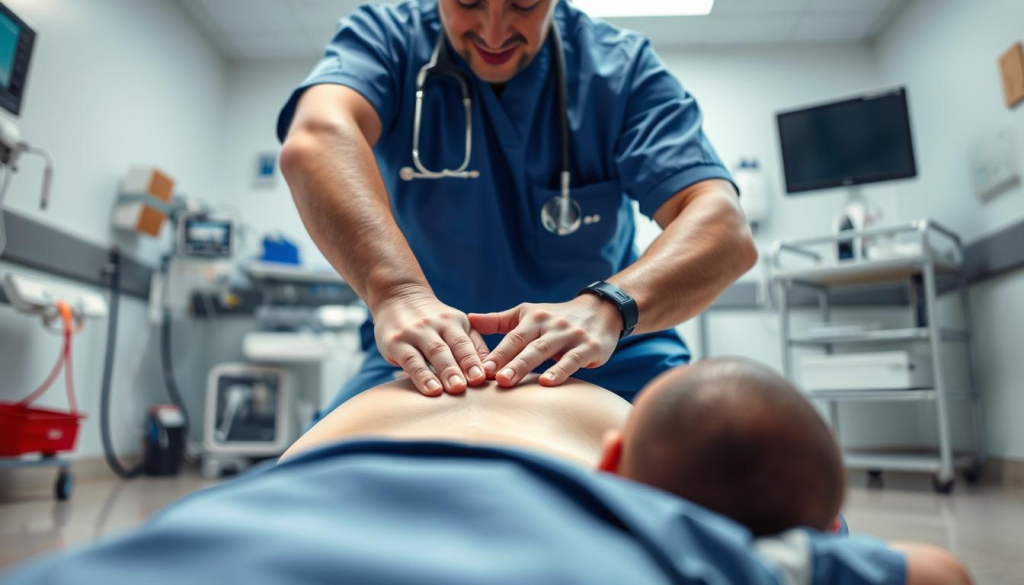
By mastering these CPR techniques, healthcare providers can significantly improve patient outcomes in cardiac emergencies.
Responding to Common Medical Emergencies
The ability to recognize and respond to medical emergencies like strokes, choking incidents, and allergic reactions is vital in healthcare settings. Healthcare providers must be trained to identify the signs and symptoms of these emergencies and take appropriate action.
Recognizing Stroke Symptoms
Recognizing the signs of a stroke is crucial for providing timely medical intervention. The American Heart Association recommends using the FAST method to identify stroke symptoms:
- Face: Ask the person to smile. Does one side of their face droop?
- Arm: Ask the person to raise both arms. Does one arm drift downward?
- Speech: Ask the person to repeat a simple sentence. Is their speech slurred or difficult to understand?
- Time: Time is of the essence. If the person shows any of these symptoms, call for emergency medical services immediately.
Managing Choking Incidents
Choking can occur when a person’s airway is blocked by an object, such as food or other debris. To manage choking incidents effectively, healthcare providers should be trained in the Heimlich maneuver:
- Stand behind the person and wrap your arms around their waist.
- Make a fist with one hand and place it just above the person’s navel.
- Grasp your fist with your other hand and perform a quick upward thrust.
- Continue until the object is dislodged or the person becomes unresponsive.
If the person becomes unresponsive, start CPR. The American Red Cross offers training on managing choking incidents as part of their first aid certification programs for healthcare providers.
Addressing Allergic Reactions
Severe allergic reactions, known as anaphylaxis, can be life-threatening. Symptoms include difficulty breathing, rapid heartbeat, and a drop in blood pressure. To address allergic reactions:
- Call for emergency medical services immediately.
- Administer epinephrine using an EpiPen or other auto-injector, if available.
- Keep the person calm and comfortable until help arrives.
Healthcare providers should be trained to recognize the signs of anaphylaxis and administer appropriate care. The American Red Cross provides training on responding to allergic reactions as part of their healthcare provider CPR training programs.
By being prepared to respond to common medical emergencies, healthcare providers can significantly improve patient outcomes. Regular training and certification in first aid and CPR are essential for maintaining the skills needed to respond effectively.
The Chain of Survival Concept
The Chain of Survival, as defined by the American Heart Association, outlines the necessary steps to maximize survival chances in cardiac emergencies. This concept is crucial for healthcare professionals who are often the first line of defense in such situations.
Understanding the Chain of Survival
The Chain of Survival is a series of steps that, when executed promptly and effectively, significantly improve the chances of survival for cardiac arrest victims. It emphasizes the importance of a systematic approach to cardiac emergencies.
Early intervention is critical in cardiac emergencies. The sooner the steps in the Chain of Survival are initiated, the higher the likelihood of a successful outcome. This includes recognizing the emergency, calling for help, and starting CPR.
Importance of Early Intervention
Early intervention is the cornerstone of the Chain of Survival. Prompt action can mean the difference between life and death. Healthcare professionals trained in CPR and first aid can significantly impact patient outcomes by acting quickly.
Training programs, such as a CPR course for healthcare professionals, are essential in equipping staff with the skills needed to respond effectively in emergencies. These programs emphasize the importance of timely intervention.
Steps in the Chain of Survival
The Chain of Survival consists of several critical steps:
- Recognition of the cardiac emergency and calling for help
- Early CPR to maintain blood circulation
- Rapid defibrillation to restore a normal heart rhythm
- Effective advanced life support
- Integrated post-cardiac arrest care
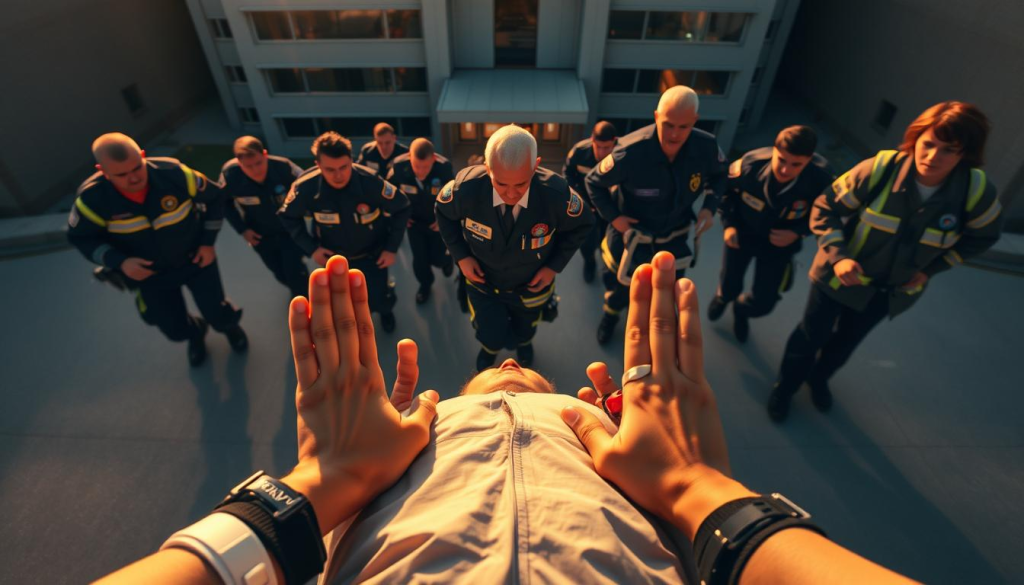
Each step in the Chain of Survival is vital and builds upon the previous one. Healthcare professionals must be well-versed in these steps to ensure the best possible outcomes for patients.
By understanding and implementing the Chain of Survival, healthcare providers can significantly improve survival rates for cardiac arrest patients. This underscores the importance of first aid training for medical professionals and regular CPR training.
First Aid for Bleeding and Wounds
First aid for bleeding and wounds involves understanding the type of bleeding and applying the appropriate care to prevent further complications. Healthcare providers trained in first aid and CPR for healthcare providers are better equipped to handle such emergencies.
Types of Bleeding: Venous vs. Arterial
Bleeding can be classified into two main types: venous and arterial. Venous bleeding is characterized by a steady flow of dark red blood, whereas arterial bleeding is marked by a rapid, pulsatile flow of bright red blood due to the higher pressure within arteries. Understanding the difference is crucial for applying the correct first aid techniques.
Venous bleeding is generally easier to control than arterial bleeding. Applying pressure to the wound can often stop venous bleeding. On the other hand, arterial bleeding requires immediate attention due to the risk of rapid blood loss.
Proper Wound Care Techniques
Proper wound care involves several steps to promote healing and prevent infection. Initially, the wound should be cleaned with sterile water or saline solution to remove any debris. Applying an antiseptic can help reduce the risk of infection.
- Stop the bleeding by applying firm, gentle pressure with a clean cloth or bandage.
- Clean the wound with sterile water or saline.
- Apply an antiseptic to the wound.
- Cover the wound with a sterile bandage or dressing.
When to Seek Additional Medical Help
While many wounds can be managed with basic first aid, there are situations that require additional medical help. Deep wounds, wounds with debris, or signs of infection (such as redness, swelling, or increased pain) necessitate further medical evaluation.
Healthcare providers should be aware of the signs that indicate a need for immediate medical attention, such as heavy bleeding that doesn’t stop after 10-15 minutes of pressure, or wounds that are deep or jagged.
By understanding the principles of first aid for bleeding and wounds, healthcare providers can significantly improve patient outcomes. Regular training in healthcare provider CPR class and first aid can enhance their ability to respond effectively in emergencies.
Managing Medical Emergencies in the Workplace
Medical emergencies can occur at any time, making it essential for healthcare workplaces to be prepared. Having a well-structured plan in place can significantly improve response times and outcomes during emergencies.
Emergency Action Plans for Healthcare Settings
An emergency action plan is a critical component of managing medical emergencies in healthcare settings. It outlines the procedures to be followed during an emergency, ensuring that staff know their roles and responsibilities. The American Heart Association and the American Red Cross offer resources and training to help healthcare providers develop effective emergency action plans.
Key elements of an emergency action plan include:
- Identifying potential emergencies and assessing risks
- Developing procedures for responding to emergencies
- Training staff on emergency procedures
- Conducting regular drills to ensure preparedness
Tips for Staying Calm in Emergencies
Staying calm during an emergency is crucial for making rational decisions and providing effective care. Here are some tips for healthcare staff to remain composed under pressure:
- Focus on the task at hand and prioritize actions
- Use deep breathing techniques to manage stress
- Communicate clearly with the team to ensure a coordinated response
Regular training and practice can also help staff feel more confident and prepared during emergencies.
Engaging Staff in Training Programs
Engaging staff in training programs is vital for ensuring that they are equipped to respond effectively during medical emergencies. Training programs should cover first aid techniques, CPR, and the use of automated external defibrillators (AEDs).
| Training Program | Description | Frequency |
|---|---|---|
| First Aid Training | Covers basic first aid techniques and wound management | Annually |
| CPR Training | Teaches CPR techniques for adults, children, and infants | Every 2 years |
| AED Training | Focuses on the proper use of automated external defibrillators | Every 2 years |
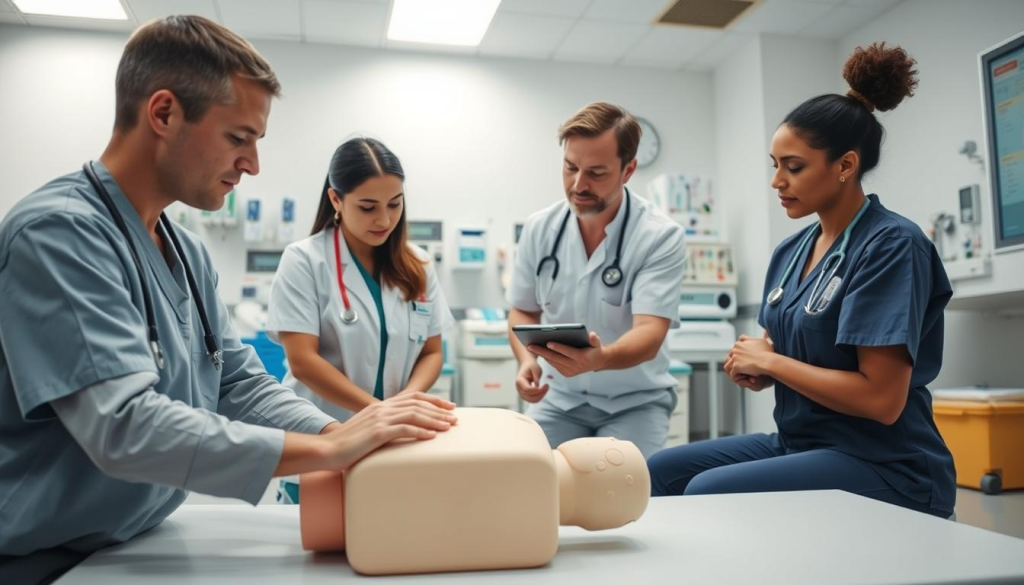
By investing in comprehensive training programs, healthcare organizations can ensure that their staff are prepared to manage medical emergencies effectively.
Continuous Education and Skills Refreshment
In the fast-paced world of healthcare, providers must commit to regular training and skills refreshment to deliver optimal patient care. Continuous education is essential for healthcare professionals to stay updated with the latest lifesaving techniques and advancements in medical emergencies response.
Benefits of Regular CPR Training
Regular CPR training is vital for healthcare providers as it ensures they are proficient in the latest cardiopulmonary resuscitation techniques. According to the American Heart Association, “High-quality CPR can significantly improve survival rates from cardiac arrest.” Regular training helps in maintaining the competency of healthcare providers, enhancing patient outcomes.
The benefits of regular CPR training include improved response times during cardiac emergencies, enhanced teamwork among healthcare staff, and increased confidence in managing critical situations. Moreover, staying updated with the latest guidelines and techniques is crucial in providing high-quality care.
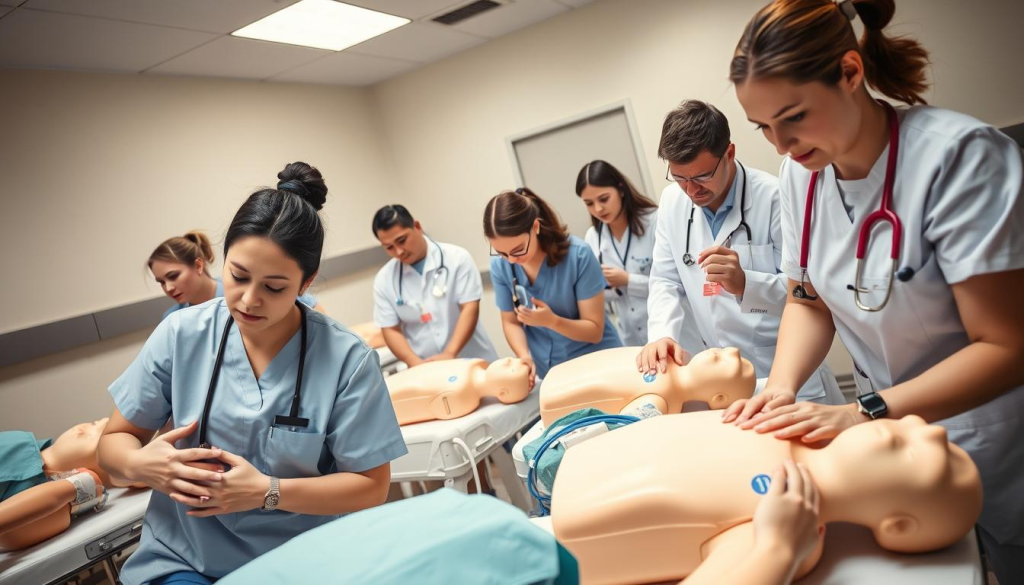
Available Courses for Healthcare Providers
Various organizations offer CPR and first aid training courses tailored to the needs of healthcare providers. The American Red Cross and the American Heart Association are two prominent bodies that provide comprehensive training programs. These courses cover a range of topics, including adult, child, and infant CPR, as well as the use of automated external defibrillators (AEDs).
- CPR/AED courses for healthcare providers
- First aid training for medical emergencies
- Advanced cardiovascular life support (ACLS) training
- Pediatric advanced life support (PALS) courses
Importance of Certification Renewal
Certification renewal is a critical aspect of continuous education for healthcare providers. It ensures that their skills and knowledge are current and compliant with the latest medical guidelines.
“Certification is not just a piece of paper; it’s a mark of excellence and a commitment to providing the best possible care,”
as emphasized by many medical training organizations.
Renewing certifications regularly helps healthcare providers stay competent in lifesaving techniques, adapt to new medical technologies, and comply with workplace requirements. It also demonstrates their commitment to delivering high-quality patient care.
Resources for Healthcare Providers
Healthcare providers can access various resources to enhance their knowledge and skills in first aid and CPR. Both the American Red Cross and the American Heart Association offer a range of materials and training programs.
Recommended Study Materials
For those looking to deepen their understanding, recommended books and manuals are available. These resources cover the latest guidelines for first aid and CPR techniques, including the use of automated external defibrillators (AEDs).
Online Training Opportunities
Online courses are also available, providing flexible training options for healthcare providers. These courses cover topics such as adult, child, and infant CPR, as well as first aid for various medical emergencies.
Professional Organizations
Joining professional organizations, such as the American Heart Association, can provide healthcare providers with access to the latest research, guidelines, and training opportunities in lifesaving techniques, including first aid and CPR for healthcare providers and healthcare provider CPR class.