
Medical emergencies are a daily occurrence, yet the individuals equipped with the lifesaving skills to respond to these situations are not as common. Healthcare workers are often the frontline responders in such emergencies, making their training in first aid crucial.
Having the right skills can significantly impact patient outcomes. Effective CPR certification and healthcare professional first aid training enable healthcare workers to recognize and respond to emergencies effectively.
Key Takeaways
- Healthcare workers need first aid training to respond to medical emergencies.
- CPR certification is crucial for lifesaving interventions.
- Effective training improves patient outcomes in emergency situations.
- Regular training for healthcare professionals is essential.
- Lifesaving skills are critical in daily medical emergencies.
Importance of First Aid Training for Healthcare Professionals
The ability to administer first aid is a vital skill for healthcare workers, ensuring they can react appropriately in emergencies. Nurses, Registered Practical Nurses (RPNs), and Registered Nurses (RNs) are often the first point of contact in patient care, making their role in emergency response critical.
First aid training equips healthcare professionals with the necessary skills to handle emergencies effectively. This training is not just about responding to cardiac arrests or severe injuries; it’s also about being prepared for a wide range of medical emergencies that can occur in various healthcare settings.
Role in Emergency Situations
In emergency situations, the initial response can significantly impact patient outcomes. Healthcare professionals trained in first aid can provide immediate care, which is crucial in stabilizing the patient’s condition until further medical help arrives.
- Assessing the situation quickly and accurately
- Providing appropriate first aid interventions
- Communicating effectively with emergency services
Effective emergency response training enables healthcare workers to act confidently and correctly, even under pressure.
Legal and Ethical Considerations
Healthcare professionals have a legal and ethical duty to provide care in emergency situations. First aid training ensures that they are aware of their responsibilities and the standards of care expected of them.
“The duty to provide care is not just a moral obligation but also a legal requirement for healthcare professionals.”
Understanding the legal and ethical implications of first aid is crucial for healthcare workers to navigate complex situations while minimizing risks.
Enhancing Patient Safety
First aid training is directly linked to enhancing patient safety. By being prepared to respond to emergencies, healthcare professionals can prevent minor issues from becoming major complications.
- Identifying potential risks and taking preventive measures
- Responding appropriately to emergencies
- Providing care that adheres to established medical guidelines
Medical emergency preparedness is key to ensuring that healthcare facilities and professionals are always ready to handle unexpected situations.
In conclusion, first aid training is indispensable for healthcare professionals. It not only enhances their ability to respond to emergencies but also contributes to a culture of safety and preparedness in healthcare settings.
Core First Aid Skills Every Healthcare Worker Should Know
In the high-stakes environment of healthcare, professionals must be equipped with essential first aid skills to save lives and prevent further injury. Sudden cardiac arrest claims the lives of over three hundred thousand people in the United States every year, underscoring the importance of knowing how to perform CPR and use an AED.
CPR Techniques
Cardiopulmonary resuscitation (CPR) is a lifesaving technique that’s crucial in many emergencies, including heart attacks or near drowning. To perform CPR correctly, one must follow a series of steps that include checking the scene for safety, calling for help, and then performing chest compressions and rescue breaths. CPR certification is often required for healthcare professionals to ensure they are proficient in this technique.
- Check the scene for safety and the victim’s responsiveness.
- Call 911 or your local emergency number.
- Begin chest compressions at a rate of 100-120 per minute.
- Provide rescue breaths after every 30 compressions.
Using an Automated External Defibrillator (AED)
An Automated External Defibrillator (AED) is a portable electronic device that automatically diagnoses the life-threatening cardiac arrhythmias of ventricular fibrillation and pulseless ventricular tachycardia, and is able to treat them through defibrillation. AED training for healthcare professionals is vital as it enables them to respond effectively in cardiac emergencies.
“The use of AEDs has been shown to significantly improve survival rates from cardiac arrest when used promptly and correctly.”
The steps to use an AED include:
- Turn on the AED.
- Attach the electrode pads to the victim’s bare chest.
- Analyze the heart rhythm.
- If advised, deliver a shock.
- Continue CPR after the shock.
Managing Choking Emergencies
Choking is a serious emergency that can occur in any setting, including healthcare facilities. Knowing how to relieve choking is an essential skill for healthcare workers. The technique involves a series of abdominal thrusts to dislodge the object from the person’s airway.
The steps to manage choking include:
- Encourage the person to cough.
- If coughing doesn’t work, give back blows.
- If back blows fail, perform abdominal thrusts.
- Continue until the object is dislodged or the person becomes unresponsive.
In conclusion, mastering core first aid skills such as CPR, using an AED, and managing choking emergencies is indispensable for healthcare workers. These skills not only save lives but also enhance patient safety and outcomes in emergency situations.
First Aid Training Programs Available for Healthcare Professionals
To equip healthcare professionals with the necessary skills, various first aid training programs have been developed. These programs are designed to cater to the diverse needs of healthcare workers, ensuring they are well-prepared to handle medical emergencies effectively.
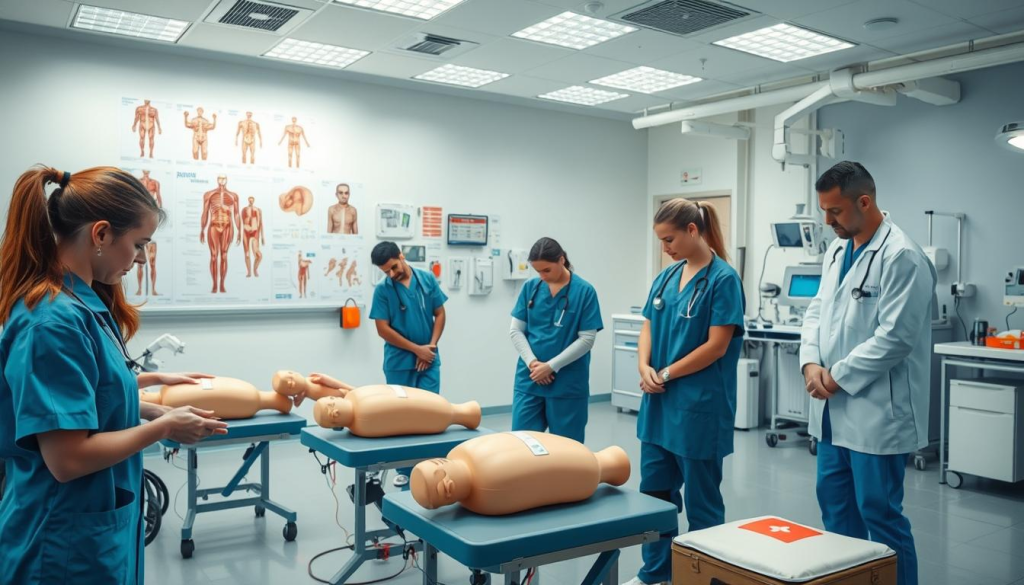
American Red Cross Certification
The American Red Cross offers a range of first aid training programs, including CPR and AED certification. These courses are highly regarded and provide healthcare professionals with the skills and confidence to respond in emergency situations. The programs are designed to be flexible, accommodating different learning styles and professional requirements.
Key components of American Red Cross Certification include:
- CPR training for adults, children, and infants
- AED training
- First aid techniques for various medical emergencies
National Safety Council Options
The National Safety Council (NSC) provides comprehensive first aid training programs that are tailored to the needs of healthcare professionals. NSC courses focus on practical skills and real-world application, ensuring that participants are equipped to handle emergencies effectively.
The NSC’s approach to first aid training emphasizes:
- Hands-on practice
- Scenario-based training
- Certification upon completion
Online First Aid Courses
For healthcare professionals seeking flexibility, online first aid courses offer a convenient alternative. These courses cover a range of topics, from basic first aid to advanced CPR techniques. Online training programs are designed to be engaging and interactive, with many providers offering certification upon completion.
Benefits of online first aid courses include:
- Flexibility in scheduling
- Self-paced learning
- Access to a wide range of training materials
How to Choose the Right First Aid Training Course
The process of choosing the right first aid training course involves several key considerations that can significantly impact a healthcare professional’s ability to respond to emergencies. When selecting a course, it’s essential to consider factors that align with your professional needs and the demands of your work environment.
Assessing Your Professional Needs
To choose an appropriate first aid training course, healthcare professionals must first assess their specific needs. This involves understanding the types of emergencies they are likely to encounter and the level of care required. For instance, professionals working in pediatric care may require training focused on pediatric first aid.
Key considerations include:
- The nature of the work environment (e.g., hospital, clinic, community health)
- The specific emergencies likely to be encountered (e.g., cardiac arrest, trauma)
- The level of first aid training required (e.g., basic, advanced)
https://www.youtube.com/watch?v=7CXB7yEnt40
Instructor Qualifications
The qualifications and experience of the instructors delivering the first aid training course are crucial. Instructors should have a strong background in emergency medical services and teaching experience. Their expertise will significantly influence the quality of the training provided.
| Instructor Qualification | Description | Importance Level |
|---|---|---|
| EMT Certification | Certification as an Emergency Medical Technician | High |
| Teaching Experience | Previous experience in teaching or training | High |
| Medical Background | A background in medical or healthcare professions | Medium |
Training Format Preferences
Healthcare professionals should also consider their preferred training format. Options may include in-person training, online courses, or a blended learning approach. The choice depends on individual learning preferences, the need for hands-on practice, and scheduling constraints.
Consider the following when choosing a training format:
- Flexibility and accessibility of the course
- Opportunities for hands-on practice
- Support for different learning styles
By carefully assessing professional needs, evaluating instructor qualifications, and considering training format preferences, healthcare professionals can make an informed decision when choosing a first aid training course. This ensures they receive the training necessary to provide effective emergency response and enhance medical emergency preparedness.
The Role of First Aid in Patient Care
The application of first aid skills is essential for healthcare professionals to deliver quality patient care. First aid training enables healthcare workers to respond effectively in emergency situations, thereby improving patient outcomes.
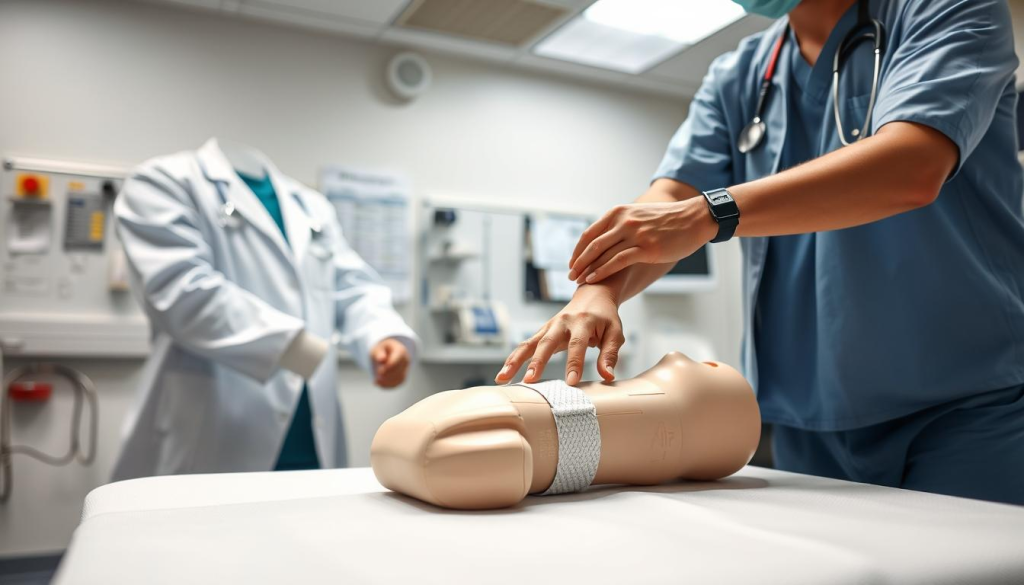
First aid is not just about responding to emergencies; it’s also about providing ongoing care and ensuring that patients receive the appropriate level of attention until more definitive medical care can be provided.
Immediate Response vs. Ongoing Care
In emergency situations, healthcare professionals must be able to provide immediate care, such as CPR or stopping bleeding. However, first aid also involves ongoing care, where professionals continue to monitor the patient’s condition and provide necessary interventions.
Nurses, for example, play a vital role in recognizing the signs of stroke early and initiating prompt treatment using the FAST method (Face drooping, Arm weakness, Speech difficulties, Time to call 911).
Collaborating with Emergency Services
Effective first aid often requires collaboration with emergency services. Healthcare professionals must be able to communicate effectively with emergency responders, providing them with critical information about the patient’s condition.
This collaboration ensures a seamless transition from initial first aid to more advanced medical care, ultimately improving patient outcomes.
Promoting a Culture of Safety
First aid training also promotes a culture of safety within healthcare settings. By empowering healthcare professionals with the skills and knowledge to respond to emergencies, organizations can foster an environment where patient safety is paramount.
This culture of safety not only benefits patients but also enhances the overall working environment for healthcare professionals, allowing them to work with confidence and assurance.
Key Equipment in First Aid Training
Proper equipment is the backbone of effective first aid training for healthcare professionals. Being equipped with the right tools and supplies is crucial for responding to medical emergencies effectively.
Essential First Aid Kits
A well-stocked first aid kit is fundamental to any first aid training program. These kits should contain a variety of supplies, including bandages, antiseptic wipes, pain relievers, and any medications specific to the needs of the individuals being treated.
- Basic Supplies: Bandages, gauze, medical tape
- Wound Care: Antiseptic wipes, antibiotic ointment
- Medications: Pain relievers, antihistamines
First aid kits should be well-stocked and readily accessible to employees. Employers must ensure the presence of individuals with basic first aid skills within the workplace.
Use of Personal Protective Equipment (PPE)
Personal Protective Equipment (PPE) is critical in preventing the spread of infection and protecting both the caregiver and the patient. PPE includes gloves, masks, and protective eyewear.
Proper use of PPE is a key component of first aid training, ensuring that healthcare professionals can safely provide care without risking their own health or that of their patients.
- Gloves: To prevent skin-to-skin contact
- Masks: To reduce transmission of airborne pathogens
- Protective Eyewear: To shield against bodily fluids
Medical Tools and Supplies
In addition to first aid kits and PPE, various medical tools and supplies are essential for comprehensive first aid training. This includes Automated External Defibrillators (AEDs), CPR masks, and splints.
AED training for healthcare professionals is a vital aspect of medical emergency preparedness. Understanding how to use an AED can significantly improve outcomes in cardiac emergencies.
By focusing on these key areas, healthcare professionals can ensure they are well-prepared to handle a wide range of medical emergencies, enhancing patient safety and outcomes.
Transitional Skills: First Aid and Advanced Care Techniques
Healthcare professionals must master the skills to bridge the gap between initial first aid and subsequent advanced care. This transition is critical in ensuring that patients receive continuous and appropriate care from the moment they are attended to until they are fully treated.
Integrating First Aid into Clinical Practice
First aid is not a standalone skill but an integral part of clinical practice. Healthcare providers should be able to apply first aid techniques seamlessly as part of their overall patient care strategy. For instance, knowing how to clean and dress a wound correctly is crucial in preventing infection and promoting healing. Nurses encounter wounds of all types, and their ability to manage these effectively is vital.
Effective wound management involves not just the initial cleaning and dressing but also ongoing assessment and adjustment of care as needed. This requires a deep understanding of wound healing processes and the ability to recognize signs of complications early.
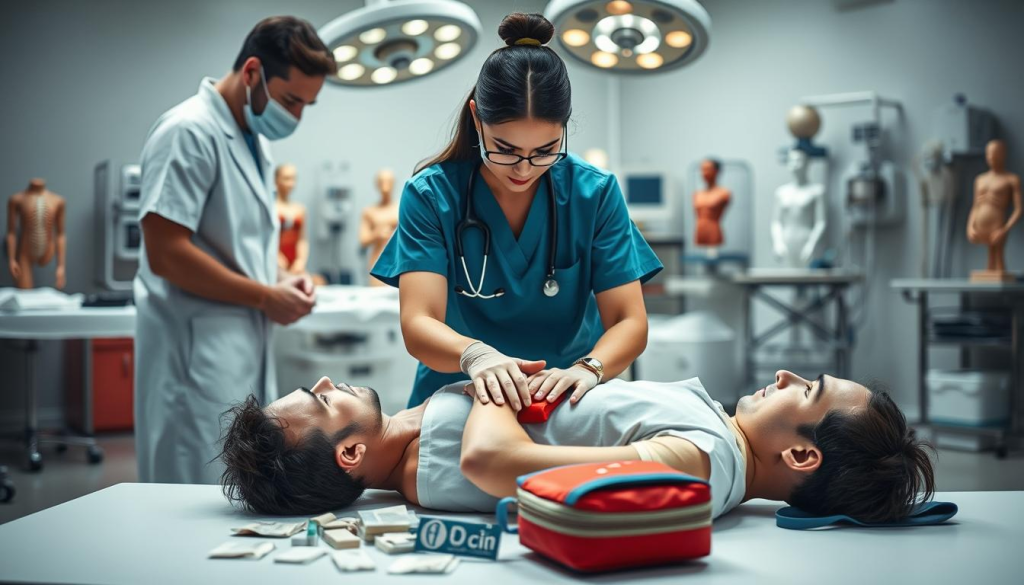
When to Escalate Care
Recognizing when a patient’s condition requires more advanced care is a critical skill for healthcare providers. This involves being able to assess the severity of a patient’s condition and deciding when to involve other healthcare professionals or emergency services. Training programs, such as a healthcare provider CPR course, equip professionals with the knowledge to make these decisions effectively.
- Assessing the severity of injuries or conditions
- Understanding the limits of one’s own expertise and training
- Knowing when to call for backup or emergency services
Collaboration with Other Healthcare Providers
Collaboration is key in ensuring that patients receive the care they need. This involves not just working with other healthcare professionals but also communicating effectively with patients and their families. Emergency response training programs emphasize the importance of teamwork in emergency situations.
By working together and sharing information, healthcare providers can ensure a smooth transition from first aid to advanced care, ultimately improving patient outcomes.
Recertification and Continuing Education
First aid skills are not a one-time learning experience; they require regular updates and practice to maintain proficiency. As medical emergencies and guidelines evolve, healthcare professionals must stay informed and adapt their skills accordingly.
Importance of Regular Training Updates
Regular training updates are crucial for healthcare professionals to remain competent in first aid techniques, including CPR certification. The American Heart Association and other reputable organizations periodically update their guidelines to reflect the latest research and best practices. Staying current with these updates ensures that healthcare providers can deliver the most effective care during emergencies.
For instance, changes in CPR techniques or the use of automated external defibrillators (AEDs) can significantly impact patient outcomes. Regular training updates help healthcare professionals understand and apply these changes effectively.
Using Online Resources for Recertification
The advent of online learning platforms has made it easier for healthcare professionals to access first aid training and recertification courses. Online resources offer flexibility, allowing professionals to complete training at their own pace and according to their schedules.
Many organizations, such as the American Red Cross, offer online CPR certification courses that include interactive modules, videos, and quizzes to ensure comprehension. These resources are invaluable for healthcare professionals looking to maintain their certifications without disrupting their work commitments.
“The key to successful resuscitation is a well-trained team with a well-planned response.” – American Heart Association
Tracking Skills and Certifications
Healthcare organizations must implement effective systems for tracking the skills and certifications of their staff. This includes monitoring the status of first aid training for healthcare professionals and ensuring that all employees are up-to-date with their certifications.
| Certification | Renewal Period | Tracking Method |
|---|---|---|
| CPR Certification | Every 2 years | Online Database |
| First Aid Training | Every 3 years | HR Software |
| AED Training | Annually | Manual Logs |
By maintaining accurate records, healthcare organizations can ensure compliance with regulatory requirements and verify that their staff are equipped to respond effectively in emergencies.
First Aid in Specialized Settings
The application of first aid varies significantly across different healthcare settings, necessitating context-specific training. Healthcare professionals work in diverse environments, from hospitals to home healthcare and rural areas, each with its unique challenges and requirements.
Embedding Training in Hospitals
In hospitals, first aid training is often integrated into the overall emergency preparedness plan. This includes training staff in CPR, use of defibrillators, and management of medical emergencies. Effective training programs in hospitals not only enhance patient safety but also ensure compliance with regulatory requirements.
A key component of hospital training is simulation-based education, where staff practice responding to various scenarios, such as cardiac arrests or pediatric emergencies. This hands-on approach helps build confidence and competence among healthcare workers.
First Aid for Home Healthcare Providers
Home healthcare providers face unique challenges, as they often work in isolation without immediate access to additional medical resources. Therefore, comprehensive first aid training is crucial for these professionals, enabling them to respond effectively to emergencies in patients’ homes.
Training for home healthcare providers should include managing emergencies such as falls, medication overdoses, and cardiac issues. It is also essential to educate them on when to escalate care and how to communicate effectively with emergency services.
Unique Challenges in Rural Healthcare
Rural healthcare settings present distinct challenges, including longer response times for emergency services and limited access to medical facilities. First aid training in these areas must be particularly robust, focusing on self-sufficiency and the ability to stabilize patients for transport to more equipped facilities.
Additionally, rural healthcare providers often require training on managing resources effectively and making decisions with limited backup. This might include advanced first aid techniques and the use of available technology to support patient care.
| Setting | Key First Aid Challenges | Training Focus |
|---|---|---|
| Hospitals | Managing medical emergencies, CPR, defibrillator use | Simulation-based training, team response |
| Home Healthcare | Responding to emergencies in isolation, patient assessment | Comprehensive first aid, emergency escalation procedures |
| Rural Healthcare | Long response times, limited resources | Advanced first aid, resource management, patient stabilization |
Simulation Training for Healthcare Professionals
Simulation training provides healthcare workers with hands-on experience, preparing them for real-life medical emergencies. This form of training is crucial in enhancing the skills and confidence of healthcare professionals.
Benefits of Hands-On Practice
Hands-on practice through simulation training allows healthcare professionals to apply their knowledge in realistic scenarios, improving their ability to respond effectively in emergencies. This practical experience is invaluable in developing the muscle memory and decision-making skills necessary for high-pressure situations.
The benefits of hands-on practice include:
- Enhanced skill retention
- Improved confidence in performing medical procedures
- Better teamwork and communication among healthcare teams
Scenarios to Prepare for Real-Life Situations
Simulation training involves creating realistic scenarios that healthcare professionals may encounter, such as cardiac arrests or trauma cases. These scenarios help trainees learn how to assess situations, make quick decisions, and execute appropriate responses.
| Scenario | Learning Objectives | Skills Developed |
|---|---|---|
| Cardiac Arrest | Recognizing cardiac arrest, CPR protocol | CPR, AED use |
| Trauma Response | Assessing trauma, prioritizing care | Teamwork, decision-making |
Use of Technology in Simulation
The integration of technology in simulation training has significantly enhanced the learning experience. Advanced simulators can mimic a wide range of physiological responses, allowing for highly realistic training scenarios. The use of technology also enables the recording and review of training sessions, providing valuable feedback to trainees.
By leveraging simulation training, healthcare professionals can gain the experience and confidence needed to excel in their roles. As medical technology continues to evolve, the importance of simulation training in healthcare education is likely to grow.
FAQs about First Aid Training for Healthcare Workers
Healthcare workers often have questions about first aid training, including what to expect and how often to renew their certification. First aid training is a crucial aspect of healthcare education, equipping professionals with the skills necessary to respond to emergencies effectively.
What Should I Expect from My Training?
First aid training programs for healthcare professionals are designed to be comprehensive and engaging. You can expect a mix of theoretical knowledge and hands-on practice, including CPR certification and the use of an Automated External Defibrillator (AED). Training sessions are typically led by experienced instructors who can provide personalized guidance and feedback.
How Often Should I Renew My Certification?
The frequency of renewing your first aid certification can vary depending on the issuing organization and your professional requirements. Generally, CPR certification needs to be renewed every two years. It’s essential to check with your certifying body and employer to determine the specific renewal requirements for your situation.
| Certification Type | Typical Renewal Period | Notes |
|---|---|---|
| CPR Certification | 2 years | Hands-on practice required for renewal |
| First Aid Certification | 2-3 years | May vary by certifying organization |
| AED Training | 2 years | Often combined with CPR training |
Can First Aid Training Save Lives?
Absolutely, first aid training can save lives. By equipping healthcare professionals with the skills to respond to emergencies, first aid training plays a critical role in patient care. Prompt and effective first aid can significantly improve outcomes in cardiac arrests, choking incidents, and other emergencies.
In conclusion, understanding the ins and outs of first aid training is vital for healthcare workers. By knowing what to expect from training and how often to renew certification, professionals can ensure they are always prepared to provide lifesaving care.
Conclusion: Your Path to Becoming a Confident First Aider
Acquiring first aid skills is crucial for healthcare professionals to respond effectively in emergency situations. EMR Safety & Health offers comprehensive first aid training courses, including healthcare provider CPR courses, to enhance medical emergency preparedness.
Take Action Today
Enroll in a first aid training course that suits your professional needs. Regular training updates are essential to stay certified and confident in your ability to respond to medical emergencies.
Resources for More Information
For more information on first aid training and certification, visit reputable organizations such as the American Red Cross and the National Safety Council. These resources provide valuable insights into medical emergency preparedness and response.
Join a Community of Prepared Healthcare Professionals
By becoming a certified first aider, you join a community committed to enhancing patient safety and responding effectively in emergencies. Take the first step towards becoming a confident first aider today.