
In the face of natural disasters or emergency situations, having a well-prepared emergency kit is crucial for survival. A bug out bag, also known as a 72-hour kit, is designed to provide individuals with the necessary essentials to sustain themselves for at least three days.
The importance of being prepared cannot be overstated, as it allows individuals to respond effectively in emergency situations. A comprehensive bug out bag should include a variety of critical supplies, such as food, water, first aid materials, and communication tools.
Key Takeaways
- Understand the importance of having a 72-hour emergency kit.
- Learn the essential components of a comprehensive bug out bag.
- Discover how to prepare for emergency situations effectively.
- Identify critical supplies needed for survival.
- Recognize the role of a bug out bag in emergency preparedness.
Understanding the Purpose of a Bug Out Bag
Understanding the purpose of a bug out bag is essential for effective emergency planning. A bug out bag serves as a portable collection of essential items that can help individuals survive and thrive during emergency situations.
What is a Bug Out Bag?
A bug out bag is a portable survival kit designed to be carried easily and used in emergency situations. It typically includes a variety of essential survival gear such as food, water, first aid supplies, and tools for navigation and shelter.
Why You Need a Bug Out Bag
Having a bug out bag is crucial for being prepared for unexpected emergencies. Whether it’s a natural disaster, a power outage, or another crisis, a well-stocked bug out bag can provide the necessary items to sustain you until help arrives or until the situation improves.
Creating a bug out bag checklist can help ensure that you include all the necessary items. This list should be tailored to your specific needs, taking into account factors such as climate, personal health, and the types of emergencies most likely to occur in your area.
Common Scenarios for Using a Bug Out Bag
Bug out bags are useful in a variety of scenarios, including natural disasters like hurricanes, earthquakes, and floods. They are also beneficial in situations where you might need to evacuate quickly, such as during wildfires or industrial accidents.
Knowing the best bug out bag items to include can help you prepare for these scenarios. Essential items often include non-perishable food, clean water, a first aid kit, a flashlight, and a means of communication.
Essential Survival Gear for Your Bug Out Bag
A well-prepared bug out bag is equipped with vital survival tools that can make a significant difference in crisis situations. The right gear can help you survive until you reach safety or until help arrives.
Multi-Tool or Swiss Army Knife
A multi-tool or Swiss Army knife is an indispensable item in any bug out bag. These versatile tools offer a variety of functions, including knives, scissors, and pliers, which can be used for a wide range of tasks from cutting through debris to opening cans.
Key Features to Look for:
- Durable construction
- Multiple functions
- Easy to use
Fire Starting Tools
Fire starting tools are crucial for warmth, cooking, and signaling for help. Include a reliable fire starter in your bug out bag, such as a lighter or waterproof matches.
| Fire Starting Method | Advantages | Disadvantages |
|---|---|---|
| Lighters | Easy to use, reliable | Can run out of fuel |
| Waterproof Matches | Water-resistant, long shelf life | Require careful handling |
| Ferrocerium Rods | Durable, works in wet conditions | Requires technique to use |
First Aid Kit Essentials
A first aid kit is a critical component of any bug out bag. It should include supplies to treat wounds, pain, and allergic reactions.
Basic First Aid Kit Contents:
- Bandages and band-aids
- Antiseptic wipes
- Pain relievers
- Antihistamines
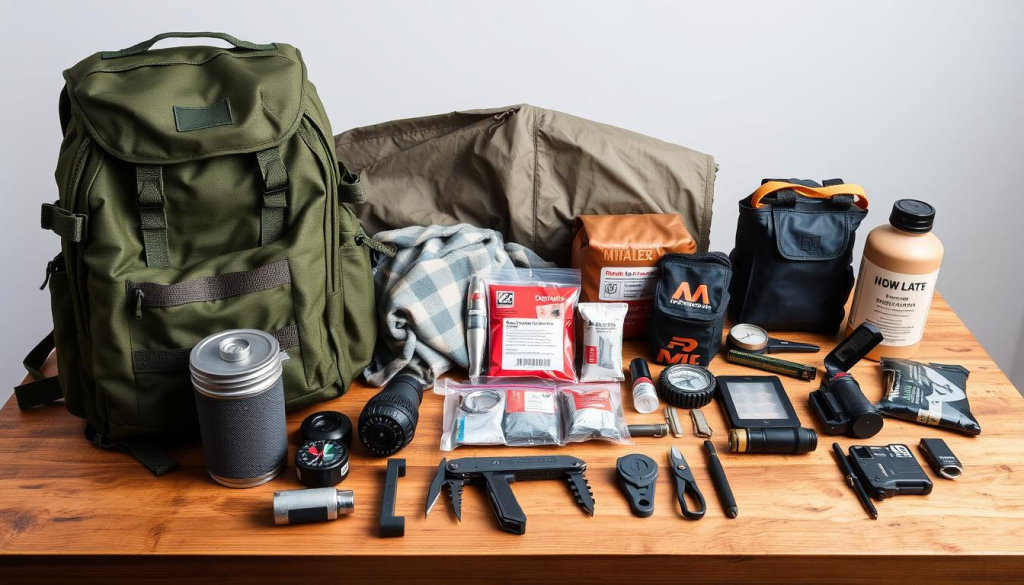
By including these essential survival gear items in your bug out bag, you’ll be better prepared to face emergencies and disasters.
Food and Water Supplies
A well-stocked bug out bag must include adequate food and water supplies to ensure survival in critical situations. The right nutrition can significantly impact your ability to respond to emergencies effectively.
High-Calorie Energy Bars
High-calorie energy bars are a vital component of your bug out bag’s food supplies. They provide a compact and efficient source of energy. Look for bars that are not only high in calories but also rich in nutrients. Brands like Clif Bar and RXBAR offer a good balance of calories and nutritional value.
Water Filtration Systems
Access to clean drinking water is crucial in survival situations. Water filtration systems like LifeStraw or Sawyer Mini can filter out bacteria, viruses, and contaminants, making water from any source safe to drink. These systems are lightweight and easy to use, making them ideal for inclusion in a bug out bag.
Freeze-Dried Meals
Freeze-dried meals are another excellent option for bug out bag food supplies. They are lightweight, have a long shelf life, and can be easily prepared with minimal equipment. Brands such as Mountain House and Backpacker’s Pantry offer a variety of meals that are both nutritious and palatable.
| Food Item | Calories per Serving | Shelf Life |
|---|---|---|
| Clif Bar | 250 | 1 year |
| Mountain House Meal | 500 | 30 years |
| RXBAR | 210 | 1 year |
In conclusion, a well-prepared bug out bag should contain a mix of high-calorie energy bars, water filtration systems, and freeze-dried meals. These items will provide the necessary sustenance and hydration to navigate through emergencies.
Clothing and Personal Items
Clothing and personal items are vital components of a bug out bag, providing the necessary comfort and hygiene during crisis situations. When selecting these items, it’s essential to consider the potential scenarios you might face and pack accordingly.
Weather-Appropriate Clothing
Packing clothing that is suitable for various weather conditions is crucial. This includes:
- Moisture-wicking base layers to keep you dry and comfortable.
- Insulating layers such as fleece or down jackets for cold weather.
- Waterproof outerwear to protect against rain and wind.
- Warm hat and gloves for cold climates.
These items will help you adapt to different environmental conditions, ensuring you stay comfortable and safe.
Sturdy Footwear
Having the right footwear is critical for mobility and protection. Consider including:
- Sturdy hiking boots that offer ankle support and are waterproof.
- Comfortable walking shoes for less demanding terrain.
- Socks made from moisture-wicking materials to keep your feet dry.
Proper footwear can prevent injuries and make a significant difference in your ability to navigate challenging terrain.
Personal Hygiene Supplies
Maintaining personal hygiene is important for both physical and mental health. Include the following in your bug out bag:
- Toothbrush and toothpaste for oral hygiene.
- Biodegradable soap for washing hands and body.
- Wet wipes for personal cleaning when water is scarce.
- Hand sanitizer to prevent the spread of infections.
These supplies will help you maintain a level of personal hygiene, even in challenging conditions.
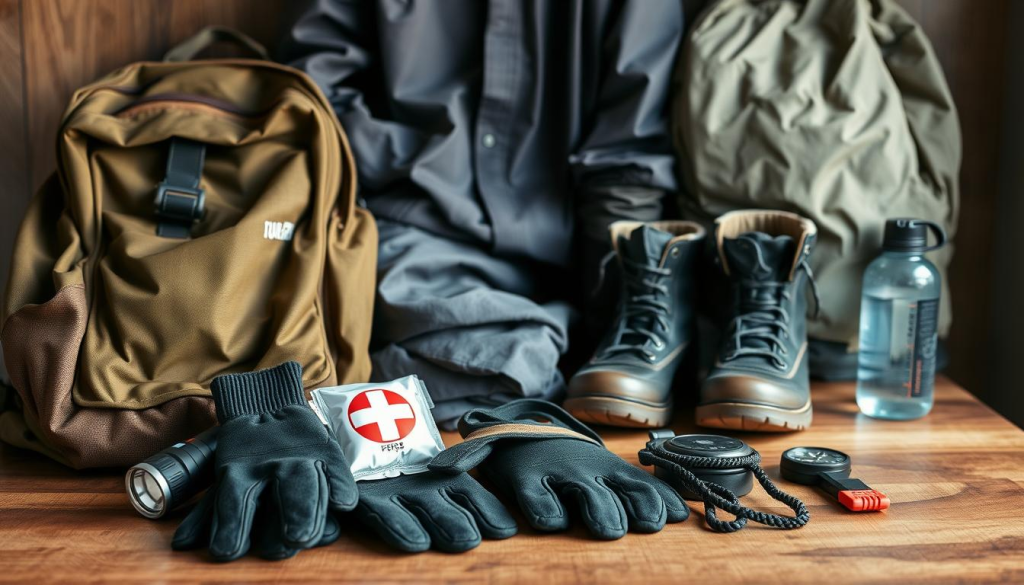
By carefully selecting clothing and personal items for your bug out bag, you can enhance your comfort, safety, and overall chances of survival during emergency situations.
Shelter and Comfort Items
Shelter and comfort are fundamental needs that your bug out bag should address. In emergency situations, having the right gear can significantly improve your chances of survival and comfort.
Emergency Blankets
An emergency blanket is a crucial item for any bug out bag. These blankets are designed to be lightweight, compact, and highly effective at retaining body heat. They are typically made of a durable, waterproof material that can also serve as a makeshift shelter or signaling device.
According to survival experts, “An emergency blanket can be a lifesaver in cold weather conditions, helping to prevent hypothermia.” — Survival Guide
Compact Tent or Tarp
A compact tent or tarp provides essential shelter from the elements. When choosing a tent or tarp, consider its durability, water resistance, and ease of setup. A good quality tent or tarp can protect you from rain, wind, and sun exposure.
- Look for a tent or tarp that is lightweight and compact.
- Ensure it is made of durable, waterproof material.
- Consider a model with easy setup instructions.
Sleeping Bag or Bivvy Sack
A sleeping bag or bivvy sack is vital for maintaining body heat during the night. Choose a model that is insulated, waterproof, and compact. Consider the temperature rating to ensure it suits the climate you are in.
| Item | Description | Benefits |
|---|---|---|
| Emergency Blanket | Lightweight, compact blanket | Retains body heat, waterproof |
| Compact Tent or Tarp | Durable, waterproof shelter | Protects from elements, easy to set up |
| Sleeping Bag or Bivvy Sack | Insulated, waterproof sleeping solution | Maintains body heat, compact |
By including these shelter and comfort items in your bug out bag, you can significantly enhance your survival chances in emergency situations.
Navigation and Communication Tools
When disaster strikes, the ability to navigate and communicate can be the difference between life and death. In a survival situation, being able to find your way and call for help are critical skills. Your Bug Out Bag should include essential navigation and communication tools to ensure you stay on course and can alert others if needed.
Map and Compass
A map and compass are fundamental navigation tools. Even with modern GPS devices, a map and compass provide a reliable means of navigation when electronic devices fail. Ensure your map is detailed and covers the area you are likely to be in. A compass helps you orient your map and determine the direction you need to travel.
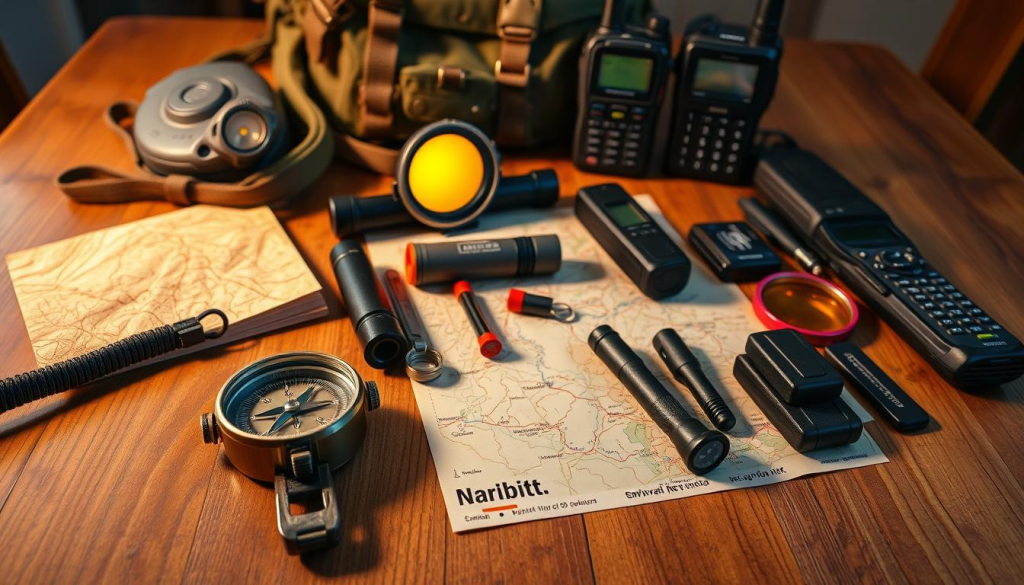
Portable GPS Device
A portable GPS device offers precise location information and can be a lifesaver in unfamiliar terrain. Look for a device that is durable, water-resistant, and has a long battery life. Some GPS devices also offer additional features like altimeters and compasses, enhancing their utility.
Emergency Whistle
An emergency whistle is a simple yet effective communication tool. It can be used to signal for help over long distances. The international distress signal is three short blasts on a whistle, followed by a pause, and then three more blasts. This signal is recognized worldwide and can be a crucial means of calling for assistance.
Including these navigation and communication tools in your Bug Out Bag can significantly enhance your chances of survival. They enable you to navigate through challenging environments and communicate your need for help when necessary.
Lighting and Power Sources
In a bug out situation, having reliable lighting and power sources is crucial for survival. When the power grid fails, and you’re navigating through dark environments, the right lighting can be a lifesaver.
Flashlights and Headlamps
A good quality flashlight or headlamp is essential for providing light in dark situations. Look for ones that are waterproof and have a red light mode to preserve night vision. Some top recommendations include:
- Streamlight Stylus Pro
- Petcam LED Headlamp
- Fenix PD35
These models offer a good balance between brightness, battery life, and durability.
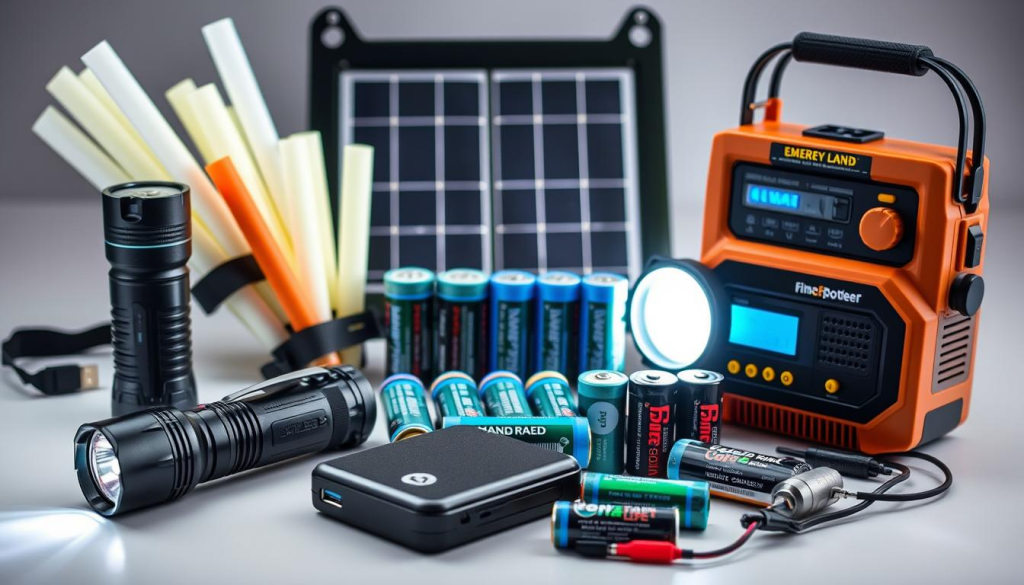
Extra Batteries
Having extra batteries for your flashlights and headlamps is vital. It’s easy to forget that your light source won’t last forever without a power supply. Pack a variety of batteries, including:
- AA batteries
- AAA batteries
- CR123A batteries
Consider rechargeable batteries to reduce waste and save money in the long run.
Solar Chargers
Solar chargers are a great way to keep your devices powered up when you’re away from traditional power sources. Look for solar chargers with:
- High-efficiency solar panels
- Built-in batteries for energy storage
- Multiple USB ports for charging various devices
Some recommended solar chargers include the Anker PowerPort Solar and the Goal Zero Nomad 7.
By including these lighting and power sources in your bug out bag, you’ll be better equipped to handle emergencies and navigate through challenging situations.
Defensive Tools and Safety Equipment
Defensive tools and safety equipment are vital components of a comprehensive Bug Out Bag. These items are designed to protect you from potential threats and ensure your safety during emergency situations.
Pepper Spray
Pepper spray is a non-lethal deterrent that can incapacitate an attacker, providing you with time to escape. When selecting a pepper spray for your Bug Out Bag, consider the concentration of oleoresin capsicum (OC) and the spray pattern. A gel-based spray can be more effective in windy conditions.
Personal Alarm Devices
Personal alarm devices emit a loud noise when activated, deterring potential attackers. These devices are compact and easy to use, making them an excellent addition to your Bug Out Bag. Look for models with long battery life and durability.
Self-Defense Tools
Self-defense tools, such as tactical pens or batons, can be used to protect yourself in a physical confrontation. When choosing a self-defense tool, consider its weight, size, and ease of use. It’s also essential to practice using these tools to ensure you’re comfortable and confident with them.
| Defensive Tool | Key Features | Benefits |
|---|---|---|
| Pepper Spray | High OC concentration, gel-based formula | Effective in windy conditions, non-lethal |
| Personal Alarm Devices | Loud noise, compact design, long battery life | Easy to use, deterrent effect |
| Self-Defense Tools | Compact, lightweight, easy to use | Effective in physical confrontations, confidence booster |
Including defensive tools and safety equipment in your Bug Out Bag can significantly enhance your personal safety during emergencies. By choosing the right tools and practicing their use, you can be better prepared to handle unexpected situations.
Important Documents to Include
When disaster strikes, the importance of having critical documents readily available cannot be overstated. In the chaos that follows an emergency, it’s easy to lose track of vital information. That’s why it’s essential to include important documents in your bug out bag.
Identification and Passport Copies
Having copies of your identification and passport can help you prove your identity and access essential services. Make sure to include:
- A copy of your driver’s license or state ID
- A copy of your passport
- Any other relevant identification documents
Medical Records and Prescriptions
In an emergency, having access to your medical records and prescriptions can be a matter of life and death. Include:
- A copy of your medical history
- A list of your current medications and dosages
- Any relevant medical records or test results
Emergency Contact Information
Having a list of emergency contact information can help you stay in touch with loved ones and receive critical support. Make sure to include:
- Phone numbers and addresses of family members and friends
- Contact information for your emergency services provider
- Any other relevant contact information
By including these critical documents in your bug out bag, you’ll be better prepared to handle emergencies and navigate challenging situations. Remember to review and update your documents regularly to ensure they remain relevant and accurate.
Outdoor Skills and Knowledge Resources
In a survival situation, having access to the right information can be just as important as having the right equipment. This is where outdoor skills and knowledge resources come into play, providing critical guidance and instruction when you need it most.
Survival Guide Book
A survival guide book is an indispensable resource that covers a wide range of topics, from finding and purifying water to building shelters and starting fires. These guides are designed to be comprehensive, offering step-by-step instructions and expert advice to help you navigate various survival scenarios.
Key Features to Look for in a Survival Guide Book:
- Comprehensive coverage of survival techniques
- Clear, concise instructions
- Relevant illustrations and diagrams
- Durable, water-resistant design
Instructional Manuals
Instructional manuals provide detailed information on how to use specific survival tools and equipment. Whether it’s a water filtration system, a portable stove, or a first aid kit, having a manual that explains how to properly use these items can be invaluable in a survival situation.
Some key benefits of instructional manuals include:
- Enhanced understanding of equipment operation
- Troubleshooting tips for common issues
- Maintenance advice to extend equipment lifespan
Local Flora and Fauna Identification Guide
Understanding the local environment is crucial for survival. A guide to local flora and fauna can help you identify edible plants, avoid poisonous species, and understand the behavior of local wildlife. This knowledge can be critical for finding food, avoiding danger, and navigating your surroundings.
To illustrate the importance of these resources, consider the following comparison of different types of guides and manuals:
| Resource Type | Key Features | Survival Benefits |
|---|---|---|
| Survival Guide Book | Comprehensive survival techniques, clear instructions | Enhanced survival skills, adaptability |
| Instructional Manuals | Detailed equipment operation, troubleshooting | Effective equipment use, reduced risk |
| Flora and Fauna Guide | Identification of edible and poisonous species | Safe food sourcing, danger avoidance |
By including these outdoor skills and knowledge resources in your bug out bag, you can significantly enhance your chances of survival during an emergency. Remember, knowledge is power, and being prepared with the right information can make all the difference.
Maintenance and Replacement of Bug Out Bag Items
To ensure your bug out bag remains effective, regular maintenance is necessary. This involves checking the bag’s contents, updating supplies, and ensuring that all items are still usable and not expired.
Regular Inventory Checks
Conducting regular inventory checks is crucial to maintaining your bug out bag. This process involves going through each item in the bag to check its condition, expiration date, and functionality. It’s recommended to do this check every six months to ensure everything is in working order.
During the inventory check, pay special attention to food and water supplies, first aid kits, and batteries. Make sure that all equipment is still functional and that there are no signs of wear or damage.
Upgrading Supplies as Needed
As new technologies emerge and your personal needs change, it may be necessary to upgrade the supplies in your bug out bag. For example, if you have a medical condition that requires specific medication, you’ll need to ensure that your bug out bag is updated with the latest prescriptions and medical equipment.
Additionally, if you’ve used any items from your bug out bag during an emergency, be sure to replace them as soon as possible. This ensures that your bag is always fully stocked and ready for the next emergency.
Storing and Rotating Food Supplies
Food supplies in your bug out bag should be stored in a way that maintains their freshness and nutritional value. This means keeping them in airtight containers and storing them in a cool, dry place.
Rotating your food supplies is also important to ensure that older items are consumed before they expire. A simple method is to use the “first in, first out” rule, where the oldest items are used or consumed before newer ones.
By following these maintenance tips, you can ensure that your bug out bag remains a reliable resource in emergency situations.
Final Thoughts on Your Bug Out Bag
Assembling a bug out bag is a crucial step in emergency preparedness, providing a portable collection of essential items to help you survive and thrive in unexpected situations. As discussed, a well-stocked bug out bag includes bug out bag essentials such as survival gear, food, water, clothing, shelter, and communication tools.
Tailoring Your Bug Out Bag
Customizing your bug out bag to fit your specific needs is vital. Consider your personal circumstances, such as health conditions, family size, and the types of emergencies you might face. Incorporating bug out bag must haves that cater to your unique requirements will ensure you’re better prepared to respond to emergencies.
Practicing with Your Bug Out Bag
Regular drills and training are essential to ensure you’re comfortable using the items in your bug out bag. Practice grabbing your bag and responding to simulated emergency scenarios to build your confidence and preparedness. By doing so, you’ll be more likely to stay calm and make the most of the resources you have available.