
In the face of an emergency, having a well-prepared emergency survival kit can be a lifesaver. A bug out bag urban is designed to provide the basic necessities for survival for at least 72 hours.
An emergency survival kit, commonly referred to as a bug out bag, is a portable collection of essential items stored in a backpack for ease of transport. Its purpose is to supply individuals with the necessary tools to survive during an evacuation from their home or workplace.
Key Takeaways
- A bug out bag is crucial for urban survival.
- It should contain essentials for at least 72 hours.
- Portability and accessibility are key.
- Customize your kit according to your needs.
- Regularly update and check your emergency survival kit.
What is a Bug Out Bag and Why You Need One
Urban survival depends on being prepared, and a bug out bag is a key component of that preparedness. In the event of an emergency or disaster, having a well-stocked and easily accessible bag can make all the difference.
Definition of a Bug Out Bag
A bug out bag, also known as an emergency go bag or urban survival pack, is a portable collection of essential items that an individual can quickly grab in case of an emergency or disaster. It is designed to provide the necessary tools and supplies to survive for at least 72 hours.
The concept of a bug out bag is centered around the idea of being able to evacuate quickly and safely, with the necessary items to sustain life and potentially escape danger. This bag is meant to be deployed at a moment’s notice, so it’s crucial to have it prepared ahead of time and stored in an easily accessible location.
Importance of Urban Preparedness
Urban preparedness is critical in today’s world, where natural disasters, accidents, and other emergencies can occur without warning. Having a disaster preparedness backpack or bug out bag is an essential aspect of this preparedness, as it ensures that you have the necessary supplies to respond to a wide range of emergencies.
Being prepared with a bug out bag can help individuals stay calm and focused during emergencies, allowing them to make better decisions and take the necessary actions to stay safe. It’s not just about having the right gear; it’s about having a plan and being ready to execute it at a moment’s notice.
Key Components of an Urban Bug Out Bag
In the event of an urban emergency, a well-stocked bug out bag can be the difference between safety and danger. The key to an effective bug out bag lies in its components, which should be carefully chosen to address the unique challenges of urban environments.
Essential Gear and Supplies
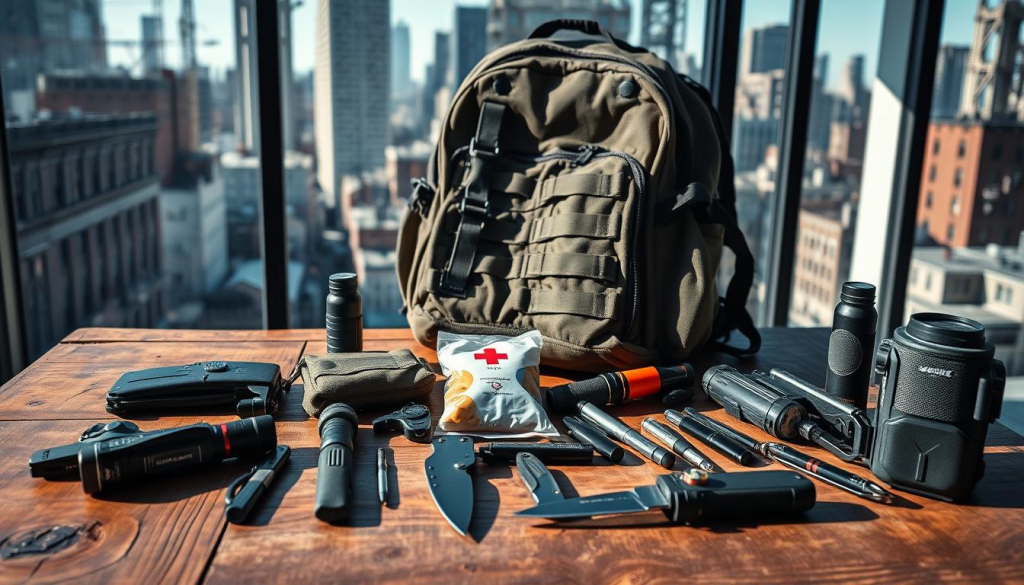
A bug out bag for urban survival should include essential gear and supplies that cater to basic needs such as first aid, shelter, and warmth. This includes items like bandages, antiseptic wipes, a portable shelter, and a warm blanket.
Multi-Functional Tools
Incorporating multi-functional tools into your bug out bag can significantly enhance your ability to respond to various urban challenges. Tools like a Swiss Army knife or a multi-tool can serve multiple purposes, from cutting to opening cans.
Food and Water Considerations
Having adequate food and water supplies is critical. Non-perishable food items and a means of water purification or bottled water should be included. It’s also important to consider the nutritional value and caloric content of the food.
| Category | Essential Items |
|---|---|
| First Aid | Bandages, Antiseptic Wipes, Pain Relievers |
| Multi-Functional Tools | Swiss Army Knife, Multi-Tool, Duct Tape |
| Food and Water | Non-Perishable Food, Water Purification Tablets, Bottled Water |
Choosing the Right Bag for Urban Survival
The key to a successful urban survival strategy lies in choosing a bug out bag that is both practical and durable. When preparing for urban emergencies, the type of bag you choose can significantly impact your ability to navigate through challenging situations.
There are primarily two schools of thought when it comes to selecting a bug out bag: opting for a tactical backpack or a hiking backpack. Tactical backpacks are designed with MOLLE (Modular Lightweight Load-carrying Equipment) systems, allowing for the attachment of various pouches and gear, which can be advantageous in urban survival scenarios. On the other hand, hiking backpacks are often more comfortable for long-distance travel and may offer better weight distribution.
Size and Weight Considerations
When considering the size and weight of your bug out bag, it’s essential to strike a balance. A bag that is too large may become cumbersome, while one that is too small may not carry enough supplies. Aim for a capacity that allows you to carry at least 3 days’ worth of essentials without exceeding 30% of your body weight.
Material and Durability
The material and durability of your bug out bag are critical factors. Look for bags made from water-resistant and tear-resistant materials such as nylon or polyester. Reinforced stitching and heavy-duty zippers are also indicators of a well-made bag that can withstand the rigors of urban survival.
Design Features to Look For
Several design features can enhance the functionality of your bug out bag. Consider a bag with multiple compartments to keep your gear organized, as well as padded straps and a ventilated back panel for comfort. Additionally, features like reflective strips or bright colors can increase visibility in low-light conditions.
Ultimately, the best bug out bag for urban survival is one that balances size, durability, and comfort, while also meeting your specific needs in terms of gear and supplies.
Food and Water Essentials for Your Bag
A well-prepared bug out bag includes a thoughtful selection of food and water essentials to sustain you during a crisis. When considering urban evacuation supplies, it’s vital to focus on items that are not only nourishing but also compact and lightweight.
Having the right food supplies is critical for maintaining energy and overall health during an emergency. Your emergency go bag should contain non-perishable food items that are easy to prepare and consume.
Non-Perishable Food Options
When selecting food for your bug out bag, consider items that are high in calories, protein, and nutrients. Some excellent options include:
- Energy bars
- Dried fruits and nuts
- Canned goods (vegetables, fruits, and meats)
- MREs (Meals Ready to Eat)
- Dried pasta and rice
These foods are not only nutritious but also have a long shelf life, making them ideal for urban evacuation supplies.
| Food Item | Calories per Serving | Shelf Life |
|---|---|---|
| Energy Bars | 200-300 | Up to 2 years |
| Dried Fruits and Nuts | 150-200 | Up to 1 year |
| Canned Goods | 100-200 | Up to 5 years |
Water Filtration and Storage Solutions
Water is critical to sustaining your life and health. Carrying water is heavy, at 8.3 lbs per gallon, so it’s essential to balance the need for hydration with the weight of your bug out bag.
To address this challenge, consider incorporating water filtration methods and storage solutions into your emergency go bag. Options include:
- Water filters (e.g., LifeStraw or Sawyer Mini)
- Water purification tablets
- Collapsible water containers
- Hydration bladders
These solutions enable you to source water from various environments while minimizing the weight and bulk of your bug out bag.
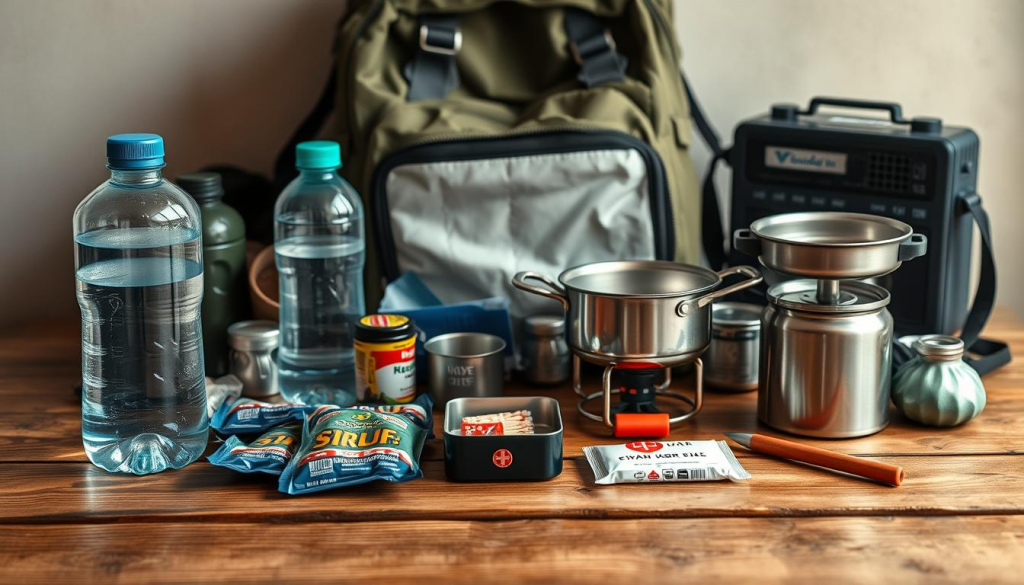
By carefully selecting non-perishable food options and effective water filtration and storage solutions, you can ensure that your bug out bag is equipped to sustain you during an emergency, making you better prepared for urban survival.
First Aid Supplies to Include
When preparing a disaster preparedness backpack, including a well-rounded first aid kit is paramount. A comprehensive first aid kit can significantly enhance your ability to respond to medical emergencies in urban environments.
Basic First Aid Items
A basic first aid kit should include items such as bandages, antiseptic wipes, pain relievers, and any medications you may need. It’s essential to tailor your first aid kit to your personal medical needs. This includes considering any pre-existing medical conditions and the specific needs of your family members.
Advanced Medical Supplies for Urban Settings
For urban settings, consider adding advanced medical supplies such as tourniquets, hemostatic agents, and chest seals. These items can be critical in responding to severe injuries that may occur during urban disasters or crises.
Gear for Urban Navigation and Communication
In the midst of urban chaos, having the right gear for navigation and communication can be a lifesaver. When disaster strikes, being able to navigate through the city and stay in touch with family members or emergency services is crucial.
Effective navigation is key to escaping danger and finding safety. This involves having the right tools to guide you through the urban landscape.
Maps and GPS Devices
A good quality map of your area is indispensable. While digital maps on smartphones are convenient, they can be unreliable when cellular networks are down. Consider including a compass and a paper map of your city in your bug out bag. GPS devices are also valuable, but be sure to include extra batteries.
It’s also wise to familiarize yourself with the city’s layout and potential escape routes beforehand. This knowledge can be a significant advantage during an emergency.

Communication Tools and Signaling
Staying connected with family and emergency services is vital. Two-way radios are a cost-effective and powerful means of communication. They allow you to stay in touch with your group and receive important updates.
In addition to two-way radios, consider including a whistle or other signaling devices in your bug out bag. These can be used to signal for help if you are injured or stranded.
It’s also important to have a plan for how you will communicate with family members if you get separated. Designate a meeting point and ensure everyone knows how to use the communication tools you have included in your bug out bag.
Safety and Self-Defense Items
As part of a comprehensive urban survival plan, incorporating safety and self-defense items into your bug out bag is essential. In urban environments, the risk of encountering dangerous situations can increase, especially during emergencies or disasters. Having the right tools and strategies can significantly enhance your ability to stay safe.

Personal Defense Tools
Personal defense tools are a critical component of your urban bug out bag. These can include items such as pepper spray, stun guns, or personal alarms. The key is to choose tools that are effective, easy to use, and comply with local laws and regulations. For instance, pepper spray is a popular choice because it is compact, easy to carry, and can be very effective in deterring an attacker.
When selecting personal defense tools, consider factors such as ease of use, legality, and your personal comfort level with the device. It’s also important to practice using these tools to ensure you’re familiar with their operation under stress.
Strategies for Staying Safe in Urban Areas
Beyond personal defense tools, having strategies for staying safe in urban areas is crucial. This includes being aware of your surroundings, avoiding walking alone in isolated areas, and keeping your bug out bag easily accessible. It’s also wise to stay informed about local conditions and potential hazards.
Data suggests that during prolonged emergencies, behavioral problems can start to arise around the third day as resources become scarce and tensions rise. Being prepared with an emergency go bag that includes safety and self-defense items can help mitigate some of these risks by allowing you to navigate through or away from dangerous situations more effectively.
- Stay aware of your surroundings and trust your instincts.
- Avoid engaging with hostile individuals whenever possible.
- Keep your personal defense tools easily accessible.
- Stay informed about local conditions and plan your route accordingly.
Clothing Considerations for Urban Survival
In urban survival situations, clothing can serve as a primary defense against harsh weather conditions and environmental hazards. The right attire can significantly enhance your ability to navigate through challenging urban environments.
Layering for Various Weather Conditions
Layering clothing is essential for adapting to different weather conditions. It allows you to adjust your clothing to suit the temperature, humidity, and wind.
- Base Layer: Choose moisture-wicking fabrics that keep you dry.
- Mid-Layer: Insulating layers like fleece or wool for warmth.
- Outer Layer: Waterproof and windproof jackets to protect against the elements.
Footwear Choices for Urban Environments
Selecting the right footwear is critical for urban survival. It should be durable, comfortable, and suitable for the terrain.
- Durability: Look for shoes with sturdy soles and high-quality materials.
- Comfort: Ensure a comfortable fit to prevent blisters and discomfort during long walks.
- Traction: Good tread patterns for grip on various surfaces.
By focusing on layering and appropriate footwear, you can enhance your urban survival preparedness, making you more resilient in the face of urban challenges.
Maintaining Your Bug Out Bag
To ensure your emergency survival kit is effective, regular maintenance is key. A well-maintained bug out bag can be the difference between safety and danger in urban survival situations.
Maintaining your bug out bag involves more than just packing it and forgetting about it. It requires regular checks and updates to ensure that all supplies are still usable and not expired.
Regular Inventory Checks
Conducting regular inventory checks is crucial. This involves going through every item in your bug out bag to check for expiration dates, damage, or obsolescence. For example, food and water supplies should be checked for expiration, and batteries should be tested to ensure they still hold a charge.
| Item | Check for | Action |
|---|---|---|
| Food and Water | Expiration Dates | Replace if expired |
| Batteries | Charge Level | Replace if dead |
| First Aid Supplies | Expiration Dates, Damage | Replace if expired or damaged |
Upgrading Supplies as Needed
As your situation changes, so too should the contents of your bug out bag. For instance, if you move to a different climate, you may need to adjust your clothing and gear accordingly. Upgrading your supplies ensures that your bug out bag remains relevant to your needs.
It’s also a good idea to stay informed about new technologies and supplies that could enhance your survival chances. For example, advancements in water filtration systems or more efficient food supplies can significantly improve your bug out bag’s effectiveness.
By regularly checking and updating your bug out bag, you can ensure that you are always prepared for any urban survival situation. Remember, a bug out bag is not a static entity; it needs to evolve with your needs and circumstances.
Final Thoughts on Urban Bug Out Bags
Preparing a bug out bag is a crucial step in urban survival. It’s about being ready for any situation that may arise, whether it’s a natural disaster or a personal emergency. Having the right city escape essentials and urban bug out gear can make all the difference.
Being Prepared Matters
An unflagging willingness to learn and adapt is key to survival. By staying informed and having the necessary tools, individuals can increase their chances of navigating through challenging situations.
Community Resources
Connecting with others who share similar interests and goals can be beneficial. Sharing knowledge and resources can enhance urban survival preparedness. Everybody has something to offer, and by working together, individuals can build a stronger, more resilient community.
By focusing on city escape essentials and urban bug out gear, individuals can ensure they are well-prepared for any urban survival situation.